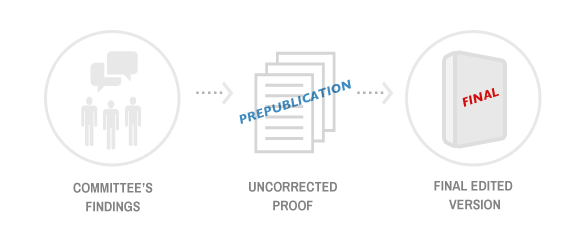
Below are the first 10 and last 10 pages of uncorrected machine-read text (when available) of this chapter, followed by the top 30 algorithmically extracted key phrases from the chapter as a whole.
Intended to provide our own search engines and external engines with highly rich, chapter-representative searchable text on the opening pages of each chapter.
Because it is UNCORRECTED material, please consider the following text as a useful but insufficient proxy for the authoritative book pages.
Do not use for reproduction, copying, pasting, or reading; exclusively for search engines.
OCR for page 1
Executive Summary
The United States and other countries of the Coordinating Com-
mittee for Multilateral Export Control (CoCom) are maintaining a
substantial qualitative and quantitative lead in computer technology
over the USSR and other countries of the Council for Mutual Eco-
nomic Assistance (CMEA). In many areas the lead is on the order of
five to ten years or more. Export controls have thus far contributed
to this gap, but current technological progress will make controls
harder to enforce, and technological and market developments com-
bine to make a case for a more focused and flexible control process.
This report, commissioned by the Department of State, presents
recommendations for producing such a process.
Technical trends make control more difficult, and computer tech-
nology continues to develop rapidly. Steady reduction in computer
and component size makes increasingly sophisticated hardware both
more portable and easier to hide. Professional workstations and
other small computers will soon be offering performance capabilities
for some applications that were previously available only in large
supercomputers. Small, high-power computers have already boosted
the lead of CoCom countries in scientific computing, but the prolif-
eration of ever more powerful small systems will undermine control
efforts. This situation could be aggravated by the movement toward
parallel processors, which can be built using small, less-advanced
1
OCR for page 2
2
GLOBAL TRENDS IN COMPUTER TECHNOLOGY
computers in large numbers. The value of parallel processors de-
pends on the development of appropriate software, however, and
CoCom countries wig continue to lead in that area.
Software is taking on growing importance in computer systems,
and it is inherently easy to acquire. Scientific software is particularly
difficult to control because it is so widely available in the scien-
tific community. Software development tools are, along with com-
puter manufacturing systems, making possible technologies critical to
CoCom's computing lead.
Increasingly powerful hardware and software win become com-
modities. Commodity products are available in high volume and at
Tow cost, they may be available in multiple and substitutable forms,
and they tend to be small and easy to transport. These attributes
make commodities vital to the economic health of the computer
industry, but also effectively uncontrollable.
International computer networking is flourishing among busi-
nesses and researchers and is an implicit conduit for technology ex-
ports. Because computer networks are used to communicate techni-
cal information about software and hardware, computer networking
probably represents the fastest growing gap between development
and decision in current export control strategy.
Advanced systems for computer and component design and man-
ufacturing are critical technologies that enable CoCom countries to
replicate computer products reliably and in large volumes. Within
CoCom, the U.S. position in many such systems is inferior. CoCom's
computer strengths overall depend on its manufacturing capabilities.
Know-how is fundamental to CoCom's computer technology ad-
vantage. CMEA countries are weak in computer manufacturing be-
cause they lack both adequate equipment and the know-how neces-
sary for volume production of high-quaTity products. Similar deficien-
cies plague CMEA scientific computing. Nevertheless, the know-how
of the West may not be sufficiently protected by export controls.
Commercial vitality is essential to technical vitality. The de-
velopment of computer technologies and their commercial markets
(both domestic and export) in CoCom countries are closely inter-
twinecI, and this relationship is fundamental to the CoCom technical
lead. Relative positions are ranked as follows: CoCom commercial
computer technology is best overall, followed by CoCom military
computer technology, then CMEA military computer technology,
with CMEA commercial computer technology last overall.
Unlike past (lecades, CoCom military establishments now have
more to gain from than give to the commercial computing technology
base. Consequently, U.S. policymakers must be concerned with the
OCR for page 3
EXECUTIVE SUMMARY
3
impact of control options on the domestic computer sector as well as
their impact on the CoCom lead overall.
The United States cannot afford to be complacent about its com-
puter technology strengths or base export control decisions on an
assumption of an invincible lead. As the computer market becomes
increasingly global, U.S. firms face increasing foreign competition,
mostly from firms operating with fewer export barriers under the
same CoCom guidelines. Tighter U.S. controls may reflect the ab-
sence of a fully effective multilateral control effort, but there is a risk
that in the computer area, the United States may lock the proverbial
barn door after the horse has escaped. And if the U.S. competitive
position in computer technologies erodes, tighter U.S. controls wiD
only find the United States devoting too much effort to controlling
technologies available in equal or better form elsewhere.
Non-CoCom countries are also expanding the supply of computer
technology. The growing production and use of computer technology
among countries outside of both CoCom and CMEA is another reason
why computer technology is becoming much more readily available
and therefore harder for CoCom to control around the world. Newly
industrializing countries, especially those in Asia, are a major source
of technology that the traditional CoCom-CMEA dichotomy fails to
capture.
CMEA prospects in computer technology are improving but still
constrained. CMEA weaknesses reflect three factors in particular:
export controls, the perception of Western firms that market op-
portunities are limited in CMEA, and self-imposed constraints in
CMEA countries. Change in each factor wiD facilitate absorption
of new computer technology in CMEA countries and each factor is
changing in ways that will promote technology transfer. But while
this prospect creates more pressure on export controls to hold the
line, there are countervailing pressures to keep export controls in
harmony with the technological and international facts of life. The
two need not be inconsistent.
Below is a condensed presentation of the committee's recom-
mendations; greater explanation can be found in Chapter 7 of the
report.
RECOMMENDATIONS
Recommendation 1: Definitions for computer technologies on
the list of controlled products and their use in administering control
OCR for page 4
4
GLOBAL TRENDS IN COMPUTER TECHNOLOGY
programs should be made more flexible to account for technology
change, market developments, and variations among technologies
that might be colloquially labeled in the same way. Further, the De-
partments of State, Defense, and Commerce should review definitions
or categorizations of controlled technologies and their administration
in a manner that is more timely, rapid, and expert.
Recommendation 2: The U.S. government should publish a list
of computer technologies that are commodities, and it should pro-
mulgate a policy that exempts such commodities from controls for
trade at least among CoCom nations. A computer technology should
be identified and treated in export control programs as a commod-
ity if the technology is readily available from foreign sources outside
CoCom control or if other factors (e.g., high volume, Tow price, small
size, ready availability of substitutes) make the technology effectively
uncontrollable.
Recommendation 5: The U.S. government should formulate a
policy for preventing computer networks from becoming a channel
for significant covert technology transfer and to protect the com-
putational resources of CoCom countries. While in many cases the
necessary security technology exists, putting it; to ,'~ m~.v Nit
further study or change in existing policy.
o ~ ~ WE ~ _ ~ ~^ ~ _
Recommendation 4: The Department of State should work with
other agencies to focus export control effort on computer technologies
of compelling military importance that could enable CMEA countries
to make substantial gains in their technology base, or those that
represent key leverage points in the increasingly interdependent world
of computer technology. Chapter 7 lists priorities.
Recommendation 5: Software should be divided into three prin-
cipal classes for control purposes. Software with a compeDing and
direct military importance should be tightly controlled; some degree
of control should be provided for software tools that could build
software in the first class; but other software should be traded freely
among CoCom nations.
Recommendation 6: The Department of State should promote
the integration of key Asian newly industrializing countries (NICs)
(including Singapore, Hong Kong, Taiwan, and South Korea) into
the CoCom control program. Unless these countries are part of an
effective multilateral control effort, their role as potential suppliers of
computer technology to C MEA countries will grow. These NTCs not
OCR for page 5
EXECUTIVE SUMMARY
5
only act as conduits for technology originating in CoCom nations,
but they also generate indigenous computer technology of increasing
sophistication.
Recommendation 7: The U.S. government should greatly in-
crease its investment in the monitoring of computer technology de-
velopment and associated market trends around the world. Although
the intelligence community monitors developments in CMEA coun-
tries, the committee recommends that more comprehensive attention
(i.e., ad(lressing commercial as well as military applications) be paid
on an ongoing basis to developments around the world, especially in
non-CMEA, non-CoCom nations (e.g., newly industrializing coun-
tries in Asia and Latin America). Given the rapid rate of change
of computer technology, the globalization of capabilities and mar-
kets, and the need to protect technology of compelling military im-
portance, the Department of State must have a greatly expanded
resource to make sound technology export decisions. Further, the
Department of State should undertake periodic reviews of technology
trends along the lines of this report. The rapid change in computer
technology makes trend presentations perishable, and thus this type
of review should be conducted at least every three years.
Representative terms from entire chapter:
export control