
CHAPTER 4
The Health and Nutritional Status of Immigrant Hispanic Children: Analyses of the Hispanic Health and Nutrition Examination Survey
Fernando S. Mendoza and Lori Beth Dixon
The Hispanic population will soon be the largest ethnic minority group in the United States. Its growth is being fueled by both a high fertility rate and immigration (Lewit et al., 1994). Indeed, over the past decade half of the increase in its population has been from immigration. As a result, federal and state public policies have focused more intently on immigrant Hispanics and their children. Although there has always been a flow of Hispanic immigrants to the United States, the recent upsurge in immigration has led to a debate about the use of public resources by immigrants, particularly their children, and concerns about the strain they cause on programs for other needy children. In reaction, federal and state governments have begun to enact changes in immigration and social welfare policies aimed at limiting public resources to immigrants, including children (e.g., congressional reform of immigration policy, Proposition 187 in California). However, two questions arise: What do we know about the nutritional and health status of immigrant Hispanic children? Are they disproportionately in need of nutrition-related and health care services? At present there is limited knowledge about their actual health and nutritional needs. If informed public policy is to be developed to deal with immigrant Hispanic children in the United States, accurate information about their health and nutritional needs is required.
Currently, about 60 percent of immigrant children are from Latin America, primarily Mexico, Cuba, and Central America (Bureau of the Census, 1994). Although immigrant children come from other countries too, such as those in Asia and Eastern Europe, for the most part Hispanics are now and will continue to be the major ethnic group of immigrant children in the United States. Furthermore, the problematic issues of poverty, low parental education, and difficulty in accessing health care encountered by many immigrant families and their children are common to Hispanics. Therefore, immigrant Hispanic children can be seen as instructive examples of immigrant children in general in the United States.
To evaluate the nutritional and health status of immigrant versus nonimmigrant Hispanic children, we examined the Hispanic Health and Nutrition Examination Survey, a health survey conducted by the National Center for Health Statistics (NCHS) in 1984 on the three major Hispanic subgroups in the United States (NCHS, 1985). This paper presents data on the growth patterns, dietary intakes, and prevalences of chronic medical conditions and the perceived health status of Mexican American, Puerto Rican, and Cuban American children and adolescents. We differentiate these findings by the birthplaces of the children and adolescents. Thus, this study provides one of the first large-scale nutritional and health status comparisons of immigrant and non-immigrant Hispanic children in the United States.
METHODS
Sample
The study subjects were children, ages 6 months to 18 years, who participated in the Hispanic Health and Nutrition Examination Survey (HHANES) in 1984 (National Center for Health Statistics, 1985). This survey sampled Mexican American children from the five Southwestern states (California, Arizona, Colorado, New Mexico, and Texas), mainland Puerto Rican children from the New York City area, and Cuban American children from Dade County, Florida. These geographic regions contain the majority of children from these three Hispanic subgroups. Therefore, al-
though not encompassing all children in the United States who are in these Hispanic subgroups, HHANES surveyed 73 percent of Mexican Americans, 53 percent of mainland Puerto Ricans, and 55 percent of Cuban Americans living in the United States at the time of the survey. Among those children and adolescents who were missed by the HHANES sampling were the homeless; those who were migrants; and, in general, those more difficult to contact, usually the poor. The survey obtained health and nutritional data from subjects through questionnaires, biochemical tests, and physical examinations. Unlike most other national health surveys, HHANES contains information from physicians' examinations of surveyed subjects. Therefore, this survey differentiates itself from other household health surveys by utilizing more than questionnaire data to determine health and nutritional status. The survey also contains information about children's birthplaces and for adolescents assesses generational status by determining their birthplace and their parents' birthplaces. No other documentation was available to determine citizenship status of a family or its child. As a result, for this study Mexican American children and adolescents were identified as being born either in Mexico or the United States; similarly, Cuban Americans were identified as being born in Cuba or the United States. Puerto Rican children were classified as being born either on the mainland or on the island of Puerto Rico.
Variables
All subjects had assessed demographic data, including age, sex, poverty status as measured by a poverty index,1 parental education, and birthplace (United States, Mexico, Cuba, or Puerto Rico). Adolescent subjects also had generational status determined.2 Subjects were assessed for their nutritional health by
using measures of anthropometry (height, weight, body mass index (weight/height2)); daily dietary intake (as assessed by a food frequency questionnaire); and for children under age 12 a parental report of anemia. The physical health of children and adolescents was assessed by the presence of chronic medical conditions and parental reports of specific conditions. The assessment of chronic medical conditions was done by survey physicians through questionnaires and a standardized physical examination. A chronic medical condition was any medical condition that impaired the child's or adolescent's function for at least the three previous months. For children under age 12 a medical condition questionnaire was administered to parents that assessed whether the children had any of several listed medical conditions. Lastly, an overall subjective assessment of health status was determined for each subject by the survey physician. Survey physicians were asked to assess each adolescent's health as excellent, very good, good, fair, or poor. A rating of fair or poor was labeled as reporting poor health, while those reporting excellent, very good, or good health were labeled as reporting good health. In addition to physicians, adolescent subjects were asked to assess their health status using the same categories. If an adolescent was unable to answer, a parent (usually the mother) responded to the question.
Analyses
The HHANES is a complex, multistage, stratified, clustered survey that requires the use of sample weights and a complex sample design effect for population estimates and comparisons. Our analyses used sample weights for population estimates (i.e., percentages, means, and medians) and an average sample design effect of 1.5 as recommended by Delgaldo et al. (1990). Chi-square analyses had critical values divided by 1.5 to account for the design effect. Regression analysis utilized sample weight and a complex sample design effect of 1.0 since regression parameters included age, sex, and measures of socioeconomic status (SES). Accurate prevalence estimates require samples of 45 or greater. Those estimates with smaller samples are not reliable as population estimates but instead reflect values for only the sampled population.
Nutritional Status Assessment
The medians for weight and height of sampled children and adolescents were assessed by age, sex, ethnic group, and birthplace. Age was determined by prior birthday. For example, all children in the age 2 category ranged from 2.00 to 2.99 years old. The HHANES data on height and weight were compared to the NCHS midyear-age 50th percentile standard for 1983 for height and weight (i.e., all children age 2 were compared to NCHS median values of 2.5 years). Calculated body mass index (BMI) values for surveyed children and adolescents were compared to standardized values of BMI from the NHANES I (1971-1974) developed by Hammer et al. (1991). To compare HHANES groups with NCHS and BMI standards, children from two-year age groups (e.g., 2 to 2.9 years plus 3 to 3.9 years) were combined because of the small immigrant sample sizes in each individual age group. Regression analyses of anthropometric measures were done by age cohort (2 to 5 years, preschoolers; 6 to 11 years, school age; 12 to 18 years, adolescents), with age, sex, poverty, parental education, and whether the child or adolescent was foreign born as independent variables. The latter variable for Mexican American adolescents includes three groupings: foreign born, U.S. born with one or both parents foreign born, and U.S. born with U.S.-born parents.
The diets of children and adolescents were assessed by determining daily intakes of the four basic food groups. This was done by utilizing the same methodology developed by Murphy et al. (1990) to analyze food frequency data from the HHANES. This method estimates the completeness of the diet with respect to the four basic food groups by comparing the daily servings of each food compared to the recommendations for age by the U.S. Department of Agriculture's (USDA) Daily Food Guide. Maximum servings ranged from 12.5 to 14 per day of the four food groups. Statistical differences in dietary intake scores between U.S.- and foreign-born children were assessed by t test. A maternal report of anemia in a child, either current or past (ever having been treated for anemia), was examined for U.S.- and foreign-born children by chi-square analyses.
Health Status Assessment
The prevalence of chronic medical conditions was assessed for U.S.- and foreign-born children in each of the Hispanic subgroups and compared by chi-square analyses. Parental reports of selected medical conditions were compared by chi-square analyses for U.S.- and foreign-born children age 6 months to 11 years. The prevalence of perceived poor health status among adolescents as assessed by survey physicians and adolescents was compared by chi-square analyses for differences between U.S.- and foreign-born subjects.
RESULTS
The size and characteristics of each sample are presented in Table 4-1. For children 6 months to 11 years old, the three Hispanic groups differed demographically among themselves and within groups by birthplace. Compared to U.S.-born Mexican American children, foreign-born ones tended to have families that were poorer, less educated, predominantly Spanish speaking, and less likely to have a female-headed household. Puerto Rican chil-
TABLE 4-1 Demographics Profile of U.S. and Foreign-Born Hispanic Children and Adolescents
|
|
Mexican American |
|
|
|
U.S. |
Mexico |
|
6 mos.-11 yrs. sample (N) |
2,493 |
272 |
|
% with female head of household |
18 |
10 |
|
% in poverty |
34 |
60 |
|
% parental education less than grade 9 |
36 |
77 |
|
% Spanish-speaking only |
28 |
78 |
|
12-18 yrs. sample (N) |
1,088 |
259 |
|
% female head of household |
26 |
17 |
|
% in poverty |
36 |
50 |
|
% parental education less than grade 9 |
41 |
81 |
|
% Spanish-speaking only |
6 |
20 |
|
(N) Second generation |
374 |
|
|
(N) Third generation |
705 |
|
dren more frequently lived in female-headed households and in poverty than Mexican Americans or Cuban Americans. Puerto Rican children born on the island were similar to those born in the United States, except they were more likely to speak only Spanish. Cuban children born outside the United States were poorer and less well educated than U.S.-born Cuban children. The characteristics of the adolescent samples were similar to those of the younger age group. However, fewer foreign-born adolescents spoke only Spanish. Although the generational status of adolescents was available, only Mexican Americans had a significant number of subjects who were third-generation children or higher. In general, foreign-born children came from families that were poorer and less well educated than their U.S. counterparts.
The data for height and weight medians by age, sex, and birthplace for Mexican American, Puerto Rican, and Cuban American children are shown in Appendix 4A, Tables 4A-1 through 4A-6. The medians for U.S.- and foreign-born subjects (Puerto Ricans were divided into mainland and island born) were examined against the NCHS 50th percentile for age. Figures 4-1 through 4-4 plot the median values for height and weight of Mexican Ameri-
|
|
Puerto Rican |
Cuban American |
||
|
|
U.S. |
Puerto Rico |
U.S. |
Cuba |
|
6 mos.-11 yrs. sample (N) |
723 |
171 |
227 |
53 |
|
% with female head of household |
50 |
51 |
16 |
17 |
|
% in poverty |
58 |
60 |
25 |
44 |
|
% parental education less than grade 9 |
24 |
32 |
28 |
48 |
|
% Spanish-speaking only |
27 |
61 |
53 |
61 |
|
12-18 yrs. sample (N) |
55 |
163 |
105 |
114 |
|
% female head of household |
58 |
63 |
19 |
22 |
|
% in poverty |
57 |
70 |
20 |
45 |
|
% parental education less than grade 9 |
33 |
43 |
34 |
53 |
|
% Spanish speaking only |
5 |
12 |
2 |
9 |
|
(N) Second generation |
405 |
|
105 |
|
|
(N) Third generation |
44 |
|
0 |
|
can males and females compared to the NCHS median or 50th percentile for age and sex. Values below the zero line indicate medians lower than the NCHS median, while values above the line are above the median. Because data were unstable owing to small sample sizes by age and sex, two-year averages are presented.
Compared to the NCHS height standard for 1983, foreign-born Mexican American males had median heights that were greater than the 50th percentile for ages 2 to 3 but were generally less than the 50th percentile for ages 4 to 17 years (Figure 4-1). The differences between the median heights of foreign-born Mexican American males and the NCHS age-appropriate median were as much as -4cm during childhood and early adolescence and then increased to about -8 cm in late adolescence. This suggests mild-to-moderate stunting of foreign-born males. Accordingly, the median heights of foreign-born Mexican American males in
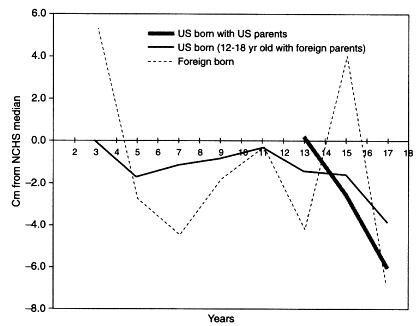
FIGURE 4-1 Median heights of Mexican American males by two-year intervals.
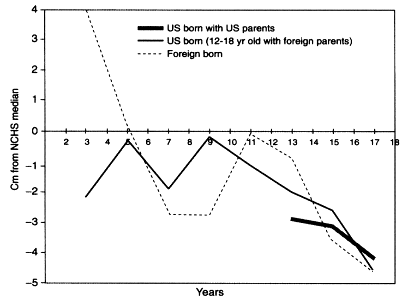
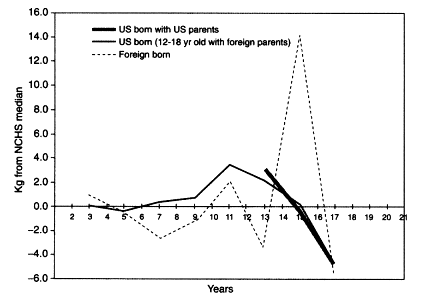
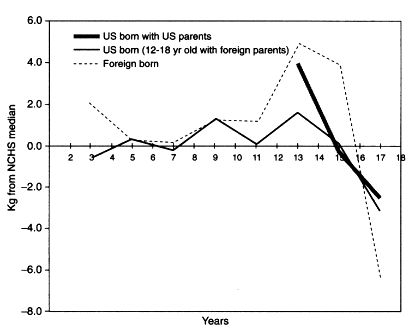
FIGURE 4-4 Median weights of Mexican American females by two-year intervals.
late adolescence were between the NCHS 5th and 10th percentiles for age. Although U.S.-born Mexican American males under age 12 were taller than their foreign-born counterparts, this decreased during adolescence, with medians averaging 5.7 cm below the 50th percentile or between the NCHS 10th and 25th percentiles at ages 16 to 18. Similarly, foreign-born Mexican American females had average median heights greater than the NCHS 50th percentile from ages 2 to 4 but then were generally below the 50th percentile from ages 5 to 17 (Figure 4-2). Specifically, the median heights of foreign-born Mexican American females were 1 to 2 cm less than their age-appropriate NCHS standard during childhood and early adolescence and then averaged 7 cm below the NCHS 50th percentile in late adolescence. In late adolescence the median heights of foreign-born females ranged between the NCHS 5th and 25th percentiles, indicating stunting among girls as well. Median heights for U.S.-born Mexican
American females compared to foreign-born females were improved, but like males they had less of a height advantage at the end of adolescence, with median heights ranging from the NCHS 10th to 25th percentiles.
Linear regressions were conducted on the heights of Mexican American children by age cohorts: 2 to 5 years, 6 to 11 years, and 12 to 18 years. Table 4-2 shows results from linear regressions on height with betas for variable levels compared to control levels (e.g., for children ages 2 to 5, male is a control variable with a beta of 0.0, while female is the variable of interest with a beta of -0.88). For children ages 2 to 5, main predictors were age, sex, and parental education (R2 = .739). Those who were older and male and whose parents were more educated are taller. For school-age children, age and parental education were the main determinants (R2 = .724). A stepwise regression indicated that the poverty score rather than parental education was a major determinant of height for school-age children. Adolescents were taller if they were older and male, had higher parental education, and were wealthier (R2= .358). (Stepwise regression selected the poverty index as a better predictor variable than parental education.) None of the regression analyses showed being foreign born as a significant determinant of height. However, in all three age groups a measure of SES predicted height.
The median weights of Mexican American children were less variant than their heights from the NCHS median or 50th percentile. Foreign-born boys through age 12 showed median weights that varied around the NCHS 50th percentile, from +1.3 kg above the 50th percentile to -2.9 kg below (Figure 4-3). During early adolescence, foreign-born boys' median weights were above the NCHS median and then fell below it after age 15, resulting in median weights around the NCHS 25th percentile. U.S.-born boys tended to be slightly heavier (-0.5 to +2.7 kg from the NCHS median) but likewise showed median weights below the NCHS 50th percentile after age 15. Their weight percentiles were also at the 25th percentile. Foreign and U.S.-born girls ages 2 to 15 had median weights above the NCHS median, with foreign-born girls usually heavier than U.S.-born girls (Figure 4-4). After age 15 both groups weighed below the NCHS median for age, with foreign-born adolescent girls having lower weights (NCHS 25th per-
TABLE 4-2 Regression Analyses for Height by Ethnic and Age Groupings
|
Age (years) |
Model |
|
|
2-5 |
Overall R2 |
|
|
|
df |
|
|
|
Variable |
Level |
|
|
Age |
2 yrs. |
|
|
|
3 yrs. |
|
|
|
4 yrs. |
|
|
|
5 yrs. |
|
|
Gender |
Female |
|
|
|
Male |
|
|
Birthplace |
Other country |
|
|
|
U.S. |
|
|
Poverty score |
|
|
|
Parental education |
< Grade 9 |
|
|
|
> Grade 9 |
|
6-11 |
Overall R2 |
|
|
|
df |
|
|
|
Variable |
Level |
|
|
Age |
6 yrs. |
|
|
|
7 yrs. |
|
|
|
8 yrs. |
|
|
|
9 yrs. |
|
|
|
10 yrs. |
|
|
|
11 yrs. |
|
|
Gender |
Female |
|
|
|
Male |
|
|
Birthplace |
Other country |
|
|
|
U.S. |
|
Mexican American |
Puerto Rican |
Cuban |
|
0.739 |
0.780 |
0.760 |
|
778 |
222 |
53 |
|
-21.14* |
-24.09* |
-22.78* |
|
-13.87* |
-15.77* |
-12.32* |
|
-6.67* |
-7.25* |
-3.95 |
|
0.00 |
0.00 |
0.00 |
|
-0.88** |
-1.24*** |
-1.15 |
|
0.00 |
0.00 |
0.00 |
|
0.69 |
-1.93*** |
-2.41 |
|
0.00 |
0.00 |
0.00 |
|
0.002 |
0.001 |
-0.004 |
|
-0.96*** |
0.45 |
0.43 |
|
0.00 |
0.00 |
0.00 |
|
0.726 |
0.714 |
0.683 |
|
1117 |
364 |
110 |
|
-28.84* |
-28.29* |
-28.63* |
|
-23.81 * |
-24.11 * |
-21.95* |
|
-18.21 * |
-16.78* |
-16.01 * |
|
-11.64* |
-11.69* |
-12.09* |
|
-6.00* |
-5.09* |
-7.33** |
|
0.00* |
0.00 |
0.00 |
|
0.28 |
1.58*** |
-1.13 |
|
0.00 |
0.00 |
0.00 |
|
-1.14 |
-2.09*** |
-3.28*** |
|
0.00 |
0.00 |
0.00 |
|
Mexican American |
Puerto Rican |
Cuban |
|
0.01 |
0.02* |
0.003 |
|
-0.50* |
-1.87*** |
0.69 |
|
0.00 |
0.00 |
0.00 |
|
0.413 |
0.391 |
0.478 |
|
986 |
466 |
155 |
|
-12.00* |
-11.39* |
-14.06* |
|
-6.16* |
-7.54* |
-12.29* |
|
-3.45* |
-5.45* |
-7.23*** |
|
-0.51 |
-2.33 |
-2.06 |
|
-0.82 |
-1.24 |
-3.70 |
|
0.61 |
-0.79 |
-1.24 |
|
0.00 |
0.00 |
0.00 |
|
-7.64* |
-7.93* |
-6.21* |
|
0.00 |
0.00 |
0.00 |
|
-1.59 |
-0.82 |
0.45 |
|
0.64 |
0.00 |
0.00 |
|
0.00 |
— |
— |
|
0.005*** |
0.005 |
0.01 |
|
1.05*** |
-0.62 |
0.32 |
|
0.00 |
0.00 |
0.00 |
centile) than U.S.-born adolescents (25th to 50th percentiles). Regression analyses of weight (see Table 4-3) showed that for children ages 2 to 5, age, sex, and parental education were predictors of weight (R2 = .488). Older males with higher parental education were heavier. For school-age children, being older and having higher income were associated with a higher weight (R2 = .446). Among adolescents, only age and sex predicted weight (R2 = 0.198). Neither socioeconomic factor—poverty index or parental education—predicted weight for adolescents, and, as with height, being foreign born was not predictive of weight among Mexican American children or adolescents.
Figures 4-5 and 4-6 show the proportion of Mexican American children and adolescents with BMI values above the 90th percentile. More than 10 percent of school-age and adolescent boys were above the 90th percentile, indicating greater obesity among these groups (Appendix 4A, Table 4A-7). Among adolescent boys, there appeared to be higher BMI values among U.S.-born adolescents, particularly those with U.S.-born parents. Foreign-born school-age girls had a higher proportion than U.S.-born girls who were above the 90th percentile. Among adolescent girls, U.S.-born adolescent girls with U.S.-born parents exceeded their counterparts. Regression analyses showed that for all age groups only age and gender were predictive variables (see Table 4-4).
Examination of the growth patterns of mainland-and island-born Puerto Rican children (under age 12) in HHANES showed that mainland-born children's median heights were similar to or greater than the NCHS 50th percentile (Appendix 4A, Tables 4A-3 and 4A-4). In contrast, island-born children showed heights below the NCHS 50th percentile, suggesting that stunting was present in this group. Both mainland-and island-born adolescents after age 12 had median heights that were consistently below average (from 1 to 7 cm), centering between the NCHS 10th and 25th percentiles for age. Similar to the Mexican American sample, both mainland-and island-born Puerto Rican children's and adolescents' weights averaged at or above the 50th percentile. Only in older adolescent island-born males did median weights fall below the NCHS average to the 25th percentile. For both mainland-born sexes and island-born females, median
weights at the end of adolescence were either similar to or above the NCHS 50th percentile.
Regression analyses of height and weight for the Puerto Rican sample by age cohort are shown in Tables 4-2 and 4-3. For children ages 2 to 5, significant variables for height were age, gender, and birthplace. Children born in Puerto Rico were 2 cm shorter than their mainland counterparts. Among school-age children, in addition to age, gender, and birthplace, both the poverty score and parental education were significant variables for predicting height. Adolescents' height was best predicted by age and gender. Birthplace was not significant for adolescents, although it had a negative coefficient, consistent with the younger age groups. Regression analyses of weight showed that for children ages 2 to 5 only age was significant. Among school-age children, poverty score also was a significant variable. Adolescents' weights were best predicted by age, gender, and poverty score. As with the Mexican American sample, those in the Puerto Rican sample had a higher-than-expected proportion of school-age children and adolescents who were above the 90th percentile for BMI, approximately 15 percent (Appendix 4A, Table 4A-8). Regression analyses for BMI among all ages were nonpredictive.
The anthropometric analyses on Cuban American children and adolescents were limited because of the small sample sizes (Appendix 4A, Table 4A-5 and 4A-6). However, in general, they followed patterns similar to Puerto Rican children and adolescents. Foreign-born Cuban American children and adolescents were shorter and somewhat lower in weight than U.S.-born Cuban American children. Regression analyses (Tables 4-2 through 4-4) showed that height was primarily influenced by age. Only among school-age children was height significantly affected by birthplace, with foreign-born children about 3 cm shorter. Weight followed a similar pattern, with foreign-born school-age children being lighter than U.S.-born children. Like Puerto Ricans, data on BMI values for Cuban American children and adolescents showed a greater proportion of children above the 90th percentile, particularly children 6 to 11 years old (Appendix 4A, Table 4A-9). Regressions for BMI by age group showed age as the only consistent predictor; however, among school-age children, being foreign born was associated with a lower BMI.
Table 4-3 Regression Analyses for Weight by Ethnic and Age Groupings
|
Age (years) |
Model |
|
|
2-5 |
Overall R2 |
|
|
|
df |
|
|
|
Variable |
Level |
|
|
Age |
2 yrs. |
|
|
|
3 yrs. |
|
|
|
4 yrs. |
|
|
|
5 yrs. |
|
|
Gender |
Female |
|
|
|
Male |
|
|
Birthplace |
Other country |
|
|
|
U.S. |
|
|
Poverty score |
|
|
|
Parental education |
< Grade 9 ≥ Grade 9 |
|
|
6-11 |
Overall R2 |
|
|
df |
|
|
|
Variable |
Leve |
|
|
Age |
6 yrs. |
|
|
|
7 yrs. |
|
|
|
8 yrs. |
|
|
|
9 yrs. |
|
|
|
10 yrs. |
|
|
|
11 yrs. |
|
|
Gender |
Female |
|
|
|
Male |
|
|
Birthplace |
Other country |
|
|
|
U.S. |
|
|
Poverty score |
|
|
|
Parental education |
< Grade 9 |
|
|
|
> Grade 9 |
|
Mexican American |
Puerto Rican |
Cuban |
|
0.488 |
0.400 |
0.251 |
|
779 |
222 |
53 |
|
-6.45* |
-8.83* |
-6.19** |
|
-4.48* |
-6.71* |
-1.37 |
|
-2.58* |
-3.46* |
-1.03 |
|
0.00 |
0.00 |
0.00 |
|
-0.51** |
-0.65 |
1.15 |
|
0.00 |
0.00 |
0.00 |
|
0.04 |
-0.93 |
-1.23 |
|
0.00 |
0.00 |
0.00 |
|
0.001 |
0.005 |
0.002 |
|
-0.46*** |
-0.16 |
-2.35 |
|
0.00 |
0.00 |
0.00 |
|
0.446 |
0.412 |
0.456 |
|
1120 |
364 |
110 |
|
-19.81* |
-16.34* |
-23.06* |
|
-16.75* |
-15.40* |
-19.40* |
|
-13.82* |
-10.51* |
-13.58* |
|
-8.68* |
-7.86* |
-11.50* |
|
-4.60* |
-1.13 |
-11.51* |
|
0.00 |
0.00 |
0.00 |
|
-0.07 |
0.80 |
-1.39 |
|
0.00 |
0.00 |
0.00 |
|
-0.50 |
-1.77 |
-4.59*** |
|
0.00 |
0.00 |
0.00 |
|
0.005*** |
0.02* |
0.0001 |
|
-0.44 |
-1.56 |
0.84 |
|
0.00 |
0.00 |
0.00 |
Table 4-5 shows the daily intakes of the four basic food groups, both as a summary of total servings and as servings of individual food groups, according to the USDA Daily Food Guide. Small sample sizes limited the evaluations of foreign-born children under age 2. For children ages 2 to 5 there were no differences in daily intakes between foreign-or island-born children and those born in the United States in any of the Hispanic subgroups. However, in the 6- to 11-year age group, foreign-born Mexican American children consumed significantly higher amounts of bread, vegetables, and fruits and fewer servings of added fat than U.S.-born Mexican American children. No differ-
|
Mexican American |
Puerto Rican |
Cuban |
|
0.198 |
0.182 |
0.283 |
|
985 |
468 |
156 |
|
-16.38* |
-16.52* |
-13.09* |
|
-11.04 * |
-13.01 * |
-16.23* |
|
-7.24* |
-9.62* |
-9.00*** |
|
-5.48* |
-8.45* |
-4.84 |
|
-2.89*** |
-1.81 |
-6.23 |
|
-3.16*** |
-3.09 |
0.91 |
|
0.00 |
0.00 |
0.00 |
|
-4.36* |
-4.22* |
-4.00*** |
|
0.00 |
0.00 |
0.00 |
|
-2.80 |
0.51 |
1.29 |
|
0.11 |
0.00 |
0.00 |
|
0.00 |
— |
— |
|
0.004 |
0.01 *** |
0.01 |
|
-0.06 |
-0.28 |
0.64 |
|
0.00 |
0.00 |
0.00 |
ences were seen among mainland-or island-born Puerto Rican school-age children or between U.S.- and non-U.S.-born Cuban American children. Overall, for children ages 2 to 11, the total daily intake was 67 percent of recommended USDA amounts for foreign-born Mexican American children and 64 percent for U.S.-born Mexican Americans. Daily intakes for both mainland-and island-born Puerto Rican children were similar: 62 percent of recommended amounts. Cuban American foreign-born children scored lower compared to those who were U.S. born, 57 versus 62 percent of recommended amounts.
In the adolescent age group, although there were no signifi-
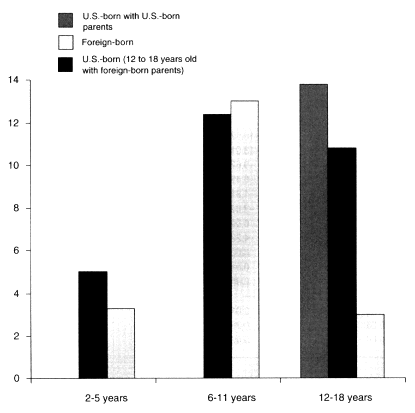
FIGURE 4-5 Percentage of Mexican American males with BMIs above 90th percentile.
cant differences in daily intakes of the four food groups between foreign-and U.S.-born groups, Mexican American and Puerto Rican adolescents reported better intakes than Cuban American adolescents (54 and 52 percent, respectively, versus 47 percent of the recommended intakes). Some significant individual food group differences were observed. Mexican American teens who were foreign born demonstrated greater intakes of breads, vegetables, and fruits with less added fat compared to their U.S. counterparts. Mainland-born Puerto Rican adolescents consumed greater amounts of milk and added fat compared to island-born Puerto Rican adolescents. Cuban American adolescents who
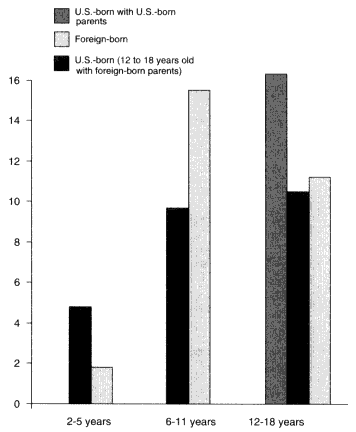
FIGURE 4-6 Mexican American females with BMIs above 90th percentile.
were foreign born ate more vegetables and fruits. In general, Hispanic adolescents showed mean dietary intakes ranging from 45 to 55 percent of the recommended daily intakes of the four basic food groups. Although not statistically significant, foreign-born Mexican American teens did slightly better in their mean dietary scores than U.S.-born teens, but this relationship was reversed for Puerto Rican and Cuban American adolescents. Milk and meat were eaten by Hispanic adolescents in the recommended amounts, but bread, vegetables, and fruits were consumed at 25 to 50 percent of the recommended levels.
The assessment of the health status of these three Hispanic
TABLE 4-4 Regression Analyses for BMI by Ethnic and Age Groupings
|
Age (years) |
Model |
|
|
2-5 |
Overall R2 |
|
|
|
df |
|
|
|
Variable |
Level |
|
|
Age |
2 yrs. |
|
|
|
3 yrs. |
|
|
|
4 yrs. |
|
|
|
5 yrs. |
|
|
Gender |
Female |
|
|
|
Male |
|
|
Birthplace |
Other country |
|
|
|
U.S. |
|
|
Poverty score |
|
|
|
Parental education |
< Grade 9 |
|
|
|
> Grade 9 |
|
6-11 |
Overall R2 |
|
|
|
df |
|
|
|
Variable |
Level |
|
|
Age |
6 yrs. |
|
|
|
7 yrs. |
|
|
|
8 yrs. |
|
|
|
9 yrs. |
|
|
|
10 yrs. |
|
|
|
11 yrs. |
|
|
Gender |
Female |
|
|
|
Male |
|
|
Birthplace |
Other country |
|
|
|
U.S. |
|
|
Poverty score |
|
|
|
Parental education |
< Grade 9 |
|
|
|
> Grade 9 |
|
Mexican American |
Puerto Rican |
Cuban |
|
0.038 |
0.022 |
0.190 |
|
777 |
222 |
53 |
|
0.52* |
-0.31 |
1.18 |
|
0.22 |
-0.86 |
2.74 |
|
-0.22 |
-0.58 |
0.35 |
|
0.00 |
0.00 |
0.00 |
|
-0.25*** |
-0.11 |
1.53 |
|
0.00 |
0.00 |
0.00 |
|
-0.08 |
-0.24 |
-0.46 |
|
0.00 |
0.00 |
0.00 |
|
0.004 |
0.003 |
0.004 |
|
-0.17 |
-0.14 |
-2.58 |
|
0.00 |
0.00 |
0.00 |
|
0.134 |
0.097 |
0.200 |
|
1117 |
364 |
110 |
|
-3.41 * |
-1.57*** |
-4.69* |
|
-2.75* |
-2.14* |
-4.10* |
|
-2.37* |
-1.09 |
-2.52*** |
|
-1.20* |
-0.95 |
-2.54*** |
|
-0.66*** |
0.74 |
-3.69** |
|
0.00 |
0.00 |
0.00 |
|
-0.12 |
0.06 |
-0.53 |
|
0.00 |
0.00 |
0.00 |
|
-0.0004 |
-0.28 |
-1.65*** |
|
0.00 |
0.00 |
0.00 |
|
0.001 |
0.005*** |
-0.001 |
|
-0.07 |
-0.21 |
0.28 |
|
0.00 |
0.00 |
0.00 |
subgroups showed some variability based on birthplace. The prevalence of chronic medical conditions for each subgroup is shown in Table 4-6. Both mainland-and island-born Puerto Rican children had the highest prevalences of chronic medical conditions and were the only Hispanic subgroup with a significant difference in prevalence between U.S.- and nonmainland-born children. Unfortunately, the small sample size of island-born Puerto Rican children did not allow for a population comparison and instead resulted in the statistical difference applying only to surveyed subjects. Small sample sizes also did not allow for comparison of Puerto Rican adolescents, but they too appeared to have a similar trend, with higher rates among island-born chil-
|
Mexican American |
Puerto Rican |
Cuban |
|
0.069 |
0.087 |
0.108 |
|
985 |
466 |
155 |
|
-3.28* |
-3.28* |
-1.15 |
|
-2.56* |
-2.75* |
-2.97** |
|
-1.79* |
-1.88*** |
-1.38 |
|
-1.88* |
-2.30** |
-1.17 |
|
-0.92*** |
-0.17 |
-1.30 |
|
-1.31 ** |
-0.95 |
0.60 |
|
0.00 |
0.00 |
0.00 |
|
0.50*** |
0.73 |
0.39 |
|
0.00 |
0.00 |
0.00 |
|
-0.62 |
0.41 |
0.30 |
|
-0.10 |
0.00 |
0.00 |
|
0.00 |
— |
— |
|
0.0001 |
0.003 |
0.001 |
|
-0.24 |
0.05 |
0.33 |
|
0.00 |
0.00 |
0.00 |
dren. The prevalence of chronic medical conditions among U.S.- and foreign-born Mexican Americans was basically equivalent, about 3.5 percent for children and 4.6 percent for adolescents. The Cuban American sample with chronic medical conditions was very small, and therefore statistical testing was not possible.
Specific medical conditions for children 6 months to 11 years old as reported by parents showed few differences based on birthplace; in general, few parents reported any such conditions (see Table 4-7). Puerto Rican children reported rates of asthma twice those of other U.S. children; children born in Puerto Rico had a higher prevalence, though nonstatistical, compared to mainland-born Puerto Ricans. Foreign-born Cuban American children had
TABLE 4-5 Mean Intakes of Food Groups by Latino Children According to Country of Birth
|
|
|
Recommended |
Mexican American |
|
|
Age (years) |
Food Groupa |
Number of Servingsc |
U.S Mean (n)d |
Foreign Mean (n) |
|
< 2 |
Four basicb |
12.5 maximum |
7.1 (308) |
5.1 (3) |
|
|
Milk |
2-3 |
2.0 (310) |
0.9 (4) |
|
|
Meat |
2-3 |
1.8 (318) |
1.8 (3) |
|
|
Bread |
4-6 |
2.5 (318) |
2.3 (4) |
|
|
Vegetables and fruits |
4-5 |
0.9 (319) |
0.7 (4) |
|
|
Added sugar |
|
1.4 (318) |
0.8 (4) |
|
|
Added fat |
|
0.8 (312) |
0.1 (3) |
|
2-5 |
Four basic |
12.5 maximum |
7.9 (783) |
8.0 (44) |
|
|
Milk |
2-3 |
2.2 (795) |
2.2 (46) |
|
|
Meat |
2-3 |
1.9 (825) |
1.9 (59) |
|
|
Bread |
4-6 |
2.8 (828) |
3.0 (59) |
|
|
Vegetables and fruits |
4-5 |
1.0 (831) |
0.9 (60) |
|
|
Added sugar |
|
1.9 (827) |
2.1 (58) |
|
|
Added fat |
|
1.2 (811) |
1.1 (53) |
|
6-11 |
Four basic |
12.5 maximum |
8.2 (1043)*** |
8.9 (176)*** |
|
|
Milk |
2-3 |
2.6 (1051) |
2.7 (181) |
|
|
Meat |
2-3 |
1.9 (1078) |
1.9 (187) |
|
|
Bread |
4-6 |
2.7 (1077)*** |
3.2 (191 )*** |
|
|
Vegetables and fruits |
4-5 |
0.9 (1078)** |
1.0 (190)** |
|
|
Added sugar |
|
2.0 (1074) |
1.9 (189) |
|
|
Added fat |
|
1.3 (1053)* |
1.1 (176)* |
|
12-18 |
Four basic |
14 maximum |
7.4 (900) |
7.7 (205) |
|
|
Milk |
2-3 |
2.3 (910) |
2.2 (209) |
|
|
Meat |
2-3 |
1.8 (935) |
1.8 (232) |
|
|
Bread |
4-6 |
2.5 (937)* |
2.8 (233)* |
|
|
Vegetables and fruits |
4-5 |
0.8 (931)*** |
1.0 (234)*** |
|
|
Added sugar |
|
2.2 (937) |
2.3 (231) |
|
|
Added fat |
|
1.2 (910)* |
1.0 (221)* |
|
a Foods were counted according to the food grouping scheme developed by Murphy et al. (1990). b Four basic refers to a dietary quality score that summed intakes from the four food groups (milk, meat, bread, vegetables and fruits) truncated at the recommended level for each age group according to the USDA Daily Food Guide. c Recommended ranges of servings are based on the USDA Daily Food Guide, which was released in 1979; HHANES was conducted in 1982. The current Food Guide Pyramid recommends the following ranges of servings: 2-3 servings of dairy, 2-3 servings of meat or meat substitutes, 6-11 servings of breads, 5-9 servings of fruits and vegetables, and fat and |
||||
TABLE 4-6 Chronic Medical Conditions Among U.S.- and Foreign-Born Mexican American, Mainland Puerto Rican, and Cuban American Children
|
|
Mexican American |
|
|
% with Chronic Medical Condition (N)a |
U.S.-Born |
Foreign-Born |
|
0-11 year olds |
3.4 (77) |
3.5 (9) |
|
12-18 year olds |
4.7 (42) |
4.6 (11) |
|
a Samples less than N = 45 are not reliable population estimates. b Significant difference at p < .01 between U.S.- and foreign-born Puerto Rican children. Samples less than 45 are significant only for surveyed subjects and not for overall population. |
||
TABLE 4-7 Selected Parental Reported Medical Conditions for U.S.- and Foreign-Born Mexican American, Mainland Puerto Rican, and Cuban American Children (ages 6 mos. to 12 yrs.; percents (sample sizea)
|
|
Mexican American |
|
|
Reported Conditiona |
U.S.-Born (N = 2,493) |
Foreign-Born (N = 272) |
|
Anemia now (1-2%) |
1.3 (36) |
.4 (1) |
|
Ever treated for anemia |
6.9 (171) |
3.9 (110) |
|
Asthma (5-10%) |
4.7 (111) |
4.0 (10) |
|
Other lung diseases |
3.7 (96) |
6.4 (17) |
|
Heart condition |
3.5 (84) |
3.3 (9) |
|
Urinary tract infection (2.5%) |
4.8 (117) |
6.3 (17) |
|
Seizures (5%) |
3.1 (75) |
2.1 (6) |
|
Speech problems (2-5%) |
3.3 (83) |
4.6 (11) |
|
Psychological problems |
1.2 (31) |
1.6 (4) |
|
Mental retardation (3%) |
0.4 (9) |
0 (0) |
|
Poisons |
0.9 (22) |
2.8 (6) |
|
a Samples less than 45 are not reliable population estimates. b Where possible estimation of reported prevalence for all children is noted (from Nelson Textbook of Pediatrics, 14th ed., Behrman and Vaughan, Philadelphia, 1992). c Significant difference between U.S.- and foreign-born samples at p < .05. Samples less than 45 are significant only for surveyed subjects and not population difference. |
||
|
|
Puerto Rican |
Cuban American |
||
|
% with Chronic Medical Condition (N)a |
U.S.-Born |
Foreign-Born |
U.S.-Born |
Foreign-Born |
|
0-11 year olds |
5.3 (31) |
15.1b (23) |
4.4 (7) |
0 (0) |
|
12-18 year olds |
4.8 (17) |
6.6 (10) |
1.1 (1) |
1.1 (1) |
|
|
Puerto Rican |
Cuban American |
||
|
Reported Conditiona |
Mainland-Born (N= 723) |
Island-Born (N= 171) |
U.S.-Born (N= 227) |
Foreign-Born (N= 53) |
|
Anemia now (1-2%) |
3.8 (32) |
2.7 (5) |
2.0 (5) |
0 (0) |
|
Ever treated for anemia |
14.5 (116) |
19.6 (34) |
13.8 (32) |
12.1 (8) |
|
Asthma (5-10%) |
18.8 (156) |
26.9 (41) |
6.7 (19) |
22.6c (12) |
|
Other lung diseases |
2.4 (20) |
3.1 (5) |
7.0 (19) |
3.8 (2) |
|
Heart condition |
6.2 (45) |
2.3 (4) |
5.2 (10) |
1.8 (1) |
|
Urinary tract infection (2.5%) |
2.8 (25) |
1.3 (4) |
5.5 (12) |
2.7 (1) |
|
Seizures (5%) |
4.3 (35) |
5.0 (10) |
2.5 (5) |
4.3 (2) |
|
Speech problems (2-5%) |
5.4 (41) |
7.3 (10) |
3.6 (7) |
2.4 (1) |
|
Psychological problems |
3.4 (27) |
6.6 (9) |
1.7 (3) |
4.5 (2) |
|
Mental retardation (3%) |
1.8 (14) |
2.3 (3) |
0.5 (1) |
0 (0) |
|
Poisons |
2.0 (14) |
1.6 (3) |
2.0 (4) |
1.9 (1) |
a significantly higher prevalence of asthma than U.S.-born Cuban Americans, who had a prevalence similar to other U.S. children. However, because of small sample sizes these were considered only trends. Mexican Americans showed no significant difference between U.S.- and foreign-born children and overall reported a lower rate of asthma, 4 to 5 percent. Reports of children having anemia at the time of the survey ranged from 1 to 4 percent, compared to 1 to 2 percent for all U.S. children. Mainland-born Puerto Rican children had the highest prevalence (3.8 percent) and foreign-born Mexican Americans the lowest (0.4 percent). Likewise, reports of ever having received treatment for anemia were highest among Puerto Ricans and lowest among foreign-born Mexican Americans. For other conditions for which overall U.S. prevalence can be determined, only urinary tract infections appeared to be higher and mostly among Mexican American children.
Assessments of perceived health status demonstrated that only 1 percent of all Hispanic children and adolescents were rated in poor health by the survey physicians (see Table 4-8). However, among adolescents the prevalence of perceived poor health was substantially higher. Among all Hispanic subgroups, more adolescents perceived their health as poor than were perceived by survey physicians. Moreover, both foreign-born Mexican American and island-born Puerto Rican adolescents had prevalences that were almost twice those of U.S.-born adolescents.
DISCUSSION
This analysis provides one of the first overviews of the health and nutritional status of immigrant Hispanic children and adolescents, utilizing data from the Hispanic Health and Nutritional Examination Survey (HHANES) conducted in 1982-1984. Although now more than a decade old, the HHANES is, nonetheless, the only large-scale health and nutritional survey currently available on Hispanic children and adolescents. As such, it provides one of the few opportunities to examine immigrant Hispanic children in a comprehensive manner. Unfortunately, the HHANES cannot provide longitudinal information about nutrition and health because of its cross-sectional design and because
TABLE 4-8 Percentage of Adolescents with Poor Health as Assessed by Physicians and Adolescents
|
Age Group |
Rater |
Born in Other Country % (Total N)a |
Born in U.S. % (Total N) |
|
Mexican Americans |
|
||
|
2-11 year olds |
Physician |
1.4 (257) |
1.2 (2206) |
|
12-18 year olds |
Physician |
0.0 (234) |
0.6 (917) |
|
|
Adolescent |
32.0 (235) |
16.5 (917) |
|
Puerto Ricans |
|
||
|
2-11 year olds |
Physician |
0.0 (148) |
0.3 (601) |
|
12-18 year olds |
Physician |
0.7 (144) |
0.7 (384) |
|
|
Adolescent |
33.7 (144) |
13.7 (385) |
|
Cubans |
|
||
|
2-11 year olds |
Physician |
0.0 (41) |
0.0 (164) |
|
12-18 year olds |
Physician |
1.2 (90) |
0.0 (85) |
|
|
Adolescent |
8.3 (90) |
7.2 (85) |
|
a Total N refers to the unweighted sample size; percentages were calculated by using the sample weights provided in HHANES. |
|||
it did not determine age of entry or length of time in the United States for sample subjects. Thus, changes in the nutritional or health status of subjects since immigrating to the United States were not captured in these data. Despite these limitations, this study provides first-time comparisons of health and nutrition parameters for immigrant and nonimmigrant children and adolescents. More importantly, it examines the relationships of these parameters to the demographic variables of age, sex, poverty status, and parental education, thereby providing insights into why differences exist.
This paper focuses on the Mexican American population because of its large sample size in HHANES and because this population contains the greatest number of immigrant children in the United States. Accordingly, this is one of the first studies to differentiate foreign-born from U.S.-born Mexican American chil-
dren and adolescents. Puerto Rican children are not immigrants but U.S. citizens whether born on the island of Puerto Rico or the U.S. mainland. This group was included because it is the second-largest Hispanic subgroup in the United States and has many of the same demographic characteristics as Mexican Americans, especially a high rate of poverty. The Cuban American sample, while having immigrant subjects, was small, thereby limiting analyses. Nonetheless, their data do provide a partial profile of the nutritional and health status of immigrant Cuban American children and adolescents.
The data from HHANES show that the nutritional status of immigrant Mexican American children and adolescents is variable compared to their U.S.-born Mexican American counterparts. Using the nutritional assessments of height, weight, body mass index, dietary intakes, and anemia, differences between foreign-and U.S.-born Mexican American children and adolescents were shown to exist but were mixed. For example, one of the primary anthropometric findings of the HHANES data showed that both immigrant and nonimmigrant Mexican American subjects were shorter than the NCHS median, the average for the United States. Although U.S.-born Mexican Americans were somewhat taller than those born in Mexico, low SES (as measured by the poverty index or parental education) and not birthplace was the best predictor of height. Given that the genetic potential for height of both immigrant and nonimmigrant Mexican Americans is most likely the same, differences between U.S.- and foreign-born subjects should be mostly environmental. Indeed, it is clear from this study that the heights of all three age cohorts were affected by factors assessing SES, either the poverty score or parental education. Moreover, since foreign-born Mexican American children and adolescents in HHANES had significantly higher poverty rates than their U.S.-born counterparts, it is interesting that greater differences did not exist in height (usually differences were less than 2 cm).
Other studies also have shown that poverty has a significant impact on Mexican Americans' stature (Martorell et al., 1987, 1988a, 1988b, 1989). In fact, height can be used as a measure of prolonged poverty because it reflects continued exposure to a detrimental environment for children's and adolescents' growth
(Martorell et al., 1988a, 1988b; Keller, 1991). Waterlow (1972) introduced the term ''stunted" for children in developing countries with very low height for age and the term "wasted" for those with low weight for height. Subsequently, the term "stunting" has been used to imply that children in a defined population have not achieved their presumed potential in height because of negative environmental conditions, such as malnutrition, recurrent infections, or other disease processes. Martorell et al. (1989) have shown that, given middle-class economic conditions, almost all children around the world grow in ways similar to the NCHS standards, suggesting that much of what is seen in height differences between populations of children is due to poverty. Therefore, from the HHANES data it appears that, as populations, both immigrant and U.S.-born Mexican American children are mildly stunted compared to the U.S. standard, principally because of SES conditions. Of interest is that the stunting becomes greater in adolescence. While the lower height in the Mexican American adolescent population may indicate a genetically determined lower final adult height, this conclusion needs to be verified further. With one-third of the U.S.-born sample and half of the foreign-born sample living in poverty, it would be reasonable to assume that poverty's effect is significant for both. It is known that Mexican Americans in the HHANES were taller than the previous generation and like other populations experienced a secular trend of increasing height (Martorell et al., 1989). This suggests that environmental conditions improved for this population of children. Consequently, if they continue to improve, future surveys might reveal improved heights and elimination of the mild stunting presently seen in both immigrant and nonimmigrant Mexican American adolescents.
Even though Mexican American children and adolescents were found to be stunted, they did not appear to be wasted or clinically malnourished as a population. This is not to say that there are not subgroups of Mexican American children who suffer from hunger or malnutrition. Clearly, the level of poverty in the Mexican American sample, particularly in the foreign-born subsample, suggests that obtaining adequate food could have been problematic. Indeed, a survey done in Central California found that one in eight children were hungry, and most of these
were poor migrant Mexican Americans (Mendoza, 1994). Nevertheless, the data on weight and BMI (weight/height2), dietary intake, and anemia suggest that immigrant Mexican American children sampled in HHANES were not significantly wasted or clinically malnourished compared to either U.S.-born Mexican Americans or other U.S. children.
The weight profiles of immigrant Mexican Americans showed that during childhood their weights reasonably matched U.S. standards for age and sex. In fact, females were commonly heavier. The regression analyses for ages 2 to 5 and 6 to 11 indicate that birthplace was not a differentiating factor. Instead, socioeconomic factors were better predictors of weight. But the differential based on SES appeared to be small, about 0.5 kg as predicted by the regression's parameters. Overall, with all Mexican American children's weights more closely approximating the NCHS median than their heights, their weight to height proportions were above the median. Furthermore, it appeared from the BMI data, at least for school-age children, that obesity was a problem with a greater than expected proportion of children above the 90th percentile. This has been previously documented utilizing the anthropometric data, including skin-fold data, from the HHANES for all Mexican American children and youth (Kaplowitz et al., 1989). Unfortunately, this previous analysis did not differentiate foreign-born from U.S.-born children. The present study expands this conclusion to school-age immigrant Mexican American children as well.
Further support for adequate nutrition of immigrant Mexican American children can be derived from the dietary intake data which showed that immigrant school-age children consumed more from the four basic food groups than did U.S.-born Mexican Americans. While food frequency data in general have methodological issues of validity and reliability, applied to both immigrants and nonimmigrants, the data were useful in comparing these two groups. Our analysis showed that immigrant school-age children appeared to have a better-balanced diet, although the amounts per serving and thereby the actual caloric or nutrient intakes of these children could not be inferred from the data. Nonetheless, at a minimum it can be assumed that immigrant children did not have worse diets than U.S.-born Mexican Ameri-
can children, and certainly the weight data supported this conclusion. Unfortunately, at present there are no similarly calculated data for U.S. children overall that would allow for comparisons.
However, Munoz et al. (1997) recently analyzed the USDA's 1989-1991 Continuing Surveys of Food Intakes by Individuals. Their analysis examined the mean number of servings of food groups, and the percentage of individuals meeting national recommendations of dietary intakes. A lower percentage of Hispanic individuals ate the recommended dairy and grain servings and also had lower amounts of food energy than non-Hispanic whites. However, they did not differ in their intakes of fruits, vegetables, and meats. Overall, all children and adolescents were taking in fewer than the recommended servings of foods. Unfortunately, the Munoz study used a different methodology than the current study and also did not differentiate Hispanics by birthplace, sub-group, or poverty status. Thus, further research is needed to detail any specific deficiency in the diets of immigrant Hispanic children or adolescents. Lastly, the reported prevalence of anemia, both present and treated by physicians, is basically equal for both immigrants and nonimmigrants. (Since these data are by parental report, access to health care is an important bias that must be considered in the validity of these data.) Actual analysis of hemoglobin levels of the full sample of Mexican Americans confirmed that the prevalence of anemia among these children was similar to other U.S. children, less than 2 percent, thereby indicating a similar intake of iron, an essential nutrient (Castillo et al., 1990).
Nutritionally, the most disparate findings are for Mexican American adolescents. As noted above, the data indicate a substantial height deviation from the NCHS median. However, it must be remembered that the HHANES data are cross-sectional data and not longitudinal and therefore are not continuous from childhood to adolescence. Thus, what may be observed in these data for Mexican American adolescents is perhaps a cohort effect. That is, these adolescents might have been children during a time or place when environmental conditions were less favorable for growth, thereby affecting their linear growth spurt during early childhood, which has an important effect on final adult height (Proos, 1993). The adolescents in HHANES were born between
1964 and 1970. If nutritional support and health programs were less readily available to Mexican American children in general and for the poor in particular, this could have led to a greater degree of relative malnutrition and poor linear growth. If so, improved height would be expected for children born later, as a re-suit of improved nutritional and health programs for the poor since that time. In fact, as also noted above, the HHANES sample of children are taller than previous samples of Mexican Americans, indicating a secular trend toward increasing height. Yet one argument against the cohort effect is that all three generational levels, first through third, seem to be affected similarly in their height. One would expect that later generations would have better growth in stature as a result of living in a developed country, but this does not seem to be the case. However, it is important to recall that, even among the second and third generations of Mexican Americans, poverty is still more prevalent than among non-Hispanic white children.
Thus, all three generations are impacted by poverty, and most likely this is the common denominator for the stunting seen among Mexican American adolescents. The weights and BMIs seen in both immigrant and nonimmigrant adolescents suggest that caloric intake is currently adequate, and hence at least this part of their nutritional status is adequate. Unfortunately, their intakes of the four basic food groups were less than adequate, suggesting that, although their total caloric intake may be more than adequate, their intake of essential nutrients may be wanting. With the high levels of poverty among all three generations probably limiting the diversity of their diets, this hypothesis is not unreasonable. It may be the lack of adequate nutrients in the diets of Mexican American immigrant and nonimmigrant adolescents that plays a role in their poor linear growth. Munoz et al. (1997) also found that teens were not taking in the recommended daily foods. Further research is needed to examine the question of dietary adequacy for Mexican American adolescents, both immigrants and nonimmigrants.
The growth patterns of Puerto Ricans were similar to Mexican Americans. However, there was a clearer distinction in height between mainland-and island-born Puerto Rican children ages 2 to 11 than between foreign-and U.S.-born Mexican American chil-
dren. Both mainland- and island-born Puerto Rican adolescents also showed similar stunting in height as Mexican Americans. Likewise, as with Mexican Americans, Puerto Rican children and adolescents, whether born on the mainland or the island, showed weights that matched the NCHS median. This resulted in a greater percentage of children above the 90th percentile for BMI. Therefore, like Mexican Americans, obesity is a problem for this group of children and adolescents. Unlike Mexican Americans, however, there were few reported differences in food group intakes between mainland-and island-born Puerto Rican children. Finally, the rate of anemia was higher for Puerto Ricans compared to the other two Hispanic groups. It was not possible to determine whether this was due to a higher prevalence among Puerto Rican children or just better detection. However, since the sample of Puerto Rican children was drawn from a primarily inner-city population (New York City area), anemia secondary to lead toxicity needs to be considered as a possible cause for the higher prevalence. Cuban American children had very limited sample sizes, and therefore their findings must be considered only descriptive of the sample without generalizability.
Health status was assessed by three measures: prevalence of chronic medical conditions, reported medical conditions, and perceived health status. Among Mexican American immigrants, the prevalence of chronic medical conditions did not differ from U.S.-born Mexican Americans, nor did either group appear to have a higher prevalence than reported among U.S. children in general (about 5 percent). However, the very small sample sizes for foreign-born Mexican Americans make these estimates unreliable as a population estimate. A previous report of chronic medical conditions among all Mexican American children and adolescents also demonstrated no increased prevalence of any one specific chronic illness (Mendoza et al., 1991; Mendoza, 1994). Reported medical conditions by parents also had small sample sizes, and therefore it is difficult to make any definitive statement about the health status of immigrant Mexican American children from these data. Moreover, reporting is based on parents having knowledge of these conditions in their children. If their children had limited health care access, there may be a significant underreporting bias. Given these caveats, it appears that foreign-born Mexican Ameri-
can children are similar to U.S.-born ones and for the most part have similar rates of reported disease as other U.S. children. Only urinary tract infections were reported at a higher rate than the U.S. average. With the association of urinary tract infections being higher in uncircumcised males, this is an interesting finding since Mexican Americans have a low rate of circumcision.
The health parameter that seemed to differentiate foreign-born from U.S.-born Mexican Americans the most was the measure of perceived health status. In general, physicians identified a very small percentage of children and adolescents as being in poor health, approximately 1 percent. In contrast, both U.S.- and foreign-born Mexican American adolescents who responded to the question of perceived health status were much more likely to rate their own health as poor. Moreover, those who were foreign born were almost twice as likely to rate their health as poor than were U.S.- born adolescents. Not all respondents to this question were the adolescents themselves: in some cases their mothers responded. However, mothers also reported similar high percentages of their adolescents as being in poor health. This significant difference between U.S.- and foreign-born adolescents and physicians suggests that either physicians did not identify illness in this population, and indeed that immigrant adolescents have significant levels of untreated disease, or that physicians' concept of health differs from that of Mexican American adolescents. Clearly, a one-time assessment of health status by a physician can, at best, determine only major disease processes. It cannot assess levels of poor functioning as a result of recurrent illnesses, stress, or other factors that affect well-being. Moreover, it is not difficult to imagine that culture can play a significant role in determining an individual's perception of health. Given that physicians make their assessments on medical grounds while subjects usually use a broader range of factors to determine their health status, including their cultural perspective of health, it is not unexpected that there would be differences between physicians and subjects. Nevertheless, the fact that such a high percentage of adolescents reported this level of poor health is alarming, particularly if one considers the demands of adolescence and the importance of achieving functional independence during this period. Research
is needed to explore the factors that contribute to these adolescents' sense of poor health.
Puerto Rican children and adolescents differed from Mexican Americans by their higher rate of chronic medical conditions. A previous analysis showed that almost half of these medical conditions were respiratory, principally asthma (Mendoza et al., 1991). This finding is reinforced by the reported high level of asthma among Puerto Rican children in this study. Although not statistically significant, the island population's reported rate of asthma was higher than that of Puerto Rican children born on the U.S. mainland. Gergen et al. (1988) reported a national prevalence of asthma to be 7.6 percent utilizing similar questionnaire data from the NHANES II (1976-1978). This would suggest that the rate of asthma is significantly higher than among other U.S. children. Other medical conditions reported by mothers did not appear to differ by birthplace nor were they higher than the national levels, although most had small sample sizes, thereby limiting their reliability. But as with Mexican Americans, Puerto Rican adolescents similarly demonstrated levels of perceived poor health that were both higher than physician ratings and higher among island-born adolescents. As noted above, multiple factors probably contribute to this disparity.
The data on Cuban Americans were insufficient to make any conclusions. However, it is interesting to note that the reported level of asthma was higher than in Mexican Americans but lower than in Puerto Ricans. Cuban American adolescents reported poor health perception levels similar to non-Hispanic white adolescents, about 5 to 10 percent.
In summary, immigrant Hispanic children and adolescents in HHANES, principally Mexican Americans, were found to be similar in nutritional status to U.S.-born Mexican Americans except for being somewhat shorter. However, the one caution is that the HHANES did not sample some groups of Hispanic children who were at high risk of health care problems because of their mobile residential status and among them were poor new immigrants. Given that exception, Mexican American immigrant children appeared to do well nutritionally, if they were not living in poverty. Poverty was the main determinant of differences in growth between immigrants and nonimmigrants. Thus, as economic con-
ditions improve for Hispanic families and children living in poverty, we would expect them to have better nutritional parameters. Unfortunately, the opposite will also hold true. The cross-sectional nature of the data does not allow for analyses of how growth patterns might change over time; however, previous reports suggest that a secular trend of increasing height is occurring among Mexican Americans, presumably because of improved nutrition and health conditions as a result of better access to health and nutritional services. With regard to health status, the health parameters measured in HHANES were similar between foreign-and U.S.-born Mexican Americans. Only in the perception of health was there a significant difference, suggesting that perhaps factors less well measured by a physician's examination may be influencing what is considered good and poor health.
It is clear that these data are dated and that changes have occurred both in the type and number of Hispanic immigrants and in the numbers living in poverty. It is also clear that the response to these immigrants by the health and social welfare systems in this country is changing. It is not unreasonable to assume that the findings reported here may have worsened from a combination of these factors. Consequently, it is important to further research the differences found in this study and also to monitor changes in parameters that were better than expected in the face of high levels of poverty. NHANES III was released for public evaluation in December 1997 by the National Center for Health Statistics. This survey, which unfortunately was not available at the time the present paper was written, oversampled Mexican Americans and will be a valuable tool in further researching immigrant Mexican American children. However, the dynamics of immigration, particularly for Mexican Americans who travel to and from Mexico, require a more responsive system to monitor the health and nutritional status of these high-risk children. Collaborative efforts between the research community and public health and social welfare agencies to collect and evaluate data in a timely fashion would be of immense value in this endeavor.
REFERENCES
Bureau of the Census 1994 The Foreign-Born Population 1994. Current Population Survey, March 1994, Series P20-486. Washington, D.C.: U.S. Department of Commerce.
Castillo, R.O., M. Garcia, I.G. Pawson, R. Martorell, and E. Mendoza 1990 Iron status of U.S. Hispanic children. Western Society for Pediatric Research 38(1):189A.
Delgado, J., C. Johnson, I. Roy, and E. Trevino 1990 Hispanic health and nutrition examination survey: Methodological considerations. American Journal of Public Health 80:6-10.
Gergen, P., D. Mullally, and R. Evans 1988 National survey of prevalence of asthma among children in the United States, 1976-1980. Pediatrics 81(1):1-17.
Hammer, L., H. Kraemer, D. Wilson, P. Ritter, and S. Dornbusch 1991 Standardized percentile curves of body-mass index for children and adolescents. American Journal of Diseases of Children 145:259-263.
Kaplowitz, K., R. Martorell, and E. Mendoza 1989 Fatness and fat distribution in Mexican American children and youths from the Hispanic Health and Nutrition Examination Survey. American Journal of Human Biology 1:631-648.
Keller, W. 1991 Stature and weight as indicators of undernutrition. Pp. 113-122 in Anthropometric Assessment of Nutritional Status, J. Hines, ed. New York: Wiley-Liss.
Lewit, E.M., and L.G. Baker 1994 Race and ethnicity—changes for children. The Future of Children, Critical Health Issues for Children and Youth R:134-144.
Martorell, R., E.S. Mendoza, R.O. Castillo, I.G. Pawson, and C.C. Budge 1987 Short and plump physique of Mexican American children. American Journal of Physical Anthropology 73:475-487.
Martorell, R., R. Malina, R. Castillo, E Mendoza, and I. Pawson 1988a Proportions in three ethnic groups: Children and youths 2-17 years in NHANES II and HHANES. Human Biology 60(2):205-222.
Martorell, R., E. Mendoza, and R. Castillo 1988b Poverty and stature in children. In Linear Growth Retardation in Less Developed Countries, J.C. Waterlow, ed. New York: Raven Press.
Martorell, R., E. Mendoza, and R. Castillo 1989 Genetic and environmental determinants of growth in Mexican Americans. Pediatrics 84(5):864-871.
Mendoza, F. 1994 The health of Latino children in the United States: Critical issues for children and youth. The Future of Children 4(3):43-72.
Mendoza, F., S.J. Ventura, R.B. Valdez, R. Castillo, L.E. Saldivar, K. Daisden, and R. Martorell 1991 Selected measures of health status of Mexican American, mainland Puerto Rican, and Cuban American children. JAMA 265(2):227-232.
Munoz, K., S. Krebs-Smith, R. Ballard-Barbash, and L. Cleveland 1997 Food intakes of US children and adolescents compared with recommendations. Pediatrics 100(3):323-329.
Murphy, S., R. Castillo, R. Martorell, and E. Mendoza 1990 An evaluation of food group intakes by Mexican American children. Journal of the American Dietetic Association 90(3):388-393.
National Center for Health Statistics 1985 Plan and Operation of the Hispanic Health and Nutrition Examination Survey 1982-1984. Vital and Health Statistics, Series 1, No. 19. DHHS Publication No. (PHS) 85-1321. Hyattsville, Md.: U.S. Department of Health and Human Services.
Proos, L. 1993 Anthropometry in adolescence—secular trends, adoption, ethnic and environmental differences. Hormonal Research 39(Suppl. 3):18-24.
Waterlow, J.C. 1972 Classification and definition of protein-calorie malnutrition. British Journal of Medicine 3:566-569.
TABLE 4A-1 Median Heights and Weights for Mexican American Children, Ages 2-11
|
|
Median Heights (cm) |
||
|
Age |
NCHS |
U.S.-Born |
Foreign-Born |
|
Mexican American males, ages 2-11 |
|
||
|
2 |
90.4 |
91.6 |
93.7 |
|
3 |
99.1 |
98.4 |
101.0 |
|
4 |
106.6 |
104.4 |
103.5 |
|
5 |
113.1 |
111.0 |
110.7 |
|
6 |
119.0 |
118.8 |
113.8 |
|
7 |
124.4 |
123.9 |
120.7 |
|
8 |
129.6 |
128.3 |
126.1 |
|
9 |
134.8 |
133.2 |
134.2 |
|
10 |
140.3 |
138.6 |
141.1 |
|
11 |
146.4 |
145.5 |
145.0 |
|
Mexican American females, ages 2-11 |
|
||
|
2 |
90.0 |
89.2 |
91.2 |
|
3 |
97.9 |
96.8 |
99.5 |
|
4 |
105.0 |
104.6 |
107.1 |
|
5 |
111.6 |
110.8 |
108.9 |
|
6 |
117.6 |
117.2 |
116.8 |
|
7 |
123.5 |
121.6 |
122.2 |
|
8 |
129.3 |
128.0 |
127.9 |
|
9 |
135.2 |
136.2 |
135.2 |
|
10 |
141.5 |
139.7 |
143.2 |
|
11 |
148.2 |
146.6 |
145.9 |
|
|
Median Weights (kg) |
||
|
|
NCHS |
U.S.-Born |
Foreign-Born |
|
Mexican American males, ages 2-11 |
|
||
|
2 |
13.5 |
14.1 |
14.2 |
|
3 |
15.7 |
15.3 |
17.0 |
|
4 |
17.7 |
17.2 |
15.9 |
|
5 |
19.7 |
19.4 |
19.2 |
|
6 |
21.7 |
21.6 |
19.3 |
|
7 |
24.0 |
24.4 |
22.7 |
|
8 |
26.7 |
27.4 |
26.4 |
|
9 |
29.7 |
30.0 |
28.5 |
|
10 |
33.3 |
33.9 |
34.6 |
|
11 |
37.5 |
40.2 |
40.4 |
|
Mexican American females, ages 2-11 |
|
||
|
2 |
13.0 |
12.8 |
13.6 |
|
3 |
15.1 |
14.8 |
16.4 |
|
4 |
16.8 |
16.6 |
17.8 |
|
5 |
18.6 |
18.8 |
18.2 |
|
6 |
20.6 |
20.7 |
21.5 |
|
7 |
23.3 |
23.8 |
25.7 |
|
8 |
26.6 |
27.2 |
25.5 |
|
9 |
30.4 |
32.4 |
36.4 |
|
10 |
34.7 |
35.5 |
37.7 |
|
11 |
39.2 |
39.4 |
38.4 |
TABLE 4A-2 Median Heights and Weights for Mexican American Adolescents
|
|
Median Heights (cm) |
|||
|
Age |
NCHS |
USB&USPa |
USB&FBP |
Foreign-Born |
|
Mexican American males, ages 12-18 |
||||
|
12 |
153.0 |
151.3 |
150.6 |
154.8 |
|
13 |
159.9 |
161.1 |
159.7 |
151.3 |
|
14 |
166.2 |
163.7 |
167.4 |
174.4 |
|
15 |
171.5 |
169.7 |
167.1 |
163.4 |
|
16 |
175.2 |
171.1 |
170.4 |
171.7 |
|
17 |
176.7 |
169.0 |
175.4 |
167.5 |
|
18 |
|
169.8 |
167.8 |
165.1 |
|
Mexican American females, ages 12-18 |
||||
|
12 |
154.6 |
152.7 |
153.2 |
155.5 |
|
13 |
159.0 |
157.3 |
157.4 |
157.1 |
|
14 |
161.2 |
156.4 |
157.9 |
154.8 |
|
15 |
162.1 |
159.8 |
161.0 |
159.6 |
|
16 |
162.7 |
159.0 |
156.0 |
158.4 |
|
17 |
163.4 |
158.9 |
159.4 |
157.1 |
|
18 |
|
158.4 |
158.8 |
152.4 |
|
a First-generation children are all subjects who are foreign born; second-generation children are U.S. born and have one or both parents who are foreign born (USB&FBP); third-generation children are U.S. born and have parents who are both U.S. born (USB&USP). |
||||
|
|
Median Weights (kg) |
|||
|
|
NCHS |
USB&USP |
USB&FBP |
Foreign-Born |
|
Mexican American males, ages 12-18 |
||||
|
12 |
42.3 |
44.6 |
42.8 |
46.0 |
|
13 |
47.8 |
53.2 |
49.2 |
41.2 |
|
14 |
53.8 |
54.2 |
57.5 |
64.5 |
|
15 |
59.5 |
57.6 |
56.9 |
74.1 |
|
16 |
64.4 |
63.2 |
61.2 |
61.4 |
|
17 |
67.8 |
60.6 |
63.2 |
60.4 |
|
18 |
68.9 |
65.8 |
67.3 |
68.1 |
|
Mexican American females, ages 12-18 |
||||
|
12 |
43.8 |
46.0 |
47.3 |
52.0 |
|
13 |
48.3 |
51.8 |
50.5 |
50.0 |
|
14 |
52.1 |
52.4 |
53.1 |
57.4 |
|
15 |
55.0 |
54.3 |
55.3 |
58.0 |
|
16 |
56.4 |
53.6 |
53.4 |
51.3 |
|
17 |
56.7 |
54.2 |
54.4 |
49.8 |
|
18 |
56.6 |
56.3 |
59.3 |
53.7 |
TABLE 4A-3 Median Heights and Weights for Puerto Rican Males, Ages 2-18
|
|
Median Heights (cm) |
||
|
Age |
NCHS |
U S-Born |
Foreign-Born |
|
2 |
90.4 |
92.3 |
90.8 |
|
3 |
99.1 |
99.2 |
97.4 |
|
4 |
106.6 |
107.3 |
104.6 |
|
5 |
113.1 |
112.5 |
112.6 |
|
6 |
119.0 |
118.6 |
115.6 |
|
7 |
124.4 |
124.5 |
123.0 |
|
8 |
129.6 |
130.2 |
128.2 |
|
9 |
134.8 |
135.9 |
137.3 |
|
10 |
140.3 |
140.9 |
138.7 |
|
11 |
146.4 |
146.5 |
146.6 |
|
12 |
153.0 |
155.6 |
154.7 |
|
13 |
159.9 |
159.2 |
158.4 |
|
14 |
166.2 |
165.0 |
163.0 |
|
15 |
171.5 |
169.7 |
167.2 |
|
16 |
175.2 |
170.8 |
168.8 |
|
17 |
176.7 |
173.0 |
169.3 |
|
18 |
176.8 |
172.0 |
172.7 |
TABLE 4A-4 Median Heights and Weights for Puerto Rican Females, Ages 2-18
|
|
Median Heights (cm) |
||
|
Age |
NCHS |
U.S.-Born |
Foreign-Born |
|
2 |
90.0 |
87.9 |
89.5 |
|
3 |
97.9 |
97.2 |
97.4 |
|
4 |
105.0 |
105.6 |
105.4 |
|
5 |
111.6 |
114.1 |
111.4 |
|
6 |
117.6 |
119.5 |
119.3 |
|
7 |
123.5 |
123.7 |
117.6 |
|
8 |
129.3 |
132.7 |
127.2 |
|
9 |
135.2 |
136.7 |
130.6 |
|
10 |
141.5 |
143.5 |
140.7 |
|
11 |
148.2 |
151.7 |
146.6 |
|
12 |
154.6 |
155.6 |
153.4 |
|
13 |
159.0 |
157.8 |
158.0 |
|
14 |
161.2 |
157.0 |
156.9 |
|
15 |
162.1 |
157.8 |
159.6 |
|
16 |
162.7 |
160.8 |
162.1 |
|
17 |
163.4 |
159.9 |
160.4 |
|
18 |
163.7 |
160.6 |
157.8 |
|
|
Median Weights (kg) |
||
|
Age |
NCHS |
U.S.-Born |
Foreign-Born |
|
2 |
13.5 |
14.2 |
14.0 |
|
3 |
15.7 |
15.5 |
16.2 |
|
4 |
17.7 |
18.3 |
16.0 |
|
5 |
19.7 |
19.9 |
19.8 |
|
6 |
21.7 |
22.4 |
21.7 |
|
7 |
24.0 |
24.2 |
23.3 |
|
8 |
26.7 |
27.3 |
25.2 |
|
9 |
29.7 |
31.4 |
31.5 |
|
10 |
33.3 |
33.4 |
33.0 |
|
11 |
37.5 |
40.7 |
35.1 |
|
12 |
42.3 |
50.9 |
41.6 |
|
13 |
47.8 |
48.4 |
45.8 |
|
14 |
53.8 |
55.8 |
57.3 |
|
15 |
59.5 |
57.1 |
59.2 |
|
16 |
64.4 |
65.4 |
64.2 |
|
17 |
67.8 |
66.8 |
59.8 |
|
18 |
68.9 |
67.3 |
67.8 |
|
|
Median Weights (kg) |
||
|
Age |
NCHS |
U.S.-Born |
Foreign-Born |
|
2 |
13.0 |
12.7 |
12.9 |
|
3 |
15.1 |
16.0 |
14.8 |
|
4 |
16.8 |
16.8 |
18.4 |
|
5 |
18.6 |
21.8 |
20.0 |
|
6 |
20.6 |
23.0 |
29.7 |
|
7 |
23.3 |
23.4 |
25.3 |
|
8 |
26.6 |
30.5 |
25.6 |
|
9 |
30.4 |
32.4 |
25.4 |
|
10 |
34.7 |
37.4 |
40.0 |
|
11 |
39.2 |
40.1 |
38.1 |
|
12 |
43.8 |
47.4 |
45.5 |
|
13 |
48.3 |
51.4 |
49.4 |
|
14 |
52.1 |
51.4 |
52.6 |
|
15 |
55.0 |
52.7 |
58.3 |
|
16 |
56.4 |
56.9 |
61.4 |
|
17 |
56.7 |
55.8 |
57.4 |
|
18 |
56.6 |
56.4 |
56.1 |
TABLE 4A-5 Median Heights and Weights for Cuban Males, Ages 2-18
|
|
Median Heights (cm) |
||
|
Age |
NCHS |
U.S.-Born |
Foreign-Born |
|
2 |
90.4 |
91.4 |
|
|
3 |
99.1 |
101.4 |
97.6 |
|
4 |
106.6 |
108.6 |
107.2 |
|
5 |
113.1 |
113.0 |
112.5 |
|
6 |
119.0 |
124.1 |
116.0 |
|
7 |
124.4 |
127.2 |
129.3 |
|
8 |
129.6 |
134.2 |
134.0 |
|
9 |
134.8 |
134.9 |
140.7 |
|
10 |
140.3 |
143.4 |
130.7 |
|
11 |
146.4 |
147.1 |
144.2 |
|
12 |
153.0 |
149.8 |
153.7 |
|
13 |
159.9 |
162.8 |
152.8 |
|
14 |
166.2 |
165.6 |
162.8 |
|
15 |
171.5 |
172.8 |
171.2 |
|
16 |
175.2 |
174.2 |
174.7 |
|
17 |
176.7 |
175.7 |
170.3 |
|
18 |
176.8 |
184.5 |
171.7 |
TABLE 4A-6 Median Heights and Weights for Cuban Females, Ages 2-18
|
|
Median Heights (cm) |
||
|
Age |
NCHS |
U.S.-Born |
Foreign-Born |
|
2 |
90.0 |
89.9 |
|
|
3 |
97.9 |
98.7 |
|
|
4 |
105.0 |
106.2 |
109.1 |
|
5 |
111.6 |
114.1 |
111.7 |
|
6 |
117.6 |
120.8 |
117.6 |
|
7 |
123.5 |
127.2 |
126.7 |
|
8 |
129.3 |
131.1 |
123.7 |
|
9 |
135.2 |
139.4 |
129.0 |
|
10 |
141.5 |
142.8 |
131.3 |
|
11 |
148.2 |
147.0 |
148.5 |
|
12 |
154.6 |
157.6 |
153.5 |
|
13 |
159.0 |
155.8 |
157.8 |
|
14 |
161.2 |
163.3 |
155.3 |
|
15 |
162.1 |
158.6 |
164.2 |
|
16 |
162.7 |
155.5 |
159.1 |
|
17 |
163.4 |
160.8 |
160 5 |
|
18 |
163.7 |
160.5 |
158.5 |
|
|
Median Weights (kg) |
||
|
Age |
NCHS |
U.S.-Born |
Foreign-Born |
|
2 |
13.5 |
13.7 |
|
|
3 |
15.7 |
16.6 |
16.3 |
|
4 |
17.7 |
19.5 |
17.2 |
|
5 |
19.7 |
20.0 |
23.3 |
|
6 |
21.7 |
27.6 |
18.7 |
|
7 |
24.0 |
28.2 |
31.8 |
|
8 |
26.7 |
35.8 |
33.0 |
|
9 |
29.7 |
32.2 |
40.1 |
|
10 |
33.3 |
41.2 |
29.3 |
|
11 |
37.5 |
52.8 |
40.6 |
|
12 |
42.3 |
39.5 |
35.8 |
|
13 |
47.8 |
51.4 |
47.6 |
|
14 |
53.8 |
52.6 |
52.4 |
|
15 |
59.5 |
58.6 |
65.4 |
|
16 |
64.4 |
58.3 |
65.4 |
|
17 |
67.8 |
65.6 |
65.3 |
|
18 |
68.9 |
84.2 |
64.4 |
|
|
Median Weights (kg) |
||
|
Age |
NCHS |
U.S.-Born |
Foreign-Born |
|
2 |
13.0 |
12.4 |
|
|
3 |
15.1 |
16.5 |
|
|
4 |
16.8 |
17.6 |
20.6 |
|
5 |
18.6 |
20.6 |
16.2 |
|
6 |
20.6 |
26.3 |
22.1 |
|
7 |
23.3 |
25.4 |
25.2 |
|
8 |
26.6 |
34.4 |
24.4 |
|
9 |
30.4 |
36.2 |
28.6 |
|
10 |
34.7 |
41.0 |
27.0 |
|
11 |
39.2 |
45.6 |
38.5 |
|
12 |
43.8 |
49.4 |
49.9 |
|
13 |
48.3 |
44.4 |
42.6 |
|
14 |
52.1 |
55.6 |
49.3 |
|
15 |
55.0 |
55.2 |
56.6 |
|
16 |
56.4 |
49.9 |
48.7 |
|
17 |
56,7 |
51.0 |
54.8 |
|
18 |
56.6 |
52.1 |
57.8 |
TABLE 4A-7 Body Mass Index and Percentage of BMI Above the 90th Percentile for Mexican American Children and Adolescents
|
|
|
U.S Born with U.S.-Born Parents |
|
|
Age (years) |
BMI Reference Average Median |
Median BMI (N) |
% > Reference 90th Percentile |
|
Mexican American males |
|||
|
2-5 |
16 |
— |
— |
|
6-11 |
16.1 |
— |
— |
|
12-18 |
19,8 |
20.2 (320) |
13.9 |
|
Mexican American females |
|||
|
2-5 |
15.6 |
— |
— |
|
6-11 |
16.4 |
— |
— |
|
12-18 |
19.8 |
21.3 (336) |
16.2 |
|
|
U.S Born with Foreign-Born Parents |
Foreign-Born |
||
|
Age (Years) |
Median BMI (N) |
% > Reference 90th Percentile |
Median BMI (N) |
% > Reference 90th Percentile |
|
Mexican American males |
||||
|
2-5 |
15.9 (428) |
5.1 |
16.0(39) |
3.4 |
|
6-11 |
16.7 (539) |
12.4 |
16.8(85) |
13.1 |
|
12-18 |
20.4 (215) |
11.0 |
20.8(32) |
3.1 |
|
Mexican American females |
||||
|
2-5 |
15.7 (384) |
4.9 |
15.8 (22) |
1.6 |
|
6-11 |
16.7 (541) |
9.5 |
17.2 (108) |
15.5 |
|
12-18 |
21.2 (227) |
10.4 |
21.8 (27) |
11.1 |
TABLE 4A-8 Median Body Mass Index and Percentage of BMI Above 90th Percentile for Puerto Rican Children and Adolescents
|
Age (years) |
BMI Reference Average Median |
|
Puerto Rican Males |
|
|
2-5 |
16 |
|
6-11 |
16.1 |
|
12-18 |
19.8 |
|
Puerto Rican Females |
|
|
2-5 |
15.6 |
|
6-11 |
16.4 |
|
12-18 |
19.8 |
TABLE 4A-9 Median Body Mass Index and Percentage of BMI Above the 90th Percentile for Cuban Children and Adolescents
|
Age (years) |
BMI Reference Average Median |
|
Cuban Males |
|
|
2-5 |
16 |
|
6-11 |
16.1 |
|
12-18 |
19.8 |
|
Cuban Females |
|
|
2-5 |
15.6 |
|
6-11 |
16.4 |
|
12-18 |
19.8 |
|
|
U.S. Mainland Born |
Puerto Rico Born |
||
|
Age (Years) |
Median BMI (N) |
% > Reference 90th Percentile |
Median BMI (N) |
% > Reference 90th Percentile |
|
Puerto Rican Males |
||||
|
2-5 |
16.0(110) |
6.1 |
16.0(20) |
7.1 |
|
6-11 |
16.8(153) |
15.1 |
16.3(51) |
16.7 |
|
12-18 |
20.8(191) |
18.3 |
20.8(72) |
17.3 |
|
Puerto Rican Females |
||||
|
2-5 |
16.1 (94) |
5.7 |
15.8(32) |
8.1 |
|
6-11 |
16.8 (171) |
15.4 |
17.0(35) |
8.9 |
|
12-18 |
21.1 (195) |
19.8 |
22.2(74) |
16.4 |
|
|
U.S. Born |
Foreign Born |
||
|
Age (years) |
Median BMI (N) |
% > Reference 90th Percentile |
Median BMI (N) |
% > Reference 90th Percentile |
|
Cuban Males |
||||
|
2-5 |
16.2(27) |
6.9 |
16.0(5) |
3.4 |
|
6-11 |
18.4(42) |
28.3 |
18.4(19) |
27.5 |
|
12-18 |
20.1(39) |
16.4 |
21.0(55) |
8.1 |
|
Cuban Females |
||||
|
2-5 |
15.9(26) |
10.1 |
15.2(2) |
0 |
|
6-11 |
18.9(44) |
25.5 |
16.4(15) |
11.8 |
|
12-18 |
20.6(45) |
7.5 |
20.6(35) |
7.2 |


