
5
DOE Remediation Technology Development: Past Experience and Future Directions
When the Department of Energy (DOE) established the Subsurface Contaminants Focus Area (SCFA) in the mid-1990s, few innovative technologies were used to clean up contaminated groundwater and soil at DOE installations. For example, as of 1995, the only innovative remedy specified for groundwater cleanup at DOE sites regulated under the Comprehensive Environmental Response, Compensation, and Liability Act (CERCLA) was one application of natural attenuation,1 according to Environmental Protection Agency (EPA) data. Only soil vapor extraction (SVE) had significant application for contaminated soil (see Table 5-1).
This chapter assesses SCFA's recent progress in developing and deploying new technologies for cleaning up contaminated groundwater and soil. The chapter first reviews barriers in transferring SCFA technologies from the research and development stage to full-scale deployment. The chapter then reviews the extent to which innovative methods have been applied in the cleanup of groundwater and soil at DOE installations and the extent to which groundwater and soil remediation technologies developed by SCFA have been used. The chapter concludes with a review of steps that SCFA has taken to improve its process for selecting which technologies to develop. Also included are descriptions of several recent successful SCFA technology development projects, which can provide models for planning future projects.
Table 5-1 Use of Innovative Technologies at DOE Sites Regulated Under CERCLA
|
Contaminated Medium |
Total Number of Sites |
Number with Conventional Remedy |
Other Remedies |
|
Groundwater |
13 |
11 |
1 natural attenuation |
|
|
|
|
1 institutional controls only |
|
Soil |
17 |
12 |
4 soil vapor extractions |
|
|
|
|
1 excavation with ex situ solidification or stabilization |
|
|
|
|
1 cover with clean soil |
|
SOURCE: EPA, 1997. |
|||
BARRIERS TO INNOVATIVE TECHNOLOGY USE AT DOE SITES
The DOE's Office of Science and Technology (OST), under which the SCFA operates, has been criticized for failing to organize a research program that leads to significant applications of innovative remediation technologies. However, DOE is not alone in its limited application of innovative remediation technologies. In the cleanup of contaminated groundwater and soil at privately owned CERCLA sites, for example, application of innovative technologies historically has been limited. According to EPA data, innovative remedies had been selected for contaminated groundwater at only 6 percent of all CERCLA sites as of 1995 (EPA, 1996). Innovative technologies other than SVE had been selected for only 26 percent of all soil cleanup under CERCLA (EPA, 1996). DOE's historical problems in deploying innovative remediation technologies thus have parallels in other sectors.
Lack of Demand
A recent National Research Council (NRC, 1997a) study of innovative remediation technologies in the private sector concluded that lack of customer demand was the primary obstacle to more rapid technology development. The NRC attributed this lack of demand to insufficient incentives for the prompt cleanup of contaminated sites. The NRC report concluded, ''A major failing of national policy in creating a healthy market for environmental remediation technologies is the lack of sufficient
mechanisms linking the prompt cleanup of contaminated sites with the financial self interest of the organization responsible for the contamination.'' As a result of this lack of demand, the NRC found, small remediation technology development companies have struggled to stay in business. For example, the stock value of the seven private-sector remediation technology companies that have gone public has decreased, in most cases precipitously, since the initial public offering (MacDonald, 1997).
OST, and within it SCFA, is analogous to a small technology development firm within DOE and has fared similarly to its private-sector counterparts. Customer demand for SCFA's technologies is lagging in part because of a historical lack of financial incentives for the rapid cleanup of contaminated DOE facilities. On the contrary, rapid cleanup of DOE sites can lead to loss of revenue for the DOE site management contractor and loss of local jobs once the cleanup is completed and the site closed (GAO, 1994a). Contractors and managers at DOE installations have resisted efforts by DOE headquarters and OST to "push" the use of innovative technologies.
In a 1995 review of federal agency efforts to clean up contaminated sites, the U.S. General Accounting Office (GAO) concluded that inadequate contract management was a major reason for the slow progress in site cleanups (Guerrero, 1995). Slow progress in cleanup, in turn, limits demand for innovative remediation technologies. GAO concluded, "DOE's problems were compounded by its failure to ensure the effective oversight of its contractors' financial management." Site management contractors could be fully reimbursed for charges incurred in site cleanup activities, but DOE's oversight of these charges was inadequate, according to GAO. One study concluded that poor contract management had increased DOE's cleanup costs 32 percent above those in the private sector and 15 percent above those in other federal agencies (Guerrero, 1997).
DOE data confirm that a major barrier to the use of innovative remediation technologies is the failure of site managers to seek applicable innovative technologies. Table 5-2 shows the results of a survey of 232 DOE sites where innovative remediation technologies were not selected for application. At 71 of these sites, project managers automatically chose the baseline without identifying innovations. At 85 sites, they indicated that no applicable innovative technologies were available, which also might be attributed to failure to search for alternative technologies.
Many demonstrations of innovative remediation technologies have occurred at DOE sites, but in the past these demonstrations were seldom converted to full-scale cleanup operations. According to SCFA managers, DOE site management contractors received significant funding for conducting innovative technology demonstrations, which created an incentive to field test numerous technologies in order to bring additional rev-
Table 5-2 Reasons for Not Selecting Innovative Technologies for Remediation of Contaminated DOE Sites
|
Reason |
Number of Sites |
|
Not cost-effective |
68 |
|
Baseline technology selected; no innovations identified |
71 |
|
No applicable innovative technologies |
85 |
|
Innovative technology has become the baseline |
6 |
|
Perceived regulatory resistance to innovations |
2 |
|
Total |
232 |
|
SOURCE: Data submitted by DOE's OST in response to questions from Representative Bliley, September 24, 1997. |
|
enue to the site. However, the lack of sufficient incentives to complete cleanups, plus the risk that the contractor might incur the additional liability of constructing a conventional cleanup system if the innovative one failed at full scale, provided major disincentives to full-scale deployment (GAO, 1994a).
Much of the reason for the lack of innovative remediation technology at DOE sites is thus external to SCFA management. Lack of demand for innovative remediation technologies from individual field sites is a major barrier to the application of innovative technology. This problem is not unique to DOE and has parallels in the private sector.
Other Barriers
Other barriers to innovative remediation technology development and application also exist within DOE, and OST and SCFA have taken steps to address some of these. The other barriers can be grouped into four categories: (1) shortcomings in OST planning and management, (2) insufficient involvement of technology end users in setting technology development priorities, (3) public resistance to innovative technology use, and (4) regulatory requirements that favor conventional technologies.
Reports by the GAO (1992, 1994a, 1996a) have identified OST management problems as one reason for the slow development of innovative remediation technologies within DOE. The 1992 report concluded that OST lacked clear decision points for deciding when to continue funding research projects and when to terminate them. Also lacking at that time were cost estimates, project development schedules, and measurable performance goals for research projects receiving OST funding. As a result of these deficiencies, GAO concluded, OST lacked mechanisms for eliminating poorly performing projects and measuring overall program perfor-
mance. Flaws with OST management identified in the 1994 GAO report included lack of a comprehensive technology needs assessment to guide research priorities and lack of a coordinated mechanism for identifying available technical solutions. The GAO found that other offices within DOE's environmental management program were funding technology research that overlapped with OST's. The 1996 GAO report pointed to lack of coordination among DOE remediation technology development activities, plus favoritism in selecting research projects for certain sites, as remaining problems with OST management. As discussed later in this chapter, OST has recognized these problems and is responding accordingly.
Insufficient involvement of end users (the customers for innovative technologies) in SCFA's technology development program is another important factor that has curtailed deployment of innovative remediation technologies developed by SCFA. In a 1998 review of the extent to which innovative technologies developed by OST have been deployed, GAO concluded that lack of end user involvement is one of the major remaining obstacles to more widespread use of technologies developed by OST as a whole (GAO, 1998b). GAO concluded that OST has not sufficiently involved the DOE field site personnel responsible for restoration activities in the technology development decision-making process. In addition, OST has not provided for sufficient involvement of field site personnel in individual technology development projects.
Site regulators and vocal members of the public have also limited the application of innovative remediation technologies at DOE sites, according to some reports (GAO, 1994a; Nemeth et al., 1997). Local officials and regulators may fear that an innovative technology has a less certain chance of meeting cleanup milestones than a conventional one (GAO, 1994a) and therefore may deny approval to use the innovative technology. Members of the public near contaminated sites may oppose use of innovative technologies for similar reasons. Regulators may hesitate to appear lenient before an active public by allowing the use of a less costly technology whose performance is uncertain.
The regulatory requirements for selection of cleanup remedies under CERCLA and the Resource Conservation and Recovery Act (RCRA) also have been faulted for limited use of innovative technologies. CERCLA requires consideration of nine evaluation criteria (listed in Box 2-2) when selecting the final remedy for a site, and the RCRA remedy selection process generally parallels CERCLA. The first two criteria, which require that the selected remedy be protective of human health and meet applicable requirements of other regulations, are the critical ones that regulators consider and do not necessarily favor conventional remedies. However, the remaining seven criteria require evaluation of a record of cost and performance data for the technology. These criteria create a bias
toward conventional cleanup technologies, because judging whether a technology will meet the criteria requires a preexisting record of performance. For many innovative technologies, cost and performance data for large-scale implementation are lacking, making it difficult to judge whether these technologies meet the criteria.
DOE STEPS TO INCREASE INNOVATIVE TECHNOLOGY DEPLOYMENT
DOE managers are now well aware of many of the impediments to remediation technology development and have taken steps to address these problems. OST instituted a variety of management reforms (including efforts to involve end users in its decision process) in response to criticism from the GAO, for example. In addition, the DOE Office of Environmental Management and OST have worked to decrease regulatory resistance to using innovative remediation technologies. More recently, DOE began implementing a new contracting approach for contaminated site cleanups that, in theory, includes incentives for completing cleanup on time and on or under budget.
Among the most important OST management reforms is a change in the process used to decide which technology development projects should receive funding (NRC, in review). During OST's inaugural years, in the early 1990s, funding decisions were made by the head of OST with essentially no involvement of those who would ultimately be the '"customers" for the technologies that OST was developing. By 1994, however, OST recognized the need to shift to a decision process that would include formal involvement of technology end users.
To provide a mechanism for involving technology end users in its funding decision process, OST established a team for each major installation to identify the installation's primary needs for completing cleanup work. These teams, known as site technology coordination groups (STCGs), consist of personnel from the installation's DOE operations office, operating contractor's office, and laboratories. Under OST's current funding decision process, STCGs submit statements describing their needs to the appropriate office within OST (such as SCFA). OST then groups the needs into like categories and further groups the categories into "work packages." Table 5-3 shows SCFA's 1999 work package list; this list was developed by consolidating the STCG needs statements. OST next solicits proposals to fill the technology gaps as identified in the work packages. To determine which proposals will be funded, OST managers work with the STCGs and other interested stakeholders (such as regulators) to develop criteria for determining funding priorities within each work package. Figure 5-1 shows the priority-setting matrix used in 1998; the num-
Table 5-3 SCFA Work Packages for 1999
bers in each box indicate the relative weight given to each criterion listed at the left of the matrix.
Other OST management changes include the following:
-
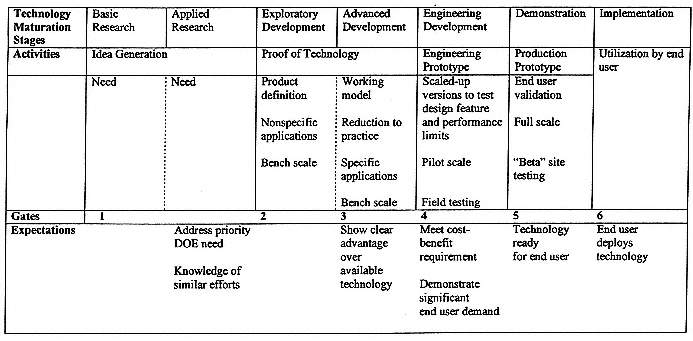
Implementation of a "gate" process for project decision making (see Figure 5-2). OST established a gate review system to address the problem of lack of clear decision points for determining when to continue or terminate project funding. The six gates, as shown in Figure 5-2, represent points at which funding and other decisions are made. They are based on the investment decision model presented in Winning at New Products (Cooper, 1993). The model depicts technology development as encompassing seven stages, from basic research (stage 1) through commercialization (stage 7). OST's six "gates" represent the passage from one of Cooper's stages to the next.
-
Tracking of cost estimates and deployment schedules for each project. OST established an automated central tracking system with information on schedules and costs for OST-funded projects. This system was designed in response to a GAO report indicating that OST lacked basic management tools, including a tracking system (Rezendes, 1997).
-
Preparation of a comprehensive list of remediation technology development projects within DOE. OST developed a list to identify overlapping efforts that could be cut or combined to reduce duplication. For example, a GAO (1996a) review of OST indicated that in 1996, DOE was fully funding studies of vitrification systems at 52 sites across the country, with little
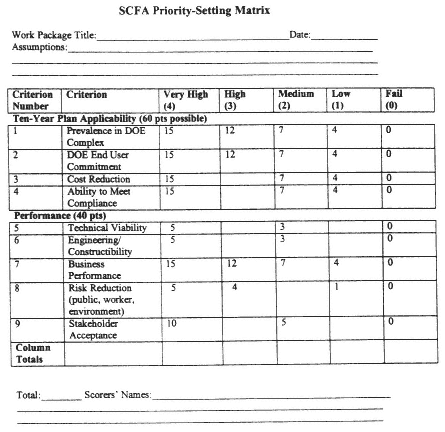
Figure 5-1
SCFA matrix used to rank proposals submitted for funding.
-
coordination among the projects; a year later, as part of the effort to reduce duplication, OST cut the number of such studies to five (GAO, 1996a; Rezendes, 1997).
-
Institution of an independent peer review process. OST has instituted a peer review process, overseen by the American Society of Mechanical Engineers, to provide independent evaluations of select technology development projects. However, this program is still evolving, and peer review is not yet an integral part of every technology development project (NRC, 1997b).
OST has also instituted programs for decreasing regulatory resistance to the use of innovative remediation technologies. Working with the Southern States Energy Board, OST has organized a series of technology
demonstrations in which regulators are directly involved in the planning (Nemeth et al., 1997). For each such demonstration, a team is appointed to establish remediation goals and define the market for the technology. The team consists of federal regulators, state regulators, technology developers, representatives of DOE sites, financiers, members of the public, a U.S. Army Corps of Engineers innovative technology advocate, and representatives of the Southern States Energy Board and the Western Governors' Association. At the end of the demonstration, the involved state and federal regulators sign a statement verifying the technology's performance, if it was successful. The verification statement can then be used to reduce future regulatory approval requirements or to satisfy potential users that the technology will perform as advertised.
In addition to these efforts by OST, DOE has undertaken contracting reforms and developed financial incentives designed in part to accelerate cleanup of contaminated sites. Providing incentives for rapid cleanup would, in turn, increase demand for new cost-effective remediation technologies. Beginning in 1994, DOE instituted the "Contract Reform Initiative" to address inefficiencies resulting from the department's historical contracting practices. Historically, a single contractor at each DOE installation carried out most environmental cleanup and other operations under a cost-reimbursible contract in which the contractor not only was paid for the expenses of running the installation but also was awarded a profit. This type of contracting arrangement not only lacked specific incentives for completing major site cleanup tasks but also created hidden disincentives for completing the cleanups because contractors would lose their jobs once the cleanup was complete. Under the Contract Reform Initiative, DOE has developed a new type of contracting procedure known as the performance-based management contract. This type of contract ties the contractor's profit to achieving specific milestones related to DOE's overall goals for completing site cleanup. Under the reform initiative, DOE is also increasing the use of competitive bidding in awarding contracts. In addition, at some installations, DOE is using an approach known as "management and integration" contracting, in which cleanup work is performed by a team of subcontractors overseen by a prime contractor. Another important component of the new contracting approach is the increasing use of fixed-price contracts. These and other reform measures are designed to create market pressure to complete site cleanup.
In fiscal year 1998, the Office of Environmental Management also established a new financial awards program to create incentives for using innovative remediation technologies. The program, known as the Accelerated Site Technology Deployment Program, provides funds for the first site that uses an innovative technology. The program is not designed to support demonstrations of new technologies but rather to support first-
time, full-scale applications of technologies that have undergone sufficient pilot testing to generate cost and performance data (NRC, in review). Under the program, managers of individual DOE site cleanup projects can apply for funds for first-time use of an innovative technology provided they can show the level of cost savings expected in comparison to application of the baseline technology. Funding for this initiative was $25 million for fiscal year 1998 (NRC, in review). Table 5-4 lists projects funded under the Accelerated Site Technology Deployment Program in 1998.
DEPLOYMENT OF INNOVATIVE REMEDIATION TECHNOLOGIES AT DOE INSTALLATIONS
According to data from SCFA, 146 deployments of 56 innovative technologies developed by SCFA had occurred as of January 14, 1998 (see Appendix B). This large number appears to be a dramatic improvement since 1995. However, whether this signifies a major step forward in deploying SCFA-tested and-developed innovative technologies is uncertain, primarily for four reasons.
First, site data from DOE's Office of Environmental Restoration do not confirm that a large number of innovative technologies are being used for full-scale cleanup of groundwater and soil at DOE installations. As indicated in Tables 5-5 and 5-6, the range of technologies being used in actual cleanup projects at DOE installations as reported by DOE remediation project managers in the summer of 1997 is quite limited and does not include many of SCFA's innovations. For example, the predominant remedies for groundwater as reported by project managers are pump-and-treat systems (used in 41 percent of the projects), natural attenuation (used in 22 percent), and capping and containment (used in 19 percent). These data do not reflect the use of innovative site characterization technologies, because site characterization technology use is not reported to the Office of Environmental Restoration. The data are also about a year less current than the SCFA deployment list. Nonetheless, the data appear to indicate that the range of technologies being used for groundwater and soil cleanup is still relatively limited. It is doubtful that there has been a surge in use of innovative remediation technologies since these data were compiled, given the long period required for remedy selection at most sites.
Second, SCFA's list of innovative technology deployments to date indicates a lack of multisite applications for most technologies (see Table 5-7). Although 29 (52 percent) of the 56 technologies have been deployed at more than one facility, only 10 (18 percent) have been deployed at more than two facilities. Ideally, to save money and advance cleanup progress,
Table 5-4 Projects Funded Under the Accelerated Site Technology Deployment Program in Fiscal Year 1998
|
Project Title and Location |
Description |
|
Alternative landfill cover system; deployment of the mixed waste landfill, Sandia National Laboratories |
An evapotranspiration cover, in lieu of a more expensive RCRA cover, combined with an innovative fiber-optic monitoring system that eliminates the need for long-term groundwater monitoring will be deployed on an actual radioactive mixed-waste landfill. |
|
Decontamination and volume reduction system, Albuquerque |
A combination of technologies will be used to decontaminate and reduce the volume of transuranic-contaminated gloveboxes in storage. |
|
Deployment of a permeable reactive treatment wall for radionuclides and metals, Albuquerque |
This treatment wall will contain a barrier impermeable to certain radioactive materials and a permeable ''gate" that will allow other materials to pass through. |
|
In-well air stripping technology to remediate an off-site organic plume, Brookhaven National Laboratory |
In-well air stripping will remove VOCs from groundwater in situ through mass transfer to the air phase in the well. |
|
Development of an integrated technology suite for cost-effectively delineating contamination in support of soil remediation actions, Fernald Environmental Management Project |
Technologies will improve detection and location of gamma-emitting radionuclides in surface soils and provide data analysis for decision support. |
|
Integrated decontamination and decommissioning (combined with) decontamination and decommissioning of 29 structures at Idaho and Fernald |
A suite of technologies that have been successfully demonstrated at previous D&D large-scale demonstration projects will be deployed. |
|
Contaminated soil cleanup using the ACT*DE*CONSM process, Ohio (Mound) |
The ACT*DE*CON process will be used for cleanup of soils or sediments contaminated with radionuclides and heavy metals that must be transported and disposed. |
|
Project Title and Location |
Description, |
|
Segmented gate system (combined with) integrated soil processing, Ohio (Mound) and Idaho |
The segmented gate system will mechanically separate radioactively contaminated soil into a clean stream and a contaminated stream. |
|
Improved systems for tank sludge retrieval, conditioning, and transfer, Oak Ridge |
Technologies developed by private industry participants will be used to enhance mixing and mobilization of sludge from various tank configurations and subsequently transfer it to intermediate storage tanks and/or treatment facilities. |
|
Electrochemical ion exchange for waste reduction (combined with) modular evaporator system for waste volume reduction in tanks, Oak Ridge |
A modular single-stage subatmospheric system will concentrate liquid radioactive waste prior to immobilization for disposal. Also, a proposed highly selective crystalline silicotitanate ionexchange process will remove radiological contaminants. |
|
Slurry monitoring, Richland |
New instruments will reduce the probability of pipeline blockage due to solids segregation, crystallization, and gelation, and therefore unnecessary line replacement costs. |
|
Enhanced in situ decontamination and size reduction of gloveboxes, Rocky Flats |
Combination of in situ technologies that provides for the radiological characterization, decontamination, and site reduction of transuranic-contaminated materials. |
|
Fluidic sampler, Savannah River |
Two fluidic samplers will be deployed to obtain accurate and representative samples from sludge feed tanks containing high level waste. |
|
NOTE: VOC = volatile organic compound. SOURCE: Accelerated Site Technology Deployment program, http://wastenot.inel.gov/tdi. |
|
Table 5-5 Technologies Used to Clean up Groundwater at DOE Projects
Table 5-6 Technologies Used to Clean up Soil at DOE Projects
Table 5-7 SCFA Technologies Deployed at More Than One DOE Facility
|
Technology |
Number of Facilities Where Deployed |
Total Number of Deployments at DOE Sites |
|
Six-phase soil heating |
2 |
2 |
|
In-well vapor stripping (recirculating wells) |
3 |
4 |
|
Dig-face characterization |
2 |
3 |
|
Passive reactive barrier |
2 |
2 |
|
Thermal enhanced vapor extraction system |
3 |
4 |
|
SEAMIST |
4 |
5 |
|
Deep-soil mixing |
2 |
3 |
|
Resonant sonic drilling |
4 |
7 |
|
Passive SVE |
3 |
4 |
|
In situ permeable flow sensor |
2 |
2 |
|
Cryogenic cutting |
2 |
2 |
|
In situ anaerobic bioremediation |
2 |
3 |
|
In situ chemical oxidation (soils) |
2 |
4 |
|
Adsorption or desorption relative to in situ bioremediation of chlorinated solvents |
2 |
2 |
|
Colloidal borescope |
2 |
3 |
|
Fiber-optic probe for TCE in groundwater |
2 |
3 |
|
Heavyweight cone penetrometer |
3 |
10 |
|
Rapid transuranic monitoring laboratory |
2 |
3 |
|
Advanced in situ moisture logging |
2 |
3 |
|
Field screening laboratory system |
2 |
2 |
|
Remote excavation system |
2 |
2 |
|
Absorptive stripping voltammetry |
2 |
3 |
|
Cross-well seismic imaging |
2 |
4 |
|
Long-range alpha detector |
3 |
4 |
|
Cross-hole compressional and shear wave seismic tomography |
2 |
2 |
|
Directional drilling |
5 |
8 |
|
Electromagnetic geophysical surveyor |
3 |
4 |
|
Micropurging of wells |
4 |
5 |
|
Rapid geophysical surveyor |
2 |
2 |
|
Number deployed at > 1 facility |
29 |
|
|
Number deployed at > 2 facilities |
10 |
|
|
NOTE: As explained in Chapter 1, ''facility" refers to an entire installation, such as Hanford or Los Alamos. "Site" refers to an individual contaminated area, such as a plume of contaminants in groundwater within a facility. One facility may contain many contaminated sites. TCE = trichloroethylene. SOURCE: Data provided by SCFA (see Appendix B). |
||
considerable technology development work should be directed at systems that can be adopted across the weapons complex.2
Third, fewer than one-third (18 of 56) of the technologies on SCFA's deployment list address the most critical need related to subsurface cleanup: in situ remediation of contaminants in groundwater and soil. The remaining technologies are for site characterization and monitoring. DOE managers should evaluate whether the development of in situ remediation technologies is being given appropriate priority.
Fourth, many of the listed remediation technologies were developed outside DOE. Technology development occurs in a variety of institutions. For example, passive reactive barriers were developed by researchers at the University of Waterloo; in situ bioremediation was developed largely by the petroleum industry in 1972; and in situ chemical oxidation was developed by private companies that hold patents on this technology (Brown et al., 1993; NRC, 1997a). Many technology projects, such as development of the Lasagna® process by a government-industry consortium, are collaborative initiatives. Work on many of the technologies on the deployment list in Appendix B (including reactive barriers, in situ bioremediation, and in situ chemical oxidation) occurred in the private sector or in other agencies, as well as in SCFA. Although SCFA should be commended for pursuing collaborative technology development projects and for adapting technologies to DOE problems because these activities can leverage limited financial resources, determining SCFA's role in furthering the development of these systems is difficult. Further, the inclusion of these technologies within the SCFA deployment list suggest a tendency for SCFA to "reinvent" existing technologies rather than support existing innovators. The GAO reached a similar conclusion and noted that "OST staff are not always well-informed about technologies developed by organizations other than OST" (GAO, 1998b). This tendency to "reinvent the wheel'' results in a significant amount of research within DOE that closely parallels previous external research. Replication of external research results in the inefficient use of resources and potentially in infringement of intellectual property rights, creating a lack of good will between DOE and technology developers. In addition, it demonstrates a lack of sufficient effort within DOE to enlist the participation of leaders in the field of remediation technology development.
The data provided by SCFA are thus not yet sufficient to assess whether OST's management reforms have led to SCFA technologies hav-
ing a greater impact on the cleanup of DOE facilities. The GAO found similar problems with OST innovative technology deployment data in its 1998 review. According to GAO's report, "GAO found many errors in the office's [OST's] deployment data.... The Office of Science and Technology overstated its deployment information."
EFFECTIVENESS OF REFORMS IN PROMOTING DEPLOYMENTS
What effect the OST and Office of Environmental Management reforms and initiatives will have on innovative remediation technology deployment at DOE sites in the near future is uncertain. The steep cuts in SCFA's budget present a critical obstacle to promoting deployment of SCFA technologies. As described in Chapter 1, the SCFA budget has decreased from a high of $82.1 million in 1994 to approximately $10 million in fiscal year 1998 (after discounting congressional earmarks). A $10 million budget is insufficient to support the types of large-scale field demonstrations necessary to advance the use of innovative technologies. Further, because of these budget cuts, the SCFA program has been fully mortgaged since 1996 (Baum, 1998ab), meaning that the full budget is used to support multiyear projects that were slated for funding before SCFA was formed. In 1998, SCFA carried out the formal process of soliciting needs statements from the STCGs, categorizing these into work packages, and prioritizing projects, but it was able to apply this process only to existing projects. SCFA solicited proposals from the national laboratory personnel already funded under the program as if they were competing for reentry into the program (Baum, 1998a,b). Whether SCFA can succeed in implementing program reforms and increasing its influence on the effectiveness of the DOE cleanup program with its current budget is unclear.
Although SCFA's budget has been cut, some have looked to the Accelerated Site Technology Deployment Program to increase the deployment of SCFA-developed innovative technologies. However, this program also might not have a sufficient budget to succeed. The amount of money provided ($25 million), although greater than the SCFA budget, is approximately equal to the average cost of cleaning up one CERCLA site. These funds will be divided among many sites. The amount each site receives may not be significant enough to encourage contractors to risk deploying an innovative technology unless performance of the innovative technology is guaranteed (NRC, 1997a). Further, whether the technology will be deployed a second time, given the fact that only the first user receives funding for the deployment, is uncertain (Rezendes, 1997).
Whether DOE's broad environmental contracting reforms will succeed and will increase the likelihood of SCFA technology deployment is
also unclear. A 1997 assessment of DOE's contract reform measures by the DOE Office of the Inspector General identified major problems with the reform effort, including failure to link DOE's overall cleanup goals to specific financial incentives being granted under the new contracts and lack of guidance from headquarters on appropriate fee structures for different types of incentives (DOE, 1997a). A more recent review by the GAO indicated that DOE is working to address these problems but that it is too early to assess the overall effectiveness of the contract reform efforts (GAO, 1998a).
Further, under the fixed-price contracting approach being implemented as one part of the reform effort, DOE officials are removed from the technology selection process, making the link between OST and site decision makers even more tenuous. In the past, GAO has identified the lack of involvement of OST's technology developers in site cleanup technology decision making as a shortcoming (GAO, 1994a). In contrast, industry in general has found that a successful approach in terms of risk reduction and cost control is to provide a central organization, which includes technology developers, with the major role of establishing technologies and expenditures for remediation at all sites. This strategy allows risks to be prioritized among all sites, the highest-risk sites to be cleaned first, and the most cost-efficient technology to be applied. SCFA's efforts to involve technology end users in its program also have achieved limited success.
Although end users are now theoretically involved in setting SCFA programs direction through the STCG's, according to GAO the actual influence of these end users in OST's program as a whole has been quite limited. GAO concluded that a "rigorous application" of requirements to involve end users at various points in deciding whether to fund specific technology projects "might indicate that some projects should be terminated for reasons such as the lack of an identified customer" (GAO, 1998b). Further, according to GAO, end users still are not sufficiently involved in planning individual technology development projects, and as a result, end users report that OST (and SCFA) technologies are too generic to meet the needs of individual sites.
In summary, OST and SCFA have taken important steps to reform their programs, but the degree to which SCFA technologies are being deployed at full scale, and whether the reforms will succeed in increasing deployments, are unclear. More rapid progress in transferring SCFA technologies to full-scale field operations depends in large part on improving site contracting mechanisms in the DOE environmental restoration program as a whole, creating incentives for using innovative technologies, improving remediation technology, improving decision-making procedures, and providing for greater involvement of technology end
users in setting SCFA's program direction. SCFA's future progress depends, as well, on the adequacy of its budget.
A recent cost savings review by the U.S. Army Corps of Engineers (1997) concluded that substantial cost savings, approximating $20 billion, can be realized from OST technologies, including 12 that were developed or enhanced with SCFA funding.3 The Corps of Engineers concluded that standardized cost and performance reports are needed and that savings can be realized only through aggressive deployment of technologies. Clearly, the recognition of and demand for SCFA technologies to address problems that currently cannot be solved or cannot be solved in reasonable time frames or at reasonable cost have to be increased.
SCFA TECHNOLOGY DEVELOPMENT ACHIEVEMENTS
Despite the difficulties SCFA has faced in transferring its technologies to full-scale field operations, some SCFA technologies have shown considerable promise. This section highlights several successful SCFA projects to develop technologies for cleanup of metals, radionuclides, and DNAPLs in groundwater and soil. The committee used the technology reviews in Chapters 3 and 4 and information presented by SCFA technology developers at committee meetings to identify projects that have resulted in successful field demonstrations and full-scale applications. The committee did not analyze in detail all of SCFA's past technology development projects or attempt to rate them on a precise scale of success. Rather, these examples are intended to provide models for SCFA to follow in its future work and to show that this program has, in fact, led to some positive results.
Various metrics can be considered when attempting to assess the relative success of a particular technology or combination of technologies. Indices of success can range from the advancement of science and technology, which represents success at the level of proving fundamental principles, to timeliness and cost-effectiveness in reaching desired cleanup end points, which represents success in the application of demonstrated principles. As indicated in Box 5-1 (see also Figure 5-3), it is possible to identify the essential features of successful projects in order to provide
|
BOX 5-1 Learning From Successful Projects The dig-face characterization project led to the development of a multisensor apparatus to allow real-time monitoring to determine the extent of contamination in a site being excavated, thereby guiding the program of excavation. The characterization system consists of on-site hardware for collecting detailed information on the changing chemical, radiological, and physical conditions in the subsurface soil during the entire course of a hazardous site excavation (see Josten et al., 1995). The essential features of the project that made it a success and that can be broadly applied include the following:
|
guidance for the planning, conduct, and assessment of other projects. In assessing SCFA projects, the factors the committee considered most important were whether (1) the project responded to a recognized and well-defined contamination problem identified by DOE field personnel; (2) initiation of the project was timely in responding to this problem; (3) laboratory and pilot-scale assessments were conducted to refine the technology; (4) the project resulted in well-defined design and operation parameters for the technology; (5) the technology resulted in cost savings and has the potential for multiple applications; (6) the project was independently peer reviewed; and (7) the project or technology met or is likely to meet the concerns of DOE site remediation managers, environmental regulators, and concerned members of the public. The committee also considered the availability and uniqueness of the technology, its stage of deployment, and the degree of interagency collaboration in technology development. The committee did not devise objective scales for evaluating technologies according to these criteria. Rather, it evaluated SCFA projects subjectively with these criteria in mind and selected by consensus examples that satisfy several of the criteria.
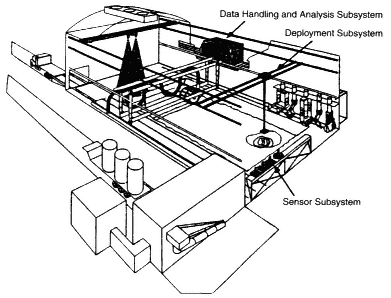
Figure 5-3
Dig-face characterization system. Source: Josten et al., 1995.
Representative Successful Technologies for Remediation of Metals and Radionuclides
Representative successful SCFA achievements in developing technologies for remediation of metals and radionuclides include in situ redox manipulation systems for chromium attenuation at Hanford, bottom barriers for waste containment at the Idaho National Engineering and Environmental Laboratory (INEEL), and the site characterization and analysis penetrometer system (SCAPS) for characterization of subsurface environments in a wide range of settings.
In Situ Redox Manipulation
SCFA has provided funding for the creation and operation of a permeable treatment zone for remediation of Cr(VI) in the contaminated aquifer at Hanford by in situ redox manipulation (ISRM) (see Box 5-2 and Figure 5-4). The demonstration of this system at Hanford has shown that this process is relatively inexpensive: it is comparable in cost to an impermeable barrier and is able to provide an overall cost savings of approximately 60 percent compared to a pump-and-treat system for the preven-
|
BOX 5-2 In Situ Redox Manipulation for Remediation of Chromium-Contaminated Groundwater at Hanford, Washington Contamination Source. Hexavalent chromium, Cr(VI), in the form of sodium dichromate was used as an anticorrosion agent in the cooling water for the nine nuclear reactors at Hanford. Large volumes of reactor coolant water, along with liquid wastes from other reactor operations that also contained significant quantities of Cr(VI), were discharged to retention basins for ultimate disposal in the Columbia River through outfall pipelines. Discharge of these liquids created contaminant plumes in groundwater that are flowing toward and entering the Columbia River. Procedure. The ISRM technology, being developed by Hanford researchers with funding from SCFA, is based on creation of a permeable subsurface treatment zone for remediating redox-sensitive contaminants in groundwater. The treatment zone is created downgradient of the contaminant plume or contaminant source through the reduction of ferric iron, Fe(III), to ferrous iron, Fe(II), within the silt and clay minerals of the aquifer sediments. Comparative laboratory-scale batch studies with sulfite, thiosulfate, hydroxylamine, and dithionite under anoxic conditions established that dithionite was the most effective reducing agent for the structural ferric iron found in the silt and clay fractions of Hanford sediments. Similar experiments were used to identify a pH buffer for use with dithionite. The reagent used is 0.4 M K2CO3 + 0.04 M KHCO3 + 0.1 M Na2S2O4. Carbonate was selected for the buffer because it has no toxic properties. The permeable treatment zone is created using a push-pull technique. The reagent, buffers, and tracers are pumped into the aquifer (injection phase), allowed to react for a period determined by laboratory and field demonstration experiments (reaction-drift phase), and then pumped back out (withdrawal phase). During the reaction-drift phase, the dithionite ion dissociates into sulfoxyl radicals that either reduce ferric iron to ferrous iron or disproportionate into thiosulfate and bisulfate. After the aquifer sediments are reduced, soluble reagents and reaction products are removed. The reduced iron in the soil acts as a permeable treatment barrier by reducing chromate to insoluble chromium hydroxide. The lifetime of the permeable treatment barrier depends on the pollutant concentration, but the primary driver for Fe(II) depletion is the concentration of oxygen in groundwater. Because of the proximity of the site location to the Columbia River, a contingency plan has been developed in the event that dissolved oxygen concentrations are severely reduced in the groundwater entering the river. The contingency plan involves pumping groundwater from the injection-withdrawal wells and the use of downgradient monitoring wells to rapidly reoxygenate the reduced zone. Pumping will stop once the dissolved oxygen concentrations at the site are back to preemplacement levels. Cost Effectiveness. An independent Los Alamos National Laboratory assessment concluded that ISRM costs 62 percent less than a pump-and-treat system for prevention of chromium movement in an unconfined aquifer under the small-scale conditions considered. Project History. In addition to laboratory-scale demonstrations, three field experiments have been conducted: (1) a full-scale bromide tracer experiment; (2) a small-scale "mini" dithionite injection-withdrawal experiment; and (3) a full-scale dithionite injection-withdrawal experiment. The permeable treatment barrier is now slated for full-scale use in cleanup of Cr(VI) at Hanford. |
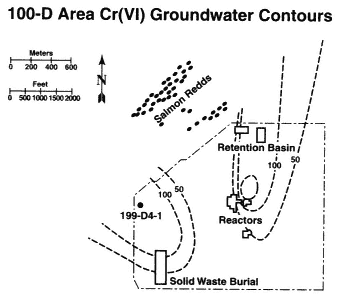
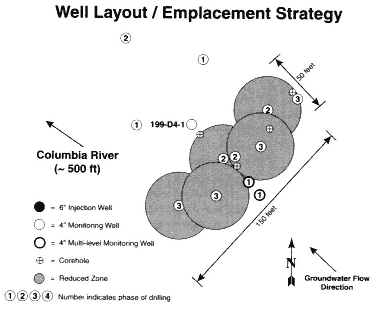
tion of chromium migration in an uncontrolled aquifer, with a long-term prognosis of additional cost savings in the future (Cummings and Booth, 1996; Civil Engineering, 1998). In the demonstration, analysis of water withdrawn downgradient of the treatment zone indicated that all trace metals, including arsenic, lead, and chromium, were below the 0.1-ppm (part per million) detection limit. Because this is an in situ technique, it reduces the risk of exposure to contamination and eliminates the need for permanent external pumping and treatment systems.
Buried Waste Containment System
Based on needs identified by DOE field site managers, SCFA has recognized the need for technology that would allow placement of a continuous barrier under and around buried wastes and has provided funding for the development of such barriers With support from SCFA, INEEL is developing the buried waste containment system (BWCS), which places a continuous, seamless barrier under and around buried waste (see Figure 5-5). This system is applicable to buried wastes containing metals and radionuclides, as well as other types of contaminants. Using an innovative, positive-displacement grouting technique, the system excavates the material under and around the buried waste and simultaneously replaces it with a barrier material to contain the waste. The BWCS design includes equipment to verify and monitor barrier integrity, both during placement and over the long term.
The BWCS was jointly developed by INEEL and R. A. Hanson Company (RAHCO) via a cooperative research and development agreement (CRADA), with the intent to develop a licensing agreement with RAHCO International. Results include a conceptual design, preliminary plan for bench-scale testing, identification of verification and monitoring technologies, and preliminary barrier material content. Two patents have been filed, and a life-cycle development plan has been written. The ability of this technology to address a common problem in the DOE complex and the availability of a contractor to provide the technology create opportunities to pursue its deployment at other DOE sites at which implementation of other technologies, such as excavation, is not feasible.
Site Characterization and Analysis Penetrometer System
Recognizing the need at DOE sites for technologies that can allow real-time on-site analysis of the subsurface, SCFA has contributed funds toward the development of SCAPS by a government consortium. SCAPS allows rapid characterization of subsurface environments using push probes for investigation and sampling (see Figure 5-6). It provides in situ
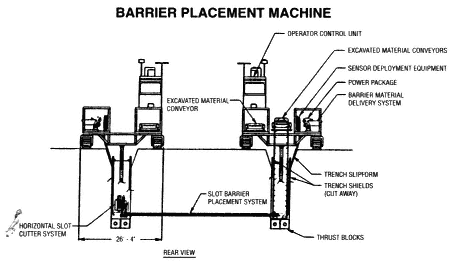
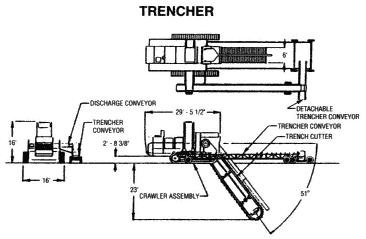
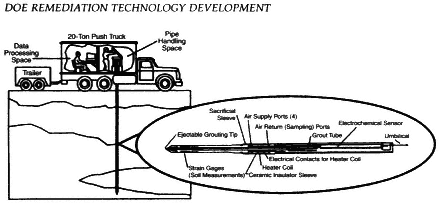
Figure 5-6
Site characterization and analysis penetrometer system, developed with partial support from SCFA.
Source: U.S. Army Corps of Engineers Waterways Experiment Station, undated.
measurements of geophysical and physical properties of soils and stratigraphic units, as well as contaminant concentrations, at a site without extensive use of drills and monitoring wells. SCAPS can also collect soil and water data to better define zones of contamination, enabling more accurate placement of remediation systems and monitoring wells. It applies to sites containing a wide variety of contaminants, including metals and radionuclides.
Originally developed by the Waterways Experiment Station with sponsorship from the U.S. Army Environmental Center and later further developed in collaboration with the Navy and DOE, SCAPS consists of a 20-ton truck equipped to force a cone penetrometer sensor probe into the ground, a data acquisition-processing room, and a hydraulic ram-rod handling room. SCAPS probes have multisensor capabilities with an on-board system providing real-time data acquisition, processing, and storage; an electronic signal processing equipment package; and a networked postprocessing computer system for three-dimensional visualization of soil stratigraphy and contaminant plumes. A mobile laboratory truck, equipped with a field-portable ion trap mass spectrometer and/or gas chromatograph, accompanies the SCAPS truck for real-time on-site analysis of analyte vapor samples collected by SCAPS in situ samplers. A variety of sensors and samplers can be deployed with SCAPS to detect a range of contaminants, from metals and radionuclides to volatile organic compounds.
SCAPS technology is being used by the Army Corps of Engineers, Department of Defense, other government agencies, and the private sector, as well as by DOE, through licensing and CRADA agreements. Use of SCAPS site characterization and monitoring technologies typically pro-
vides cost savings of 25 to 50 percent per site compared to conventional drilling and sampling techniques (Ballard and Cullinane, 1997).
Representative Successful Technologies for Remediation of DNAPLs
Representative successful SCFA projects for developing dense non-aqueous-phase liquid (DNAPL) remediation technologies include dynamic underground stripping (DUS), thermally enhanced vapor extraction (TEVES), and Lasagna®.
Dynamic Underground Stripping
DUS is technically a highly effective system for removing free-phase DNAPL. It addresses a commonly identified problem in the DOE complex for which cost-effective solutions are extremely limited. The DUS system, which is being developed with partial support from SCFA, combines three technologies:
-
steam injection at the periphery of a contaminated area to drive contaminants to centrally located vacuum extraction locations;
-
electrical heating of less permeable soils; and
-
underground imaging (using electrical resistance tomography) to delineate heated areas.
Surrounding an underground plume with injection wells and electrically heating clay-rich soil layers, while sandy layers, are flooded with steam, volatilize contaminants, which the steam then carries to extraction wells. The steam is condensed, extracted, and treated above ground. Water condensed from the steam is reinjected underground after the contaminants are removed. The process is capable of removing free DNAPL product. Time savings of an order of magnitude, which translate into considerable cost savings, are considered possible compared to pump-and-treat technology for a broad range of DNAPL contaminants (Aines, 1997).
The original demonstration of DUS, conducted in 1992–1993 by Lawrence Livermore National Laboratory (LLNL), evaluated the effectiveness of this technology for cleanup of a gasoline spill site (see Box 5-3). LLNL researchers compared results to those from a pump-and-treat system and determined that the potential cost savings of applying DUS, instead of a pump-and-treat system, at the same site in the future would be $4 million, when benefits of lessons learned and reduced costs for deployment without research-oriented activities are taken into account
|
BOX 5-3 Dynamic Underground Stripping for Remediation of Gasoline-Contaminated Groundwater at LLNL Contamination Source. An estimated 65 m3 (17,000 gallons) of leaded gasoline leaked from underground storage tanks between 1952 and 1979 at LLNL, at a site now called the Gasoline Spill Area. Procedure. DUS combines steam injection and electrical heating to drive nonaqueous-phase liquid contaminants from the subsurface. In this full-scale demonstration, six wells combining steam injection and electrical heating, three wells using electrical heating alone, and one vacuum extraction system were used to clean up the fuel hydrocarbons. Well characteristics were as follows:
Extracted water was processed through a heat exchanger, oil-water separators, filters, ultraviolet light and hydrogen peroxide treatment units, air strippers, and granular activated carbon filters. Extracted vapors were processed through a heat exchanger, demister, and internal combustion engine. Results. The demonstration resulted in the removal of more than 29 m3 (7,600 gallons) of gasoline, mostly in the vapor stream rather than in the extracted groundwater. Cost Effectiveness. Researchers estimated that potential cost savings from the use of DUS, rather than a pump-and-treat system, for full-scale treatment of this site are $4 million. Project History. The demonstration began in November 1992 and ended in December 1993. SOURCE: Federal Remediation Technologies Roundtable, 1995. |
(Federal Remediation Technologies Roundtable, 1997). Overall program costs for the field demonstration were $1.7 million for before-treatment costs and $5.4 million for treatment activities.
The first full-scale commercial DUS application is ongoing at Southern California Edison's Visalia Pole Yard. The project involves a partnership among LLNL, Southern California Edison, and SteamTech Environmental Services as the licensee. The site is contaminated with creosote. The use of DUS is expected to allow site closure in five years at a cost savings to the company of $30 million compared with a conventional pump-and-treat remedy (Aines, 1997).
Thermally Enhanced Vapor Extraction
TEVES is one of the technology development projects that SCFA is supporting to address the difficulty of removing contaminants with low volatility from low-permeability soils. The technology couples soil heating by resistive and dielectric (radio-frequency) methods with vacuum vapor extraction (see Figure 5-7). Although the use of electrical heating techniques for the recovery of volatile and semivolatile liquids from porous media is not new, the use of resistance heating for in situ recovery is more recent. In TEVES, three rows of electrodes are placed through a contaminated zone with the center electrodes connected to the energy input (excitor) and the two exterior rows serving as a grounding system to help contain the input energy to the treatment zone. Two wells providing for soil vapor extraction and also containing electrodes are installed as part of the excitor array. A vacuum blower and off-gas treatment system are provided for the removal of the heated soil contaminants.
A field demonstration at Sandia National Laboratories evaluated the application of TEVES on an old disposal pit containing a complex mixture of organic chemicals, oils, and containerized wastes (Sandia National Laboratories, undated). Process monitoring systems included automated vapor sampling and analysis of the extracted contaminants and subsurface pressure to monitor vapor capture in the treatment zone. Resistive heating for 30 days increased soil temperature to 83°C over the entire treatment volume. Contaminant concentration removal in the gas phase increased by 400 percent compared to extraction at ambient temperature. Subsequent cooling to ambient temperature and radio-frequency heating for 30 days raised the average soil temperature to 112°C, with a contaminant concentration increase of 500 to 1,000 percent over baseline.
TEVES also has been applied to pilot-scale cleanup of trichloroethylene (TCE) and a gasoline spill at LLNL (in 1992 and 1993). In the initial LLNL investigation, a three-phase 400-V power source heated a region about 7 m in diameter and 4 m thick with six electrodes placed symmetrically around the periphery, with an extraction well in the center of the zone. The electrical heating ran for 47 days. The temperature in the middle of the pattern increased from 19° to 44°C and to 55°C after heating was discontinued. Vapor TCE concentrations increased by a factor of two compared to stable rates obtained by vacuum extraction alone; vapor concentrations decreased rapidly near the end of electrical heating (Udell, undated).
Coinciding with the final phase of electrical heating at LLNL, Pacific Northwest Laboratories (PNL) used electrical heating at Savannah River to remove perchloroethylene (PCE), TCE, and trichloroethane (TCA) from low-permeability clays in the vadose zone (see Box 5-4). On initiation of
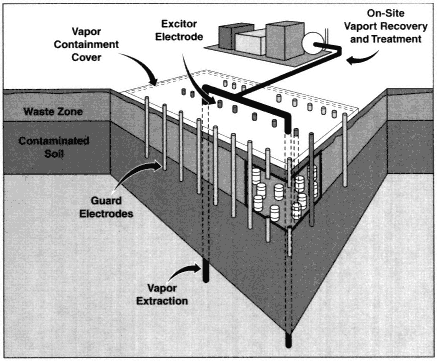
Figure 5-7
Thermal-enhanced vapor extraction system, being developed at-Sandia National Laboratories with funding from SCFA. Source: Sandia National Laboratories, undated.
the electrical heating, slight increases in contaminant recovery rates in the air leaving the treatment condenser, beyond those predicted for soil vapor extraction alone, were observed, although the location of the demonstration inside a larger contaminated zone obfuscated the vapor concentration results (Udell, undated). Soil concentrations decreased on average by more than 99 percent inside the pattern and more than 95 percent outside the pattern in heated zones (Udell, undated).
Based on reported results, electrical resistance heating combined with vapor extraction for in situ cleanup of DNAPL contaminants found both above and below the water table in low-permeability media is a promising technique. With proper design and operation, this remediation method is expected to be relatively rapid, robust, and predictable. The cost to remediate a site would depend on the required number of extraction and electrode wells, access to adequate line power, and fluid treatment requirements.
|
BOX 5-4 Electrical Heating for Treatment of Solvent-Contaminated Soil at the Savannah River Site Contamination Source. From 1958 until 1985, process wastewater from metal manufacturing operations at the Savannah River Site was disposed of in an unlined settling basin. The wastewater contained TCE, PCE, and TCA, which subsequently migrated to the soil and groundwater beneath the settling basins. Procedure. The heating system used in this demonstration was created by splitting conventional three-phase electricity into six separate phases, each of which was delivered to a different electrode. The six electrodes were set into a hexagonal pattern, 9.1 m (30 ft) in diameter. Moisture was maintained at the electrodes by adding 4 to 8 liters per hour (1 to 2 gallons per hour) of a 500-mg/liter sodium chloride solution to each electrode. A vapor extraction well was located in the center of the hexagon to withdraw contaminants volatilized by the application of heat. Power was applied to the electrodes for a total of 25 days. Results. After eight days of heating, the soil temperature rose to 100°C; the temperature stabilized at 100 to 110°C for the remaining 17 days of the demonstration. The system removed 180 kg of PCE and 23 kg of TCE. Median PCE removal was 99.9 percent. Researchers estimated that cleanup of the site using this method would require 5 years, compared to 50 years for soil vapor extraction alone. Operating difficulties that required adjustments of the system during the test period included drying out of the electrodes and shorting of the thermocouples. Cost Effectiveness. Researchers estimated the cost of this system at $110/m2 ($86/yd3) of soil treated, compared to an estimated cost of $753/m3 ($576/yd3) for soil vapor extraction. Project History. This demonstration was conducted from October 1993 through January 1994. SOURCE: Federal Remediation Technologies Roundtable, 1995. |
Lasagna® Soil Remediation
Another technology development project that SCFA is helping to support to address the problem of cleanup of low-permeability zones is the Lasagna® process. This system couples electrokinetics with in situ treatment zones. The process was developed by a consortium including Monsanto, E. I. DuPont de Nemours & Co., and General Electric, with participation from DOE and EPA. As indicated in Figure 5-8, the name ''Lasagna'' derives from the original concept of alternating horizontal layers of electrodes and treatment zones, although actual tests to date have used a vertical configuration. The process is especially suited to sites with low-permeability soils because electroosmosis can move water faster and more uniformly through such soils than hydraulic methods and because
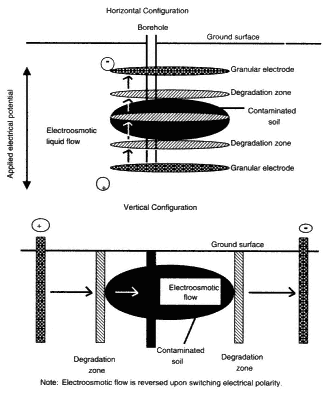
Figure 5-8
Lasagna® process, developed with partial support from SCFA.
Source: Ho, 1997.
electrokinetics can move contaminants in soil pore water to treatment zones, where they can be captured or transformed. Major features of the technology are
-
electrodes, energized by direct current, that heat the soil and cause water and soluble contaminants to move through the treatment layers;
-
treatment zones containing reagents that transform the soluble organic contaminants or adsorb contaminants for immobilization or subsequent removal and disposal; and
-
a water management system to recycle the water that accumulates at the cathode (high pH) back to the anode (low pH) for acid-base neutralization or, alternatively, periodic reversal of electrode polarity to reverse electroosmotic flow and neutralize pH.
|
BOX 5-5 Cleanup of TCE in Soil Using the Lasagna® Method at the Paducah Gaseous Diffusion Plant Contaminated Site Characteristics. The site used in this field demonstration was a 4.6 m × 3.0 m (15 ft × 10 ft) square plot at the Paducah Gaseous Diffusion Plant cylinder drop-test pad area. Soil at the site contained from less than 1 to 1,500 µg/g of TCE. The soil consists mostly of clay, with a porosity of 0.4. Procedure. Two 4.6-m (15 ft) vertical electrodes were emplaced 3.0 m (10 ft) apart to a depth of approximately 4.6 m (15 ft). Between the electrodes, four rows of wicks filled with granular activated carbon were emplaced approximately 0.6 m (2 ft) apart. Voltage was applied to the electrodes for 120 days at a current of 40 amperes and a voltage gradient of 0.45 to 0.35 V/cm. The induced flow rate averaged about 4 liters per hour, resulting in about three pore volumes of water being circulated during the four-month operating period. Results. TCE removal, based on soil core analyses, averaged 98.4 percent, with final TCE concentrations generally below 1 mg/kg soil. Higher residuals were found at the base of the test zone, indicating that contamination extended to greater depth. Approximately 50 percent of the estimated original mass of TCE was captured on the carbon wicks. Several core samples yielded calculated TCE concentrations in the pore water above the TCE solubility limit, suggesting that DNAPL was present at the start of the test. Residual values were low in these areas, suggesting that the process was effective where DNAPL was present. Cost-Effectiveness. Although no data were provided on the capital or operating costs for this demonstration, the industry-government consortium responsible for developing Lasagna® has estimated costs based on data from this demonstration, a later demonstration, and a paper study of a full-scale cleanup operation. Costs (excluding those for sampling and oversight) ranged from approximately $160/m 3 ($120/yd3) of soil under optimal conditions to nearly $340/m3 ($260/yd 3) under difficult conditions. These costs were determined based on a 18 m × 30 m (60 ft × 100 ft) treatment zone with a depth of either 4.6 m (15 ft) or 14 m (45 ft). Project History. This demonstration operated from January though May 1995 and was followed with a larger field test. SOURCES: Federal Remediation Technologies Roundtable, 1995; Monsanto Company, 1998. |
The first field test of Lasagna® was conducted in 1995 at DOE's Paducah Gaseous Diffusion Plant in Kentucky (see Box 5-5). Based on .promising results from this first test, a larger-scale field test was conducted at Paducah in 1996–1997 (Monsanto Company, 1998). This test used two electrodes, each 9.1 m (30 ft) long and 14 m (45 ft) deep, spaced 6.4 m (21 ft) apart. Three treatment zones containing zero-valent iron were installed at 2.1, 3.7, and 4.3 m (7, 12, and 14 ft) from the anode. The system was operated for one year, resulting in circulation of about 2.5
pore volumes of water. Soil temperature was raised to over 60°C throughout the test volume, reaching 80°C in the center. TCE removal efficiencies ranged from 41.5 to 99.7 percent. The technology performed as effectively in areas believed to contain DNAPL as in areas that did not.
The use of treatment zones for in situ destruction of contaminants gives Lasagna® a competitive advantage over other electrokinetic methods that extract contaminants for above ground treatment or disposal. The implementation cost for Lasagna® in the initial studies was estimated by DuPont at $100–$120/m3 ($80–$90/yd3) for remediation in one year and $65–$78/m3 ($50–$60/yd3) if three-year remediation was allowed (DOE, 1996). Comparable preliminary estimates for the second field test were $78–$92/m3 ($60–$70/yd3) (one year) and $52–$65/m3 ($40–$50/yd 3) (three years).4
CONCLUSIONS
DOE is not alone in facing resistance to the use of innovative technologies for cleaning up contaminated soil and groundwater at its installations. Use of innovative remediation technologies is also quite limited in private-sector cleanup of major contaminated sites. At both DOE installations and private-sector sites, a primary barrier to the use of innovative remediation technologies is lack of demand for such technologies by end users.
SCFA's potential for progress also has been limited considerably by its small and continually declining budget. The 1998 budget of approximately $10 million is less than half the cost of cleaning up one typical CERCLA site. DOE managers will have to reassess whether this budget adequately reflects the level of priority that should be given to developing new groundwater and soil remediation technologies.
The committee believes that SCFA has an important mission to fulfill in continuing development work on innovative remediation technologies, especially those for cleaning up metals, radionuclides, and DNAPLs. The technical solutions for these types of contamination problems are generally not adequate or are excessively costly. Key areas of concern for ensuring the success of future SCFA technology development efforts are as follows:
-
The limited SCFA budget. SCFA's budget has been reduced so much that it is unlikely SCFA can have a significant impact on the development of innovative remediation technologies. The budget was cut from a
-
1994 level of $82 million to a 1998 level of $15 million, which includes a $5 million congressional earmark, leaving an effective budget of $10 million.
-
The lack of incentives and cost control for site cleanup. Lack of sufficient incentives from DOE headquarters for prompt and cost-effective cleanup of DOE sites is a critical barrier to SCFA's successful development and deployment of innovative remediation technologies. Local control of technology selection does not provide the broad perspective needed for maximizing returns on limited DOE funds.
-
The high perceived risk of initial technology deployment. Contractors, as well as regulators, at DOE installations can be reluctant to accept the full consequences of failure should a potentially cost-effective innovative remediation technology fail to perform as predicted and thus will tend to choose conventional remediation technologies over innovative ones.
-
Insufficient data on full-scale deployment of SCFA technologies. Data on applications of innovative remediation technologies at DOE sites are currently inadequate to determine the full extent of the use of SCFA technologies in site cleanup.
-
Need for greater collaboration with leaders in the field of remediation technology development. SCFA has taken credit for the development of a number of technologies for which sufficient research and development efforts already had occurred in the private sector. This overlap suggests lack of a sufficient partnering strategy between SCFA and external technology developers. It also suggests lack of sufficient expertise among SCFA staff with respect to technologies developed outside SCFA.
-
Need for greater involvement of technology end users in the SCFA program. Despite SCFA's formation of STCGs, the field personnel who are the ultimate customers for SCFA's technologies still are not adequately involved in setting overall program direction and planning individual technology development projects.
-
Need for multisite applications of SCFA technologies. Fewer than one-third of SCFA technologies have been deployed at more than one facility, and fewer than 20 percent have been deployed at more than two facilities.
-
Need for more work on in situ remediation technologies. Fewer than one-third of SCFA technologies address the need for in situ remediation of contaminants in soil and groundwater. Development of in situ remediation technologies may not be receiving appropriate priority.
REFERENCES
Aines, R. 1997. Results from Visalia: Rapid thermal cleanup of dense nonaqueous-phase liquids. Presentation to the National Research Council Committee on Technologies for Cleanup of Subsurface Contaminants in the DOE Weapons Complex, Third Meeting, Livermore, Calif., December 15–17.
Ballard, J. H., and M. J. Cullinane, Jr. 1997. Tri-Service Site Characterization and Analysis Penetrometer System (SCAPS) Technology Verification and Transition. Vicksburg, Miss.: U.S. Army Corps of Engineer Waterways Experiment Station.
Baum, J. S. 1998a. SCFA processes for setting project funding priorities. Presentation to the National Research Council Committee on Technologies for Cleanup of Subsurface Contaminants in the DOE Weapons Complex, Fifth Meeting, Augusta, Ga. February 18–20.
Baum, J. S. 1998b. Written memorandum in answer to questions submitted by the Committee on Technologies for Cleanup of Subsurface Contaminants in the DOE Weapons Complex. Aitken, S.C.: DOE, Savannah River Site.
Brown, R. A., W. Mahaffey, and R. D. Norris. 1993. In situ bioremediation: The state of the practice. Pp. 121–135 in In Situ Bioremediation: When Does It Work? Washington, D.C.: National Academy Press.
Civil Engineering. 1998. Chemical barrier remediates groundwater. Civil Engineering (November):14.
Cooper, R. K. 1993. Winning at New Products. New York: Perseus Press.
Crocker, T. 1997. Buried waste containment system: Results of recent research. Presentation to the National Research Council Committee on Technologies for Cleanup of Subsurface Contaminants in the DOE Weapons Complex, Second Meeting, Woods Hole, Mass., September 22–23.
Cummings, M., and S. R. Booth. 1996. Cost Effectiveness of In Situ Redox Manipulation for Remediation of Chromium-Contaminated Groundwater. Los Alamos, N.M.: Los Alamos National Laboratory.
DOE (Department of Energy). 1996. Innovative Technology Summary Report: Lasagna® Soil Remediation. DOE/EM-0308. Washington, D.C.: DOE.
EPA (Environmental Protection Agency). 1996. Innovative Treatment Technologies: Annual Status Report (Eighth Edition). EPA-542-R-96-010. Washington, D.C.: EPA, Office of Solid Waste and Emergency Response.
EPA. 1997. Superfund Public Information System. Washington, D.C.: EPA, Office of Emergency and Remedial Response. http://www.epa.gov/Superfund.
Federal Remediation Technologies Roundtable. 1995. Abstracts of Remediation Case Studies. EPA-542-R-95-001. Washington, D.C.: Environmental Protection Agency.
Federal Remediation Technologies Roundtable. 1997. Abstracts of Remediation Case Studies. EPA-542-R-97-010. Washington, D.C.: Environmental Protection Agency.
Fruchter, J. S. 1997. In situ redox manipulation: Results of recent research. Presentation to the National Research Council Committee on Technologies for Cleanup of Subsurface Contaminants in the DOE Weapons Complex, Second Meeting, Woods Hole, Mass., September 22–23.
GAO (U.S. General Accounting Office). 1992. Cleanup Technology: Better Management for DOE's Technology Development Program. GAO/RCED-92-145. Washington, D.C.: GAO.
GAO. 1994a. Department of Energy: Management Changes Needed to Expand Use of Innovative Cleanup Technologies. GAO/RCED-94-205. Washington, D.C.: GAO.
GAO. 1994b. Nuclear Cleanup: Difficulties in Coordinating Activities Under Two Environmental Laws. GAO/RCED-95-66. Washington, D.C.: GAO.
GAO. 1996a. Energy Management: Technology Development Program Taking Action to Address Problems. GAO/RCED-96-184. Washington, D.C.: GAO.
GAO. 1996b. Superfund: How States Establish and Apply Environmental Standards When Cleaning up Sites. GAO/RCED-96-70. Washington, D.C.: GAO.
GAO. 1997. Department of Energy: Funding and Workforce Reduced, but Spending Remains Stable. GAO/RCED-97-96. Washington, D.C.: GAO.
GAO. 1998a. DOE: Alternative Financing and Contracting Strategies for Cleanup Projects. Washington, D.C.: GAO.
GAO. 1998b. Nuclear Waste: Further Actions Needed to Increase the Use of Innovative Cleanup Technologies. GAO/RCED-98-249. Washington, D.C.: GAO.
Guerrero, P. F. 1997. Federal hazardous waste sites: Opportunities for more cost-effective cleanups. Testimony before the Subcommittee on Superfund, Waste Control, and Risk Assessment, Committee on Environment and Public Works, U.S. Senate, May 9, 1995. Washington, D.C.: U.S. General Accounting Office.
Hill, G. R., C. H. Sink, and D. A. Lynn. 1997. Three Tiers and Six Gates: Implementing Streamlined Regulatory Review and Acceptance of Innovative Environmental Technologies Draft for Review. Norcross, Ga.: Southern States Energy Board.
Ho, S. V. 1997. Scale-up aspects of the Lasagna® process for in situ soil decontamination. Journal of Hazardous Materials 55:39–60.
Josten, N. E., R. J. Gehrke, and M. V. Carpenter. 1995. Dig-face Monitoring During Excavation of a Radioactive Plume at Mound Laboratory, Ohio. INEL-95/0633. Idaho Falls, Id.: Idaho National Engineering and Environmental Laboratory.
MacDonald, J. A. 1997. Hard times for innovative cleanup technology: What can be done to remove market barriers to new groundwater and soil remediation technologies? Environmental Science and Technology 31(12):560A–563A.
Mintz, J. 1997. Lockheed Martin mired in toxic mess cleanup: Company failing to fulfill government contract. Washington Post (October 5):A14.
Monsanto Company. 1998. Rapid Commercialization Initiative (RCI) Final Report for an Integrated In-Situ Remediation Technology (Lasagna®). Morgantown, W.V.: Morgan-town Energy Technology Center. http://www.rtdf.org/lastechp.htm.
NRC (National Research Council). 1997a. Innovations in Ground Water and Soil Cleanup: From Concept to Commercialization. Washington, D.C.: National Academy Press.
NRC. 1997b. Peer Review in the Department of Energy—Office of Science and Technology: Interim Report. Washington, D.C.: National Academy Press.
NRC. In review. Decision Making Related to the U.S. Department of Energy's Environmental Management Office of Science and Technology. Washington, D.C.: National Academy Press.
Nemeth, K. J., C. H. Sink, G. R. Hill, and A. Rappazzo. 1997. Strategy for regulatory review and acceptance of innovative environmental technology . Presented at X-Change 97: The Global D&D Marketplace, Miami, Fla., December 1–5.
Rezendes, V. S. 1997. Cleanup technology: DOE's program to develop new technologies for environmental cleanup. Testimony before the Subcommittee on Oversight and Investigations, Committee on Commerce, U.S. House of Representatives, May 7,1997. GAO/T-RCED-97-161. Washington, D.C.: U.S. General Accounting Office.
Sandia National Laboratories. Undated. Thermal Enhanced Vapor Extraction System. Albuquerque, N.M.: Sandia National Laboratories.
Udell, K. S. Undated. Thermal Treatment of Low Permeability Soils Using Electrical Resistance Heating. Berkeley, Calif.: Berkeley Environmental Restoration Center, College of Engineering, University of California.
U.S. Army Corps of Engineers. 1997. U.S. Army Corps of Engineers Peer Review of DOE Office of Science and Technology (EM-50) Cost Savings Calculations. Washington, D.C.: U.S. Army Corps of Engineers.
U.S. Army Corps of Engineers Waterways Experiment Station. Undated. Tri-Service Site Characterization and Analysis Penetrometer System (SCAPS): Technology Development/Transition. Vicksburg, Miss.: Waterways Experiment Station.


