
Introduction
PURPOSE OF THIS REPORT
The purpose of this report is to help those responsible for curriculum decisions in school districts to design coherent mathematics and science curriculum programs. Coherence, as it is used in this report, refers to the connectedness and sound development of ideas and skills presented to students within a year and over several years. To achieve coherence, a curriculum program must build new ideas and skills on earlier ones within lessons, from lesson to lesson, from unit to unit, and from year to year, while avoiding excessive repetition. As students construct and develop new ideas and skills, the concepts and processes they learn become richer and more complex.
In this report, a curriculum program2 is defined as the content of instruction and the ways in which it is structured, organized, balanced, and delivered in the classroom over an extended period of time (at least a few years). The components of a curriculum program addressed by or discussed in this report are goals, standards, a common vision, a curriculum framework, and instructional materials.3 (Teaching strategies and the classroom assessments associated with the use of instructional materials are also part of the program but will not be discussed in this report per se.)
All of the components of a curriculum program together are often referred to as the ''intended curriculum" of a school district and may differ from what is implemented by the teacher — the "implemented curriculum" — and what is learned by the students — the "achieved curriculum." (This report does not deal with implemented or achieved curricula but monitoring both can provide districts with important data to guide their process and results.)
Although curriculum programs, frameworks, or guidelines of some nature are in place in states and school
districts across the country, they typically do not span all the years of pre-college education and can lack coherence. Rather, local school districts as well as entities that can influence them, such as textbook companies, national curriculum development groups, and state educational agencies, tend to organize instruction around smaller "chunks" of schooling that may focus on the primary years (grades K-2), on grades 6-8, or on a particular highschool-level course. These smaller chunks of schooling are not necessarily designed to maximize the opportunities for all students to learn the content called for in standards. By contrast, this report emphasizes the importance of defining and coordinating curricula across the entire 13-year span — based on standards in use by local school districts — as a way to improve the quality of education. It describes the components of coherent curriculum programs based on mathematics or science standards or both and a process for designing such programs.4 Through the process, schools and school districts will be able to develop greater alignment between existing curriculum programs and content standards. In many districts, curriculum program design committees will be formed to perform the task.
CURRICULUM PROGRAMS—A NATIONAL PERSPECTIVE
TIMSS and Curriculum Programs in the U.S.
The Third International Mathematics and Science Study (TIMSS) compared the achievement of over 500,000 fourth-, eighth-, and twelfth-grade students in 41 countries. In addition to measuring achievement in mathematics and science, TIMSS measured the opportunities of students to learn mathematics and science. The data were obtained through classroom observations, videotaping of classroom teaching, teacher and student surveys, and an extensive review of each country's curricula. The results of the study indicated that the typical mathematics and science curricula in United States school systems are not well designed.
When fourth-grade student achievement data from TIMSS were analyzed, only one other country's students outperformed U.S. students in science. U.S. students also were above the international average in mathematics. However, when eighth-grade student
achievement data were analyzed, U.S. students scored below the international mean in mathematics and just above the mean in science. U.S. students slipped even farther at the twelfth grade, where, in science and mathematics general achievement, they outperformed only one other country's students.
There may be a number of reasons that the science assessment performance of the fourth-grade students in the United States was relatively high compared to those of students in other countries, including the fact many other countries do not include formal science instruction in the early grades; however, education analysts found it most startling that achievement appears to decline over time in the United States relative to other countries. Whatever the cause, it appears to be cumulative, contributing to the decrease in U.S. scores as schooling progresses through the grade levels.
One possible cause for this decrease is the nature of the curricula that many U.S. students experience over their 13 years in the schools (Schmidt et al., 1998). Most mathematics and science curricula in the United States lack coherence and focus, and that has caused some researchers associated with TIMSS to characterize the typical curriculum in the United States as a "mile wide and an inch deep" (Schmidt et al., 1997). When Schmidt compared the number of topics in U.S. textbooks and curriculum guides with those of other countries, he found that textbooks in the United States contained considerably more. As an example, Figure 1 displays data obtained in the analysis of science textbooks for three age levels. In addition, in the United States, fourth-grade mathematics and science textbooks contain an average of 530 and 397 pages, respectively, whereas in Japan, mathematics and science text
|
Country |
Number of Topics |
|
|
|
|
9-year-olds |
13-year-olds |
High-school completion |
|
United States |
56 |
67 |
53 |
|
Japan |
11 |
8 |
17 |
|
International Mean |
25 |
27 |
23 |
Figure 1. Number of Science Textbook Topics for Three Age Levels Studied in TIMSS
books intended for the same age level contain an average of 170 and 125 pages, respectively (Schmidt & Valverde, 1998).
The breadth of topic coverage and lack of focus in the textbooks in the United States as illustrated by these data do not allow students to develop deep understanding of the topics. An analysis of eighth-grade physical science textbooks on the topic of chemical changes illustrates the problem (see Figure 2) (Schmidt et al., 1997). In the textbooks
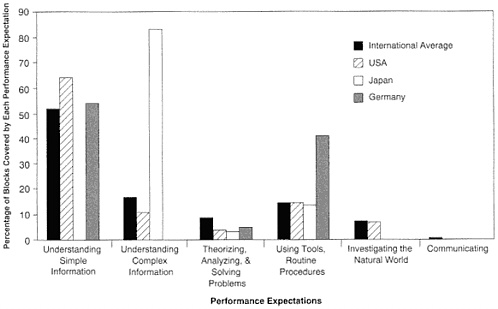
Figure 2. Grade 8 Science Textbook Performance Expectations for "Chemical Changes"
Reprinted from A Splintered Vision: An Investigation of U.S. Science and Mathematics Education, pg. 104, Exhibit 40, by permission of Kluwer Academic Publishers (Schmidt et al., 1997).5
|
5 |
Percentages in some categories were so low or negligible that they may not appear on Fig. 2. Performance expectations as defined in the TIMSS study are as follows: Simple information (information such as vocabulary, facts, equations, simple concepts; examples include defining, describing, naming, quoting, reciting, etc.; specific examples are defining scientific terms [boiling point, niche], knowing symbols [abbreviations for units, chemical symbols], describing simple concepts [materials expand when heated, characteristics of animals]); Complex information (information involving the integration of bits of simple information; examples include differentiating, comparing, contrasting, synthesizing; specific examples are understanding how increased external pressure raises boiling point of liquids, how fire is a part of the life cycle of pine trees) (Robitaille et al., 1993). |
used in the United States, approximately 65% of the textbook content calls for students to understand only simple information and only 10% of the textbook content requires students to understand complex information. In the books used in Japan, 83% of the textbook content requires students to understand complex information, and there is virtually no emphasis on understanding only simple ideas. Clearly, the performance expectations of textbooks in the United States as shown here are quite different from those in books used in Japan.
These data on the number of topics and level of expectations are an indication of the lack of focus and coherence in curriculum programs in the United States. As Schmidt and Valverde (1998) state,
"Attempting to cover a large number of topics results in textbooks and teaching that are episodic. U.S. textbooks and teachers present items one after the other from a laundry list of topics prescribed by state and local district guides, in a frenzied attempt to cover them all before the school year runs out. This is done with little or no regard for establishing the relationship between topics or themes on the list. The loss of these relationships between ideas encourages children to regard these disciplines as no more than disjointed notions that they are unable to conceive of as belonging to a disciplinary whole."
These findings from TIMSS serve to emphasize what many mathematics and science educators have long believed — that the typical curricula in schools in the United States are shallow yet overloaded, undemanding, fragmented, unfocused, and incoherent. The TIMSS achievement data suggest that the toll this takes on student learning is great — and greater as the curricula advance through the grades.
Practices that Contribute to the Lack of Coherence in Curriculum Programs.
A number of practices in curriculum design and implementation appear to contribute to the lack of coherence — and challenge — in mathematics and science curricula in the United States.
-
Mastery. In psychology, the concept of "mastery" derived from the era of behavioral objectives. Its use in mathematics education refers to a stimulus-and-response approach to instruction, with reinforcement of right answers, usually under conditions of speed. When and if such an approach produced high degrees of accuracy, the student was said to have mastered the concept. Delayed testing often revealed a significant loss in mastery. In addition, behaviorist approaches did not support underlying learning theory nor did they
-
examine systematically the patterns of errors that can explain student difficulty. This led most mathematics educators to the belief that a direct and sole emphasis on mastery — as learned in isolation and established at a single moment — is a questionable practice. Too often, mastery, as defined previously, remains a major goal in many classrooms. As a result, when a student is not able to recall immediately a concept or procedure, often in a situation free of any context such as a drill-and-practice exercise, this is interpreted as a lack of "mastery." One consequence is that the same procedures and content are re-taught each year, often with minimal improvement in student outcomes. Another consequence is that, when mastery is a major goal yet students fail to achieve it, new concepts and procedures are delayed or not taught at all. Instead, as students are exposed to an annual cycle of repeating what was previously taught, they lose motivation as well as are denied access to higher level concepts, procedures, and problems. Students who are slower to gain skills early are especially hard hit by this practice because the impact of denied access to new concepts begins so early and accumulates over time, causing these students to fall farther and farther behind.
Rejection of direct and sole emphasis on mastery, where skills are learned in isolation and dependent on repetition, in conditions of timed tests, should not be interpreted as rejection of the important characteristics of procedural fluency and automaticity. Because many more complex skills and concepts in mathematics and science depend on simpler ones, a student is hampered if ease and quickness are not achieved. This can be accomplished through repeated practice, especially as embedded in other activities, and through careful assessment and accountability practices.
-
The Practice of Rote Memorization. It is difficult to change the attempt to achieve mastery through repetition and rote memorization because such practices are widespread and deeply engrained. Many teachers experience pre-college mathematics and science instruction that is based largely on rote memorization of disconnected facts and skills. Many never go on to acquire additional education or experience in mathematics and science strong enough to give them the confidence to teach these subjects in an appropriate manner. It is easier for teachers who have experienced traditional instruction and who have weak backgrounds to teach low-level skills over and over
-
than it is for them to provide instruction that develops new concepts and procedures. Unfortunately, it is not easier for students to learn well this way.
-
Textbook Content Coverage. Publishers of mathematics and science instructional materials at all levels often attempt to cover all possible content in single products — primarily textbooks — in order to meet the requirements of as many districts and states as possible. The result is a smattering of all possible concepts and skills so that each state or district can find the topics required by its syllabus or standards (Tyson, 1997). In addition, at the secondary level, long-standing practice and tradition have dictated much of the textbook content for decades. As a consequence, the secondary science course content recommended by the "Committee of Ten" in 1892 still prevails today virtually intact (Hoffman & Stage, 1993).6 These courses mimic the design of freshman college courses in name and often in content structure and organization.
-
Overly Flexible Design. A major curriculum design assumption in many local districts and states is that the curriculum should be flexible enough to allow for a choice of instructional materials by schools and teachers. In both mathematics and science, this has led to the use of the "module" — usually six to nine weeks in length — as the basic unit or building block of a curriculum. Several major curriculum development projects have produced complete K-6 programs based on a matrix that assigns four modules per grade level. Even when these programs are based on a well-thought-out development of concepts, processes, and skills over the six or seven elementary grades, schools, school districts, and states often "mix and match" the modules as they see fit. In this case, there should be a well-designed, multi-year framework within which the selected modules fit and can be coherently linked; otherwise, there is the danger that their inherent coherence and developmental sequence will be lost. Similar types of modular programs are emerging for use at the middle-grade levels from some of the same curriculum development groups. Districts may be tempted to mix and match these components, as well. The same caution about the implications of such a temptation for coherence and developmental sequence applies.
-
Lack of Attention by Schools to Coherent Curriculum Program Development. Most school districts do not devote sufficient economic resources and expertise to the development of curriculum programs. Typically, school districts use standards (or some other criteria) as the basis for the selection of textbooks and other instructional materials, and then these materials become the curriculum program for the district. As mentioned above, in some cases, the instructional materials may have been designed to provide coherence from unit to unit and from grade to grade. However, it is often the case that units, grade-level materials, and textbooks from different sources — even when they are internally well designed — constitute separate collections that do not relate well to one another. Also, the instructional materials selection process often does not include attention to multi-grade coherence and articulation. The curriculum program should guide the selection of instructional materials to ensure that the entire set provides the coherence needed to ensure the development of concepts and skills within a given grade level, from one grade level to the next, from one year to the next, and from elementary school to middle school to high school.
CURRICULUM PROGRAMS—THE POTENTIAL
With the development of national standards for mathematics and science and of standards-based curricula, educators have increased their understanding of practices that will contribute to coherence in curriculum programs and, of critical importance, enhance accessibility for all students. The potential for putting that understanding to work and thereby significantly improving the efficacy of curriculum programs for all students is discussed below.
National Standards Address the Importance of High-Quality Programs.
Of the many landmark national standards documents that describe what students should know and be able to do by the end of their K-12 education, the first was the Curriculum and Evaluation Standards for School Mathematics (NCTM, 1989). It was followed a few years later by the Benchmarks for Science Literacy (Benchmarks) (American Association for the Advancement of Science [AAAS], 1993) and the National Science Education Standards (NSES) (NRC, 1996b). NCTM plans to release a new version of its standards, Principles and Standards for School Mathematics, in the year 2000. All versions of these standards make the
case for improving and aligning all parts of the education system. See Table 1 on pg. 10.
Since the release of these documents, state educational agencies and local school districts have been developing their own content standards as a foundation of their efforts to improve the quality of educational opportunities for their students in K-12 mathematics and science (Council of Chief State School Officers [CCSSO], 1997). Standards related to curriculum programs generally have not been included in these content standards, although suggestions concerning curricula are often included in other documents, such as state frameworks.
This report assumes that schools and districts will be guided by the state and/or local district standards that they are required to follow and that they will also seek additional guidance from other state documents and national standards from the NCTM, NRC, and AAAS.
Coherence and Accessibility in Curriculum Programs.
In describing high-quality mathematics and science programs over the 13-year period of K-12 schooling, national standards stress the importance of good design, articulation, and coherence in the K-12 curriculum program. Indeed, this emphasis has received particular focus in the revised NCTM Standards entitled Principles and Standards for School Mathematics: Discussion Draft, which include a mathematics curriculum principle: "Mathematics instructional programs should emphasize important and meaningful mathematics through curricul[a] that are coherent and comprehensive" (NCTM, 1998).
The connectness and sound development of ideas and skills over the years of schooling in a coherent program is often compared to the progression of a good story. Students become aware of and understand the connections between ideas as the story develops over days, months, and years. Of course, in mathematics and science, as in most core curriculum subjects, not just one story is involved. In its best form, a coherent program is one in which there are many stories: some are being told simultaneously, and there is an interdependence between them; some are unfolding progressively, with the complexity and level of conceptual understanding increasing from one segment or story to the next.
To achieve coherence, a curriculum program must (1) focus on the important ideas and skills that are critical to the understanding of important phenomena and relationships and that can be developed over several age levels; (2) help students develop an understanding of these ideas and skills over several years in ways that are logical
Table 1
|
The National Science Education Standards (NRC, 1996b) contain "Program Standards" that describe the conditions needed for high-quality school science. These standards include • consistency across all elements of the science program and across the K-12 continuum; • quality in the program of studies; • coordination with mathematics; • quality resources; • equitable opportunities for achievement; and • collaboration within the school community to support a quality program. |
|
Specifically, the narrative for the second standard calls for "district-wide goals and expectations for student achievement, as well as the curriculum frameworks, [which] serve to ensure coherence and articulation across grades. . .". |
|
The NCTM Standards (NCTM, 1989) promote essentially the same points in Standards 11, 12, and 13 of the "Evaluation" section, as follows: |
|
Standard 11 — Indicators of a mathematics program's consistency with the Standards should include • student outcomes; • program expectations and support; • equity for all students; and • curriculum review and change. |
|
Standard 12 — In an evaluation of a mathematics program's consistency with the Standards, the examination of curriculum and instructional resources should focus on • goals, objectives, and instructional methodology; • relative emphases of various topics and processes and their relationships; • instructional approaches and activities; • articulation across grades; • assessment methods and instruments; and • availability of technological tools and support materials. |
|
Standard 13 — In an evaluation of a mathematics program's consistency with the Standards, instruction and the environment in which it takes place should be examined, with special attention to • mathematical content and treatment; • relative emphases assigned to various topics and processes and the relationships among them; • opportunities to learn; • instructional resources and classroom climate; • assessment methods and instruments; and • the articulation of instruction across grades. |
and that reflect intellectual readiness; (3) explicitly establish the connections among the ideas and skills in ways that allow students to understand both ideas and the connections among them; and (4) assess and diagnose what students understand to determine the next steps in instruction.
A coherent program does not contain simply a listing of vocabulary or content topics. Rather, ideas and skills connect and build on one another, i.e., they are clearly described; they include some indication of the level of performance expected of the students; and they are connected in a logical progression of ideas and skills. It is important that the standards and benchmarks used in the program contain enough detail to make clear the connections between lessons, units, or levels, and that the connections make increasingly rigorous development of ideas possible. (The second section of this report includes an expanded discussion of these important characteristics of standards and benchmarks.)
Connections can best be made among ideas and skills that are well understood and not just memorized as definitions or procedures that are quickly forgotten. Therefore, while a coherent curriculum program will usually contain fewer topics than an incoherent program, the topics will be richer and lead to greater depth and persistence of understanding.
If a deep understanding is to be achieved, content must be presented to students at an age when they have a readiness for it, are capable of understanding it, and can see the relationships between the ideas to which they are being exposed presently and those to which they were exposed previously (Schoenfeld, Smith & Arcavi, 1993).
Because ideas build and connect over time in a coherent program, monitoring student progress through thoughtful classroom assessment is essential to prevent the thread of ideas or skill development from being broken. Assessment used by teachers as feedback to guide the modification of the teaching and learning activities (often called formative assessment) has been demonstrated as an effective means to improve the achievement of students (Black & Wiliam, 1998).
It may seem from the discussion so far that, if a program has coherence, then only students who have successfully experienced everything preceding a unit can learn the intended outcomes of that unit. Such a view has the potential to limit access for many students. A belief that a student can move on to the next skill in a continuum only when that student has ''mastered" all previous skills has prevented many students from ever experiencing the level or type of content in which they would be motivated to succeed. This has been
especially true in mathematics, where the curriculum traditionally has been viewed as a linear progression of skills and procedures (NCTM, 1989).
It is important to stress that a coherent program should be accessible to all students. While the curriculum should be designed so that each learning activity builds on previous activities, instruction should be guided by decisions that allow every student, regardless of past experience, to participate in intellectually stimulating ways and to demonstrate continual progress. If the curriculum has been designed with rich, engaging tasks, appropriate instructional decisions can be made to assist all students in attaining significant cognitive growth. Use of a variety of tools, such as calculators, computers, measurement equipment, and computational recording devices, can increase the likelihood that students with past gaps in experience, particularly computational gaps, will not be denied access to new material while being encouraged to gain procedural fluency with past material. Students at all levels of preparation solve problems in their own unique ways and can contribute significant insights to a class's mathematical activity. Frequently, it is when their contributions are solicited and recognized that these students recognize the value in gaining computational fluency and show marked gains in achievement. Simultaneously, other class members continue to progress academically.
In mathematics, in particular, when mastery procedures that can be performed mechanically, such as paper-and-pencil computation or factoring of binomials, dominate the curriculum, underprepared students have virtually been excluded from reaching classes that involve more interesting contextual problems. The assumption has been made that students must demonstrate proficiency in low-level skills before engaging interesting and challenging ideas and problem solving. In such a system, a student with gaps in low-level skills or computational proficiency is highly unlikely to succeed.
A well-developed, coherent curriculum program not only is designed to take advantage of important previous knowledge but to have multiple entry points to allow students who may have gaps in their previous knowledge to participate and learn rigorous content. At least one NSF-funded curriculum project is built on this premise, with units that evolve to increasing levels of rigor and sophistication with entry points for students with less than complete prior experience. All students have opportunities to be successful, including those who may not have experienced previous units (Lappan & Phillips, 1998).
In science, accessibility for all students is possible through the inquiry provided
by laboratory investigations that allow all students to approach new concepts with a common set of concrete experiences. Subsequent analyses of experimental data and constructions of explanation will vary in sophistication from student to student depending on their previous learning. Although ideas and activities may build on previous activity, each new investigation presents new opportunities for students with gaps in their past experience to contribute to their team's or class's solution to the investigation. Students with less comprehensive prior preparation can still reach an acceptable level of understanding and success. Having access and success through the concrete experience of the investigations may enable a student to find renewed interest and achievement in the importance and application of previous concepts and skills that would have been impossible in a more didactic program.
ASSUMPTIONS UNDERLYING THIS REPORT
Four broadly accepted assumptions underlie this report:
-
Some knowledge is more fundamental than other knowledge.
-
Student learning can be significantly enhanced when learning experiences are designed in a coherent way based on what students have already learned.
-
Curriculum programs should specify what ALL students should know, understand, and be able to do.
-
The curriculum affects what is taught and learned.
Some Knowledge Is More Fundamental Than Other Knowledge.
Some ideas and procedures are more fundamental than others because they are the foundation for ideas that will be taught, have rich explanatory power, and relate to everyday experiences (NRC, 1996b; NRC, 1993). Mathematics and science curriculum programs should focus on providing students with the opportunity to learn a limited number of fundamental ideas well rather than presenting them with a long list of random, unconnected information (Schoenfeld, Smith & Arcavi, 1993).
Student Learning Can Be Significantly Enhanced When Learning Experiences Are Designed in a Coherent Way Based on What Students Have Already Learned.
Students are more likely to learn when the sequence of their experiences is designed so that the development of their understanding of ideas grows and expands over time, reaching higher and higher levels of sophistication and
depth. Conversely, students' learning suffers when their experiences have no particular order and do not require or capitalize on earlier learning (NRC, 1999b). This does not mean that a student who has missed one or more units should not be allowed to progress. There are many alternative and creative ways to assist students to progress when some elements of important prior knowledge are missing.
Curriculum Programs Should Specify What All Students Should Know, Understand, and Be Able to Do.
This assumption echoes the central theme of both the NSES and the NCTM Standards, i.e., the content described in both documents is for ALL students.7 This report focuses on curriculum programs that will make that learning possible. Regardless of the source, an agreed-upon set of learning targets to be met by all students over a given amount of time (such as grades K through 12 or any other multi-year period) is a key element in the design of an effective curriculum program.
The Curriculum Affects What Is Taught and Learned.
Teachers adapt and modify most curricula and instructional materials before and during use in the classroom. Even though the intended curriculum may vary from the delivered curriculum, there is ample evidence that the intended curriculum still has a significant effect on what is presented and learned (Schmidt et al., 1998).
In addition, the authoring committee acknowledges that the effort to improve mathematics and science education at the K-12 level must be embedded in a systemic context. In systemic reform, goals, standards, instructional materials, teaching practices, professional development opportunities, and assessment practices all are aligned with one another. In systemic reform, educational agencies adopt policies for the establishment and alignment of high-quality programs in curricula, teaching, assessment, professional development, and systems of support (Smith & O'Day, 1991; O'Day & Smith, 1993). The shaded and non-shaded portions of Figure 3 show key aspects of the system.
As noted in the "Introduction," this report addresses the steps leading to the design of the curriculum program, represented by shading in Figure 3. It does not address professional development, large-scale district, state, or national assessments, and support systems represented by the non-shaded
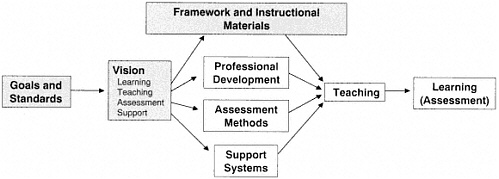
Figure 3. Using Standards to Improve Student Achievement
portions of Figure 3. These systemic components also play a role in curriculum programs but primarily in the implementation phase. While it is outside the scope of this report to provide a detailed examination of these components, their importance and their role in implementation are addressed briefly in an appendix (Appendix A).
Finally, an important premise of this report is that what a student learns depends to a great degree on how he or she is taught (NCTM, 1989). As school districts develop curriculum programs, they need to be as thorough in their consideration of and communication about the instructional approaches of teachers as they are in their consideration of and communication about mathematics and science content. Instructional approaches that will lead students to process information for meaningful interpretations and to think creatively about mathematics and science must be clearly expressed and be coherent from unit to unit and from grade to grade. While these are not topics of this report per se, instructional methodology must support student development of conceptual understanding or the intended levels of student achievement will not be attained.
The next section of this report, "Components of Coherent Mathematics and Science Education Curriculum Programs," outlines the components of a coherent curriculum program and describes the criteria necessary to design and create each component. It then suggests a process for using the components to develop the curriculum program.


