
WHAT DO POLICYMAKERS AND POLICY-IMPLEMENTORS NEED FROM SCIENTISTS?
Peter M. Douglas
California Coastal Commission
“The Legislature … finds and declares that sound and timely scientific recommendations are necessary for many coastal planning, conservation, and development decisions and that the [California Coastal] Commission should, in addition to developing its own expertise in significant applicable fields of science, interact with members of the scientific and academic communities in the social, physical, and natural sciences so that the Commission may receive technical advice … with regard to its decision-making....
The Commission is encouraged to utilize innovative techniques to increase effective communication between the Commission and the scientific community....” (Assembly Bill 2559 [Chapter 965, Statutes of 1992] by Assembly Member Sam Farr and signed into law by California Governor Pete Wilson)
Introduction
Before addressing the subject of this paper directly, some variables that influence and confound the discussion need to be put on the table. To some policymakers the answer to the question “What do they need from scientists?” is simple—nothing. For others, the answer is that they only want, and therefore
“need,” scientific input which supports or furthers their preconceived political or policy agenda. Yet others, keeping an open mind, seek high-caliber, result-neutral scientific information in the hope it will shed light on a complex technical problem and aid in the identification of feasible solutions.
The answer to the question depends in large measure on who wants the information, why they want it, when they want it, what they intend to do with it and when, and whether they are serious about it or just striving to appear interested or interesting.
Understanding and agreeing on the role of scientists in a particular context is also critical and should be made clear at the outset. To understand respective roles we need to define our terms and goals. We must be clear about our expectations and need to recognize the limitations of scientific knowledge, especially in the environmental sciences.
For purposes of this paper, scientific information refers to factual information (data and conclusions) based on observation, study and experimentation that follows recognized principles of methodology and verification to maximize accuracy and minimize the potential for error.
The assumption of this paper is that misuse of science or scientific knowledge is to be avoided by, among other techniques, carefully distinguishing between wishful thinking and reality, and facts and interests. The goal should be to use scientific information to formulate policy and program implementation decisions and to ensure they are predicated on a sound foundation of the most current, factual knowledge.
Obviously, separating facts from values or interests is not easy. That is why defining up front the role of science is critical. My assumption is that science should be used to help us understand the present condition of a given environment, the actions and forces of change that are proposed affecting that environment and to assist in the evaluation and prediction of short- and long-term environmental impacts and consequences that will or could result. Science is the tool. How it is used and what it is used to create involves policy and politics.
Do Public Policymakers and Implementors Need Scientific Input?
In this era of high technology in which knowledge is the new source of power, the answer should be obvious.8 On closer review, however, one hears other answers. Certainly, no one can question the contributions of science to the human condition. Its achievements across the range of human enterprise and interaction with the natural environments of land, sea, air and space are legion. And yet, in the arena of public policy development and implementation, whether in health care, space exploration or environmental protection, the application of science to decisionmaking has a record of mixed results.
Most of what drives the politics and decisionmaking within and among public institutions in societies of the world is based on values and beliefs, whether religious or secular. Rational, objective, scientifically based thinking, more often than not, has little to do with the outcome. For example, no matter how many times an American seaside home is destroyed by the forces of nature, the urge to “not give up,” the desire to live by the ocean’s edge, and the notion that humans can somehow hold nature at bay conspire to cause people to come back for more of the same. It makes no difference that scientists warn that the risks of another storm striking and doing serious and even fatal harm are predictable and certain. People make judgments and ignore the advice or don’t believe it. A few follow it. Others acknowledge the advice as sound, but decide to rebuild and accept the risks and unknown costs of a potential future event as a tradeoff for the short-term gratification living on the seashore brings. And, in this country at least, governmental regulators usually issue permits for the reconstruction.
One may well agree that in a free society individuals should be allowed to assume certain risks if they are willing to pay the costs even when scientists say the chances of the risk occurring are certain. The rub is that the costs in assuming such risks are rarely borne solely by the individual. So the question becomes more complex and we must ask if society should be expected to bear any burden for an individual’s assumption of the risk.
After we stir good-old traditional values into the mix, such as an individual’s freedom to make choices, that government has no business protecting people from their own folly, and the duty of government to come to the rescue when disaster strikes, no matter how predictable, we also have to consider the affect of evolving doctrines of law. 9 When one looks at all these factors together, questions relating
|
8 |
See Alvin Toffler, Powershift, Bantam Books (1990). |
|
9 |
Lucas v. South Carolina Council, (1992) 112 S.Ct 2886 |
to the value of science to public policy decisionmaking take on a whole new meaning.
Given today’s shrinking public sector budgets and difficult economic times, some ask if we can afford scientific input especially if the information only plays a minor role in the policy decisions made. In these times of increasingly complex human, societal and environmental problems, many more, I would hope, ask the question differently—“Can we afford not to have such input?” It seems that, as with any profound question, it all depends. Our response depends on the nature of the problem, who is asking the question, who is affected by the answer, what the answer is, what is at stake, whether the courts have imposed requirements that affect the issue, and so on.
In coastal management programs, for example, the role of science has fluctuated—waxing and waning in importance over the years depending on factors having little to do with the value of science to good decisionmaking. Given the dimensions and complexities of contemporary problems, and in view of new requirements by the courts that regulatory agencies make stronger evidentiary showings of a nexus between site-specific project impacts and the decision rendered, scientific input rises to a new level of significance.10
Non-governmental organizations are also turning more to science to bolster their arguments for tougher environmental protection. As more becomes known about ecology and the workings of natural systems that determine biodiversity, and biological health and productivity, science will clearly play a more decisive role in the decisionmaking process. For example, in the long struggle to restore the biological integrity of Mono Lake in California, the absence of a settlement and the passage of time have allowed more scientific evidence to be collected about the lake and the range of perturbations resulting from Los Angeles’ water draw-down practices. This has resulted in a stronger case for decisions protective of the natural resources of Mono Lake by the courts and the responsible regulatory agencies.
I strongly believe science will be of increasing importance to public policy formulation and implementation in the future. As more single purpose interest groups become involved in advocating their own particular agenda, the competition among values may produce decisionmaking gridlock. In many cases, scientific or other technical, specialized expertise may provide the only common ground on which to fashion mutually acceptable solutions. The application of science is also important to avoid costly and misdirected “solutions” to difficult problems. I am
|
10 |
Surfside Colony, Ltd. v. California Coastal Commission, 277 California Reporter 371 (1991). |
mindful that science can have the opposite effect as well. However, as populations around the globe continue to expand at alarming rates and the capacity of natural systems to accommodate human activities is exceeded, we must intensify our quest for politically and economically acceptable solutions. Science will play a vital role in finding these solutions. Indeed, it appears that science and scientists cannot escape being drawn into the political arena to help us cope with the growing number of environmental pollution problems faced by countries throughout the world.11
Who Wants the Scientific Information?
Policymakers
What scientific information is needed by policy decisionmakers usually depends on who needs it. In the legislative context, reliance on scientific knowledge for environmental policy formulation is often merely strategic and used to muster political support. Not infrequently, policymakers or -implementors point to science as the rationale and sole basis for a particular environmental policy decision. In these cases science becomes politics, often with counterproductive and unintended consequences. 12 Examples include the struggle over the use and banning of certain pesticides such as DDT. More to the point here, the felt need for “good” science at this level appears not to be as pressing, in many cases, because no one seems to care enough to examine closely the accuracy of the scientific information presented. In fact, the real need for “good” science in this context is far greater than many other settings because the consequences of the decisions to be made usually are more far-reaching. Unfortunately, in a legislative context the institutional desire to ensure quality and a sound, factual basis for decisionmaking is usually limited or non-existent. Perhaps this explains why U.S. Supreme Court Justice Scalia gives so little credence to legislative findings.13 In a legislative setting, any scientific information that supports a particular political agenda may be good enough even though in other contexts it would be judged to be preliminary, superficial, or too speculative.
|
11 |
See California Cooperative Oceanic Fisheries Investigations, California Department of Fish and Game, Reports Vol. 31 (comments by California Assembly Member Byron Sher, Chairman of the Assembly Natural Resources Committee), p. 38 (1990). |
|
12 |
Boehmer-Christiansen, Sonja, Black Mist and Acid Rain - Science as Fig Leaf of Policy, The Political Quarterly, p. 145 (April 1988). |
|
13 |
Lucas v. California Coastal Commission, ibid. |
I have often seen the use of “loose” science to further a particular policy agenda both in the legislative and executive branches of government. I recall one example of loose use of a technical study in the early 1980s involving an evaluation for the California State Senate of the occurrence of radon gas in California. The study showed higher levels of carcinogenic radon gas, where it did exist, in homes built to conserve energy than in older, “less-tight” homes. One Legislator used the study to argue for the need to relax the state’s tough home energy efficiency standards in order to reduce cancer risks to homeowners. Drawing this conclusion from the study was remarkable enough, but the senator went on to argue that homes be built less air-tight. He then argued that because more electric energy would be needed to heat the “less-tight” homes, more nuclear powerplants should be built in California! Although this study’s “science” may have been good, its use was tortured.
Exceptions do, of course, occur. When “good” science is used depends on the individual politician, the context of its use, and the nature of any “outside” review of its use.
Another factor, is that policymakers often want information in short time frames leaving scientists insufficient time to explore the issues fully. Policymakers, in these circumstances, usually get no information, partial results, superficial studies, or a lot of speculation. Yet another element relates to the extent of the inquiry that is expected to generate the scientific knowledge a policymaker wants.14 For example, a simple search and synthesis of existing scientific literature on a topic may be sufficient for some policy formulation purposes. Generic studies may also suffice for legislative purposes although they may no longer be adequate for purposes of regulatory decisionmaking.15 Information needs will also differ depending on the level at which the policy is being made (e.g., local, regional, state, or federal).
Some politicians and special interest groups, at times, seem to have a vested need to perpetuate ignorance, especially among the public, rather than seeking enlightenment through scientific knowledge. The behavior of many industry groups, aided by politicians who need their support, to prevent or stall the development and publication of scientific information about the adverse effects of their operations is an illustration of this condition. Pesticide use, discharges into rivers and the ocean, and air emissions are but some specific examples.
|
14 |
For a discussion of various modes of inquiry affecting the quality of thought going into policy development, see Hammond, Kenneth R., Judgment and Decision in Public Policy Formation, p. 15 (1978). |
|
15 |
Surfside Colony Ltd. v. California Coastal Commission, (1991) 226 Cal.App.3d 1260. |
Some policymakers have an interest in faulty science. A prime example is the curious saga of efforts to save the Kemp’s Ridley Sea Turtle. 16 Begun as an effort to save a rapidly declining species of sea turtle, the experiment was soon shown to be fatally flawed by its creators. However, it could not be ended because it had taken on a life of its own. Gulf coast members of Congress insisted that the turtle headstarting project be continued because it offered a cheap way for the shrimp industry to compensate for turtles killed in their shrimp harvest operations. The fatal flaw in the project was that it lacked necessary controls to prove that turtles raised in captivity were actually reproducing in the wild. Although this was the primary purpose of the original project, current supporters argue it should be continued because no one has been able to show that the project does not work. So the project continues because its flawed methodology cannot prove that it does or does not work. This case clearly illustrates that what scientific information is needed depends on who wants it. It also demonstrates the dangers of poor science. When the state of Texas declared this project “a proven management tool”, its author was prompted to lament that he had “created a monster.”
Policy-Implementors
Implementors of policies made by others usually find themselves in a different position relative to the type and substance of the scientific information they need. Many implementors function in regulatory capacities and must adhere to much more rigorous standards of factual accuracy than do legislators or policymakers in the executive branch, including members of boards and commissions. Because their decisions are often subjected to judicial scrutiny, regulators acting in a quasi-judicial capacity must take steps to ensure that the scientific information they use in making a particular decision derives from “good science. ”
Again, the quality of the “science” depends on the mandated context in which the “science” is used, and the nature of the review of the use of the scientific knowledge. Policy-implementors who have courts or scientific review panels looking over their shoulders are much more scrupulous in their use of knowledge and science than those operating without such “ constraints.” For example and as a result of recent judicial decisions, broad, generic studies or
|
16 |
See, “A Dubious Battle to Save the Kemp’s Ridley Sea Turtle,” Science, Vol. 256, p. 614 (1 May 1992). |
scientific information or conclusions may no longer suffice in particular cases where site-specific scientific inquiry may now be required. 17
As mentioned above, policy-implementors usually cannot “get away” with using the same type of scientific information policymakers use. Some of it may meet the same standards of accuracy and credibility, but that is probably the exception. Another factor in determining what scientific information policy-implementors need is the capacity in which the decisionmakers act. For example and generally speaking, the level of specificity and scope of scientific information needed for a planning decision may be less exacting than what is needed for a regulatory decision. Even within the range of regulatory decisions, differences may arise depending on the nature of the property interest being impacted and how it is affected. For example, courts will take a much more critical look at a decision that exacts a property interest coupled with public use (e.g., an easement for public access or recreational use) than at a decision that does not involve a private property interest (e.g., stream setback requirement) or public use (e.g., an open space easement).18
Another determinant of the type of scientific information implementors need is the methodology used to address problems and resolve disputes. There is a distinction between the use of science in an adversarial process and its use in a consensus or non-adversarial proceeding. The former has produced a subculture of mental-gunslingers with technical degrees who ask questions, use methodologies and provide answers most favorable to “the client.” Opponents will then enlist their own high powered guns to shoot down the other side’s science. In this context, regulators need their own scientific expertise or an objective outside, third-party review to make an independent judgment about who’s information is correct. “In-house” scientific expertise is essential in an adversarial context to deal with “outhouse” science.
In the non-adversarial decisionmaking context, scientific inquiry usually proceeds by agreement among the participants about what information is needed. In this situation, the science is usually more “objective ” or result-neutral. That is not to say subjectivity will not play a role or that scientists will always agree among each other. On the contrary, scientists are quick to admit they often disagree with their brethren. However, whatever tilt or disagreement there is will
|
17 |
Surfside Colony Ltd. v. California Coastal Commission (1991) 226 Cal.App.3d 1260; See Also Lucas v. So. Carolina Coastal Council, ibid. |
|
18 |
Nollan v. California Coastal Commission (1987) 483 U.S. 825 (97 L.Ed.2d 677, 107 S.Ct. 3141) |
be based on the individual scientist’s view of the world and not that of “the client.”
Others
There are many other actors in the arena of coastal and ocean resources planning and management who are policy-implementors. For example, non-governmental organizations, developers, and governmental entities in the business of using coastal and ocean resources (e.g., port districts, local governments, special districts, state highway departments) are, in one way or another, involved with policy implementation. They too turn to science to assist them with their policy implementation strategies. Again, both subtle and obvious differences in roles exist that affect the type of scientific information that is wanted and used.
Environmental groups usually want scientific information that will help them advance or enforce a particular environmental policy. Developers usually look for (read, pay for) and expect, scientific information that “proves” how their project complies with and therefore implements a particular environmental policy. The ongoing debate over the implementation of the Endangered Species Act is a good example.19 This not surprising phenomenon is a primary reason why self-monitoring in cases where highly technical standards must be met (e.g., environmental pollution controls) is ineffective in so many cases. Based on considerable experience, it seems to me that independent monitoring is the only reliable method to ensure compliance with regulatory requirements.
Public entities, such as port districts, usually seek accurate and credible scientific information and then keep their institutional fingers crossed that it will show how their project is, or can be modified to be consistent with existing environmental policies.
Again, the kind and quality of the information wanted depends on the context in which it will be used. Because there is usually no agreement on the context of the application of science, its use is not seen as a means to achieve a
|
19 |
See Los Angeles Times, “Gnatcatcher a Distinct Subspecies, Experts Say,” Pt. I, p. 3, 9/24/92 regarding whether the gnatcatcher of Southern California should be listed as an endangered species - the developers say no and argue that the Southern California gnatcatcher is not genetically different from a larger population of gnatcatcher found in Mexico while the environmentalists argue it is a separate and distinct subspecies of songbird and should be protected. The argument may miss the point because geographically isolated populations of the same species or subspecies should be protected as well. |
neutral result. Rather, it is seen as a tool to achieve a preconceived end. What we most often have in these cases is a “result-oriented ” science as compared to a science adhering to sound methodologies with the results being whatever the evidence and the process produces.
Understanding the Role of the User of the Information andThat of the Scientist
What information is needed from scientists also depends on our understanding of the respective roles of the user and the scientist. “User” here refers to the person or entity asking for the information (as distinguished from the ultimate audience). The scientists’ role turns largely on what is expected of them. For example, what is needed will depend on whether the scientist is seen as an advocate of a particular policy or merely as a neutral gatherer and presenter of factual evidence.
As a general proposition, I think policymakers and implementors should not rely on or expect scientists to become advocates or policymakers. Rather, scientists should be expected to be objective, neutral experts who have studied the facts in a rigorous and reliable manner, who explain the results, and who provide the predictive tools that can then be used to make decisions. I recognize there are differing opinions on this point. In the past, many scientists would not extrapolate their data to predict consequences of human activities. They considered this practice as advocacy and therefore non-scientific. Now that human perturbations have so severely degraded Earth’s natural systems, scientists are more prone to become advocates. Many view this as a good development because it is far better to have a scientific basis for one’s advocacy than to have politically or economically motivated people (pseudo-scientists) fill the void. I don’t disagree with this view. However, the credibility of a policy implementing public agency is essential for it to sustain the public and political support needed to maintain a strong environmental protection program. If an agency uses scientists as advocates, credibility will, in the near term, be eroded, no matter the quality of the science. As a result, the achievement of long-term environmental protection goals could well be jeopardized.
To illustrate my concern, we should remember there is a “religious” aspect to some science. For example, when a scientist’s hypotheses and conclusions (read, objectivity) become mingled with convictions, faith and belief, credibility in the eyes of many in power will suffer because that person’s “science” becomes seen as his/her religion. The point is not that there is anything wrong with scientists becoming advocates, but rather that a policy-implementor, especially a
public agency, must be sensitive to how such advocacy affects the credibility and therefore effectiveness of the agency itself.
Scientists certainly can and should be asked to draw conclusions and make recommendations based on the evidence they have gathered. However, a line should be carefully drawn between explanation and advocacy, and between subjectivity and objectivity. For example, scientists can be asked to examine whether sea level is rising at an accelerated rate along an urban shoreline. They can be asked to draw conclusions, albeit somewhat speculative, about potential impacts on shoreline communities if sea level rises at a particular rate over a certain period of time. The line is crossed however, when the scientists are asked, as scientists, what the responsible governing bodies should do about it. That is when the scientist becomes a policymaker or politician and, almost by definition, risks the loss of some credibility. I pass no judgment on whether this is good or not. This is merely my view based on experience and reflects what I, as a policy-implementor, think the role of a scientist associated with a public regulatory agency should be.
The user of the information is the one who decides what to do with the information the scientist presents. This leads to the question of why the information is needed, how it will be used, and what will it be used to achieve.
Why is the Scientific Information Wanted?
In determining what information policymakers and -implementors need, we should ask why they need it. This inquiry raises other questions such as how serious the user is about the issue at hand. It makes a difference if the person requesting the scientific information is really intent on taking action or is merely looking for a way to avoid being accused of being indifferent to a particular problem in the future. We have all seen policymakers and -implementors avoid politically difficult decisions by calling for a new study. The level of interest in and a willingness to actually do something about a problem will, to a large extent, determine what kind of scientific information is needed.
How serious the user is will depend, in part, on how important and immediate the problem is. Does it really matter if a particular problem is scientifically examined and then dealt with? What are the consequences if nothing is done? Perhaps others have shared my observation that the level of interest in a particular problem requiring scientific inquiry often is directly related to the imminence and gravity of the threat, the political dividends to be realized by taking action, and who cares. Not surprisingly and therefore unfortunately, most politicians and policymakers (not always the same) do not see any self-serving
purpose in looking too far ahead to anticipate problems. When they do, they may or may not be serious about taking action since by merely glancing to the future in public they may see themselves as having demonstrated a capacity for the “vision thing.” As a result, many problems are confronted on a reactionary basis, leaving little time for the conduct of a thorough, high-quality scientific inquiry.
Another variable in the “who” and the “why” of it is what will be done with the information. Will it be used to formulate a new policy proposal? Or will it be used to make a planning or regulatory decision to implement or enforce a decision? Answers to these questions too, will affect what kind of information is needed.
What the user wants to get out of the inquiry, as distinguished from what will be done with the information, is also important to know. One can imagine the range of motivations a politician or policymaker may bring to a particular inquiry. For example, studies showing that ocean discharges of sewage effluent subjected only to primary treatment increase the biological productivity of the receiving waters may be very useful to counter calls for expensive upgrades of existing plants to secondary levels of treatment. If that is what a policymaker wants to get out of a scientific inquiry different questions will be asked than if the inquiry were focused on the identification of impacts on biota of commercial or recreational value (e.g., fish, shellfish, kelp).
In describing information needs, it is important for the user to understand the limitation of scientific knowledge, especially in the field of environmental science. If our expectations are not tempered by reality (i.e., gaps in our knowledge), we run the risk of creating a situation as a result of which the value of scientific input to policy formulation may be discounted by decisionmakers and the public. In addition, we must be mindful of other qualifications relative to what science can and cannot tell us. Scientists are usually reluctant to give definitive or firm answers which, though understandable, often provides policymakers and implementors a convenient excuse to do nothing. Scientists are among the first to remind us of a most fundamental tenet of the subculture—science cannot prove anything, it can merely disprove something. When we seek scientific information, we can certainly ask the scientist to take a risk and give us some logical, best-judgment speculation about conclusions. So long as we are cognizant of the qualifiers associated with the information and emphasize our desire that the scientific information be objective and result-neutral, we will be well served.
When we ask what one wants to get out of an inquiry, scientific integrity must play a decisive role. We do a disservice to science, the public, and our responsibilities as policymakers and -implementors if we participate in the misuse of science. Credibility and public acceptance of decisions reached based on scientific input should be a fundamental purpose underlying any request for
scientific knowledge. Gunslinger science, poor science, and misuse of science all spawn a cynicism toward science generally among decisionmakers and the public which clearly undermines support for its application in public policy decisionmaking. There are many examples of science used to justify a policy decision which later turned out to have been a mistake.20 Public confidence in environmental policy decisionmaking and policy implementation requires credibility; and that, in turn, requires accurate, valid, high-caliber scientific information that is properly used.
Other Factors to Consider
Defining the Problem
One of the most important steps in determining what information is needed from the scientist is a clear statement of the problem. Whatever the time and effort required, it must be given to defining the problem at an early stage in the process. If there is a misunderstanding about the precise nature of the problem, the subsequent scientific inquiry can veer off on tangents that lead to useless results.
Effective communications between user and scientist are essential at this and virtually every stage of the process. It is fascinating how easily a statement of a problem or what one wants to do about it can be misunderstood. Everyone has a lot on their mind and brings to their work a different set of cognitive filters and psychological censors. Two individuals hearing the same statement of a problem at the same time often come away from the discussion with a different impression of what is wanted. Each person (e.g., user and scientist) should be asked to restate the issues in his or her own terms.
An example of the importance of clearly defining the problem is the use of artificial reefs as mitigation for lost fish habitat. Some coastal users, such as ports, argue that artificial reefs should be accepted as mitigation for ocean fill projects because when put in place more fish are found around them so they clearly provide habitat. It is certainly true that such submerged structures provide habitat values. The question not asked until recently and certainly not yet answered, is whether artificial reefs are merely attractive devices or whether they
|
20 |
See Boehmer-Christiansen ibid; other examples include the use of science to head off restrictions on the use of pesticides, and recent revelations that milk and margarine may not be good for the body. The media reported that consumers felt betrayed by the scientific community they felt had assured them margarine was better than butter. Marin Independent Journal, Pt A, p 1, Oct. 7, 1992. |
are productive habitat that result in an overall increase in fish populations. Similar questions must be asked about fish hatcheries intended to revive a diminishing fish stock. Like the Kemp’s Ridley Sea Turtle, the question is whether the animals headstarted in captivity survive and reproduce in the wild or whether their stock is simply replenished. With hatchery programs, even the question of replenishment has not been answered because it is difficult to monitor the released fish to determine if they actually mature or if they just constitute easy food for other critters higher on the food chain.
Once the problem has been defined, the right questions must be asked to ensure that the information provided is valid and useful. If the problem is to determine whether the rate of sea level rise along a particular coastline is accelerating and what, if any, land use policy decisions should be made, many more questions must be asked and answered. Is sea level rising at all? If so, is it rising at different rates in different locations? Is the adjacent upland rising or subsiding and what is the relative ratio of the rate of sea rise and land fall? Will the rate of rise continue at an even or increasing rate and over what period of time will it continue to rise? What variables have a direct affect on sea level rise and what is the likelihood these variables can change? Here again, the questions one asks depends on what one wants to know and why.
Speaking the Same Language
Scientists and policymakers and -implementors come from different subcultures and usually speak a different language. To maximize effective communication and minimize misunderstandings, the language each uses must be understandable to the other. Using a language both parties understand is vital at all stages of the inquiry—defining the problem, asking the right questions, explaining methodology and results, and exploring possible implications and responses to conclusions.
Problems of communication are compounded by the differences between how scientists and policymakers view the world. In addition to philosophical differences, differing educational backgrounds and appreciation of the strict demands of scientific inquiry lead to vastly different perceptions of the value to society of scientific knowledge and its role in decisionmaking. This highlights the need for universities and other centers of learning and training to do a much better job encouraging and teaching students of public policy and science to become cross-culturally literate. The scarcity of translators or individuals who can
communicate well across disciplines and who feel comfortable in either is a major barrier to the effective application of science to decisionmaking.
What do Decisionmakers Need From the Scientific Community?
After having factored in the considerations discussed above, the elements of what a policymaker or implementor needs are fairly straightforward.
Timely Information
A decisionmaker’s frequent lament is “’Why can’t we get the information when we need it?” Timing of informational input is usually critical. Unfortunately, and as a result of a combination of conflicting traits typical to each subculture, timely scientific input is a major problem. Usually decisionmakers, for whatever reason, ask for information with relatively short advance notice while scientists usually need substantial lead time to conduct the necessary studies to produce the requested information.
The difficulty scientists have in providing timely information results from a number of factors, including funding constraints. No matter the reason, receipt of information in a timely fashion in order for it to be factored into the decisionmaking process is a key element of what is needed.
Ways should be found to encourage decisionmakers to identify their information needs earlier in the process and for scientists to develop a more rapid response capability.
Credible Information
Decisionmakers need high-quality scientific information that is valid and reliable. This, among other things, means that the right parameters are studied, the methodology is correct, and the results are verifiable. High quality information is needed to ensure credibility and public acceptance, especially if the decisions to be made based on scientific information are controversial. Decisionmakers need to have confidence in the information provided if they are to rely on it. Usually, they cannot verify it themselves and therefore in-house expertise or peer review becomes essential.
Responsiveness to the Questions Asked
To be useful, the information provided must be responsive to the questions asked. All too often, scientific reports or conclusions are interesting but fail to address the specific question at issue. Input that is not directly on point may be of little use. This again emphasizes the importance of effective, early, and ongoing communications between the user and the scientist.
Making Clear Limitations of the Scientific Information
To avoid misuse of scientific input and to promote understanding of what the information really means, it is important that the limitations inherent in the science are carefully explained. Environmental science is an emerging and evolving field with many major gaps in existing knowledge. There is more that we do not understand than we do. Additionally, very few scientists are holistic, “big-picture” thinkers. Most are trained in specialized areas and this should be kept in mind when the questions to be addressed are identified. Considerable time and money can be saved by spending time up-front in bringing together a multi-disciplinary team of scientists to brainstorm the approach to studying a particular problem.
Some decisionmakers expect more of science and scientists than can reasonable be expected. It is important that false expectations not be created or perpetuated. It is often better to know what science cannot yet tell us about a particular subject than to rely on speculation. The scientific community has a tendency to hedge its bets and to avoid being drawn into reaching conclusions. That too has its downside because information that is at best inconclusive is usually not very useful and has a way of discouraging future reliance on scientists for help. At the same time, if a decision must be made in a regulatory or policy context, it will be made regardless of the extent or quality of scientific information available. In this sense, the absence of an opinion may itself be viewed as “information” and will be used to affect some result.
Obviously, there are exceptions, especially in cases where the possibility of irreversible environmental damage is high. For example, the ongoing debate about global warming and the depletion of ozone in the stratosphere is, it seems to me, a critical topic for discussion because of the potential affect on all life on the planet. Most scientific conclusions relative to issues such as these inevitably involve speculation. When the risks to the environment are high we cannot afford not to ask for scientific information and conclusions. Additionally, when the risks of not taking action are high, we can and should expect scientists to stick their necks out and make their best guesses. Scientific input is essential in such cases. It is important, however, that policymakers know the information is qualified and the
level of confidence the scientist and his/her peers place on the best guess. The policymakers must then weigh the information and decide what action is appropriate.
Identifying What Additional Questions Need to be Asked and Answered
It is important to identify what additional questions should be asked and answered in order to make the information previously provided more useful. It is in the nature of scientific inquiry that the quest for answers spawns more questions. In the environmental sciences little is fully understood about the interaction of forces within and among ecological units. In coastal and ocean governance, as in virtually every environmental protection program, the issues are so complex and our knowledge so limited that it is difficult to reach definitive conclusions about many of the technical questions raised.
Decisions are often made based on the available information despite the fact that not everything is known about the particular subject. However, decisions are often incremental or made on a case-by-case basis. As our knowledge evolves, the decisions made in reliance on it can be expected to change. That is one reason why it is so important that decisionmakers understand clearly what a scientific study really says, what it does not say, and what additional questions need to be explored in order to shape subsequent decisions.
Clear Explanations of Conclusions Drawn from the Scientific Information
In language decisionmakers can understand, summaries should be provided that clearly explain the conclusions that can and cannot be drawn from the information. Because decisionmakers are usually not fully conversant with the science involved, it is incumbent on the scientist to speak simply and plainly.
What is Needed to Provide the Information and Any Additional Input
Decisionmakers should know what resources will be needed to provide the requested scientific information. This is especially relevant to any follow-up inquiries that are identified by and result from the primary study. The tendency is to underestimate what is needed to carry out a scientific inquiry. We need good cost estimates, timelines for studies, who is available to conduct and review the work, etc.
Conclusion
Science will play an increasingly important role in environmental public policy decisionmaking. Although scientists and policymakers and -implementors belong to distinct subcultures in our society, the two groups must learn to interact more effectively. Decisionmakers must turn more often to the scientific community for information and the latter must make better efforts to provide the information the former needs to improve the quality of their decisions. It is not enough to convince the two communities they need each other. Practical steps should be identified and taken to substantially improve the substantive interaction between them. Greater emphasis must be placed on encouraging and educating students in both fields to become knowledgeable about and comfortable with the other. Decisionmakers must make their needs clear and scientists must explain what they will require in order to be responsive. Sound decisionmaking requires good science and good science means that the right questions are asked, rigorous methodologies are used, reliable and verifiable results are provided, and it is all done in terms the decisionmaker can understand. We have a long way to go toward that end, but as best I can tell, we have no choice but to step to it.
BRIDGING THE GAP: WHAT NATURAL SCIENTISTS AND POLICYMAKERS AND IMPLEMENTORS NEED TO KNOW ABOUT EACH OTHER
Donald F. Boesch
Center for Environmental and Estuarine Studies
University of Maryland, Cambridge
and
Swantje-A. Macke
The Marine Forum for Environmental Issues
Department of Zoology
The Natural History Museum, London, England
Introduction
The National Research Council sponsorship of this symposium and great interest of the invitees in attending are testament to the wide perception that the interaction between coastal science and policy is not working to satisfaction. This perception is shared by scientists as well as makers and implementors of policy and the parties affected by those policies. Scientists tend to think that science is undersupported and that most decisions are “political,” meaning that scientific input is lacking, ignored or has only a minor effect. Policymakers and
implementors feel they need “good” science, but in practice science seems too slow, inconclusive (not as “good” as they would like), and expensive. Environmental advocates see scientists as unwilling to take a stand and often view science as a delay tactic to avoid doing immediately what is clearly the right thing.
But few things in life are perfect. And, in fact, a large number of our environmental policies have been influenced—through whatever messy process—by science. Is there any reason to think that the effectiveness of the coastal science-policy interaction can really be improved or as Sebek (1983) puts it, the gap can be bridged? Furthermore, would such improvement make much difference? We believe the answer is “yes” on both accounts.
We have two reasons. First, environmental science is becoming more sophisticated and capable, as a result both of technological advances and of improvements in the conceptual understanding of coastal ecosystems and their responses to human perturbations. Second, the complexity of policy decisions we face on regional and global scales (beyond a discharge pipe or single dredge-and-fill permit) demands sounder analysis of the environmental, economic, and social consequences of policy options, both a more rigorous and a more holistic approach. As the popular press is now commenting in the wake of the recent Presidential election, the age of the “policy wonk” may be upon us. By one criterion, a policy wonk must know a minimum of six sides to every issue. But there were even earlier signs of this trend, for example, the emphasis of the present administration of the Environmental Protection Agency (EPA) on “credible science for credible solutions” (Expert Panel on the Role of Science at EPA, 1992), based in part on concerns about over-regulation or misdirected regulation.
Our objective in this paper is to offer some insights and suggestions for inspiring helpful science and improving the effectiveness of the use of natural science in policies affecting coastal seas. Most of the literature on environmental science-policy interactions has been authored by policy analysts and perhaps they have more detached objectivity. Our perspectives are those of natural scientists who have long been engaged in basic and applied research in the coastal ocean (DFB) and who have worked to stimulate dialogue among environmentalists, scientists, managers, and users (SAM). We have both maintained a strong interest in the use of scientific information in environmental management, but our view has been from the inside of the process rather than from outside of it. From this somewhat different vantage point, we offer advice both to fellow natural scientists with a similar bent and social consciousness and to policymakers and implementors. We base many of our views on personal experiences at the science-policy interface on the issues of waste disposal in the ocean, coastal and offshore
oil and gas development, and eutrophication of coastal waters21 and will offer examples based on the U.S. experience in these areas in the following discussion.
Two Cultures?
It helps to understand the subcultural differences among scientists and policymakers and implementors. Much has been written about the two communities or cultures of science and policy (e.g., Caldwell, 1990). Bernstein et al. (1991) provide an enlightening comparison of the culturally ingrained tendencies that are typically, but not always, exhibited, especially when scientists and policymakers/implementors interact (Table 1). The disparate focus on knowledge versus action, on scientific evidence versus broader societal values, and on long-term versus short-term goals obviously contribute to the cultural gap. In addition, there are the notorious language differences which inhibit communication. And they result not just from the use of jargon and mathematics by the scientist, but also from code words and acronyms by the policy folks.
The important thing to understand is that although these behaviors and points of view are subject to some modification and the viewpoints to some broadening, they are strongly ingrained and are adaptive to the peer-pressures and reward systems which shape these cultures. The effective gap bridger will recognize these differences and show understanding and accommodation at the interface. For example, an effective scientist will recognize that the crafting of a bill by a legislative staffer or a draft regulation by an agency official is seen as just as creative and rewarding by them as a peer-reviewed journal article is to him or her. When asked, he or she will devote the same care and responsiveness as offered in reviewing a scientific manuscript or proposal. The effective agency official overseeing sponsored research will understand that production of that journal article is as important to scientists as the timely submission of a final report is to him or her. The effective scientist, while knowing that understanding is incomplete will recognize that the policymaker/implementor nonetheless needs clear answers and will make special efforts to do so. On the other hand, the effective policymaker/implementor will insure that scientists are not forced to overextend their conclusions. And so on.
|
21 |
In work in progress, we are comparing the influence of science on policy related to these issues in the United States and the North Sea. This has involved interviews with numerous policymakers and implementors, scientists, and environmental advocates, which have greatly helped us develop our views. |
Table 1. Behaviors and points of view typically associated with the cultures of science and policy (adapted from Bernstein et al., 1991 and used with permission from Taylor and Francis Publishing).
|
Factor |
Science |
Policy |
|
Valued action |
Research, scholarship |
Legislation, regulations, decisions |
|
Timeframe |
That needed to gather evidence |
Immediate, short-term |
|
Goals |
Increase understanding |
Manage immediate problems |
|
Basis for decisions |
Scientific evidence |
Science, values, public opinion, economics |
|
Expectations |
Understanding never complete |
Expect clear answers from science |
|
Grain |
Focus on details, contradictions |
Focus on broad outline |
|
World view |
Primacy of biological, physical, chemical mechanisms |
Primacy of political, social, interpersonal, economic mechanisms |
One cultural tendency of scientists poses particular limitations on the development of environmental policy: the value placed on narrowly defined scholarship. Particularly in universities where faculty are presumably evaluated for their contributions in research, teaching and public service, reward systems for scientists place major emphasis on original, specialized research. The scientific generalist or research team member may not be as highly regarded. Contributions involving the restructuring of broader knowledge and identification of relationships within the environment may not be seen as rigorous science. As Caldwell (1990) suggests, the wise strategy for ambitious scientists may be to “stick to reductionist basics and avoid temptations to advance scientific knowledge through interdisciplinary synthesis.” Academic administrators interested in bridging the science-policy gap should consider insisting that scholarship be evaluated as redefined by Boyer (1990) to encompass discovery (original research), integration (restructuring broader knowledge), application (efforts to bridge the gap), and teaching.
This polar cultural model of science and policy is highly simplified and other models of the role of science in environmental policy have also been proposed. For example, Sabatier (1988 and this volume) describes an “advocacy coalition” model in which coalitions of interest group leaders, policymakers and implementors, scientists and even journalists share a set of basic beliefs (policy goals plus critical perceptions of causal relationships) and seek common goals. This model recognizes that scientists are not neutral participants, but operate within a specific paradigm and accept certain normative assumptions. This explains why there may be more communication between scientists and policymakers/implementors within an advocacy coalition than between scientists in different advocacy coalitions. In coastal ocean science, advocacy coalitions with distinct scientific memberships have existed over such issues as the effects of oil spills and sewage discharges.
Somewhat similar to the idea of advocacy coalitions, Haas (1990) has described the importance of “epistemic communities” in forging international agreements on environmental protection of the Mediterranean Sea. An epistemic community is “a professional group that believes in the same cause-and-effect relationships, truth tests to assess them, and shares common values.” Here too, it is recognized that scientists are not totally dispassionate and objective, but they too have values which influence their approaches and conclusions. Influences of advocacy coalitions or epistemic communities are not inconsistent with the basic professional cultural model depicted in Table 1, but simply suggest that science-policy interactions have normative as well as professional dimensions.
Translation
Scientific understanding is translated to the policy formulation and implementation processes in a variety of ways. In general, we pay far too little attention to these mechanisms. One of the most important conduits to policymakers is the popular and semi-popular press. The press provides them information directly, helps shape public opinion, and affects the policymakers’ impression of public opinion. In some cases, the press has fallen victim to the temptation to sensationalize emotional issues. For example, both in the case of ocean dumping in the New York Bight (Squires, 1981) and offshore oil and gas development off California, Florida, and New England the press helped develop public fear which exceeded scientific assessment of the risks, leading to Congressional bans or moratoria. On the other hand, the press can also be very effective in educating the public and policymakers about rather complex environmental issues and marshalling support for action against more insidious threats. A good example concerns nutrient overenrichment and oxygen depletion in the Chesapeake Bay (Malone et al., 1993).
The tendency for the popular press to at least oversimplify, if not sensationalize science, explains the reluctance of most scientists to speak with reporters. The fact that the press is likely to print a provocative quote out of context of an otherwise sober interview with a scientist explains why decisionmakers and implementors wish that scientists would avoid the press even more than they do. Both sides should realize that the role of the popular press is to inform the public and not primarily to directly infuse scientific information into the policy process. There needs to be alternative, more direct mechanisms for this infusion that fall between the newspaper clipping and the full technical report in abstraction and approachability. The wide availability of graphics and desktop publishing technology is stimulating the proliferation of effective publications for communication within policy-science-public interest-user communities. One of the more effective of such media is the Bay Journal, produced by the Alliance for the Chesapeake Bay, a monthly tabloid which includes among other regular features the Bay Barometer. There is a great need to nurture and support people who have the knowledge and skills to assimilate and articulate coastal science in such publications.
Translation of science to the policy arena also takes place through a variety of interpersonal means. The role of committees and individual scientists is discussed in the following sections, but one of the most routine and effective means is through technical staff with appropriate scientific training within the management agencies. These individuals may synthesize and interpret the primary scientific literature themselves and frequently maintain close contact with active researchers (often as contractors). External scientists need to appreciate this role and the collegial relationship it requires. Agency managers need to allow and encourage their professional staffs to “get out of the office” for such interaction—it is certainly more timely and may be more informative than the final report.
Getting and Giving Advice
Scientific advisory committees concerning some aspect of the coastal environment have been a growth industry over the past decade. Such committees consist of scientists with relevant expertise who meet to advise an agency or group of agencies on the direction and execution of its research programs and, at least in some cases, on the use of scientific information in policymaking or implementation. Scientific advisory committees may be convened directly by the agency or as independent evaluative committees under the auspices of the National Research Council (NRC) or professional societies.
Scientific advisory committees may advise on research and regulatory programs throughout a large federal agency, e.g., EPA’s Science Advisory Board; research programs focused on one subject within a subagency, e.g., the Scientific Committee of the Department of the Interior ’s Outer Continental Shelf Advisory Board; or regional environmental management programs, e.g., the scientific and technical committees of the Chesapeake Bay Program and the various components of the National Estuary Program. They may be standing committees, often with rotating membership, or convened for a fixed term to produce an evaluation or report, such as the study committees set up under the NRC.
The effectiveness of scientific advisory committees is limited and variable. Sometimes they can prepare reports or make recommendations which have major repercussions within the agency (e.g., a 1978 report of the NRC resulted in the abrupt termination of ongoing benchmark studies and institution of new criteria for formulating studies). More recently, evaluations of the adequacy of scientific information to support OCS leasing decisions off New England, Florida, and California by another NRC committee (NRC, 1989; 1991) contributed to the decision by President Bush to extend moratoria on lease sales in those areas. Interestingly, this same committee recently completed its assessment of the Minerals Management Service’s OCS Environmental Studies Program (NRC, 1992); almost all of the criticisms leveled were raised by the agency’s own scientific committee a decade earlier with little result (Boesch, 1992).
Commonly, committee work is slow going for committee members and agency staff alike. Volunteer committees meet infrequently and there is a shortage of time back in the office to read all the background materials and think and write critically. After serving a few years, many committee members become frustrated that so little progress has been made or marvel at the inertia within the agency. Agency liaisons may think that the advisors, although smart, do not really grasp the policy problem facing the agency or, worse, are self-serving, esoteric or elitist.
Many interagency or interjurisdictional programs (e.g., National Estuary Programs) appoint scientific committees largely on the basis of representation of agencies and institutions within the region. Such committees may accomplish interagency dialogue, but they are usually ineffective in providing a fresh look at the scientific issues as members typically feel compelled to take their agency’s position. Independent scientists lose interest and stop participating as a result. Although our comparisons of international experiences with scientific advisory committees await a subsequent paper, we simply point out here that Wettestad (1989) and Wettestad and Andresen (1989) found that scientific advice from international groups of independent scientists concerning the North Sea was more effective than that resulting from groups composed of individuals representing their nations, governmental organization, or research institutions.
Despite these limitations, scientific advisory committees can fill very valuable roles of detached criticism, public validation, and forward-looking advice. We offer a few suggestions on how to make scientific committees effective, both to members and sponsoring agencies:
Committee members:
-
make an effort to focus on what is known and how this information can help the agency; do not spend too much effort lamenting all the unfilled research needs;
-
concentrate on a future time horizon at which the committee’s advice may have an effect; do not get bogged down with today’s crises;
-
avoid minutiae and details.
Sponsor agencies:
-
have the committee formally report to the highest appropriate level within the agency (e.g., EPA’s Science Advisory Board directs all of its reports to the Administrator); this keeps everyone honest and gives the committee a sense that its work is important;
-
avoid committees composed of individuals representing institutions or programs; appoint individuals because of their scientific experience and knowledge, a mixture of eminent scientists (for prestige and wisdom) and younger activists (to do the work);
-
assign the committee some important, but narrowly defined and doable tasks (to give it a sense of accomplishment important for sustaining interest) and at least one futuristic and relatively unbounded task (to stimulate intellectual creativity); EPA’s Science Advisory Board works quite effectively with such a mix;
-
consider the committee’s time priceless; use it wisely.
Authorities, Advocates and Antagonists
Authorities, advocates and antagonists: these are roles that individual scientists sometimes play in the dynamics of science-policy interactions. It is human nature to place disproportionate trust in individuals regarded as authorities. A senior Congressional staff member related to us that when scientists appeared
before his Committee they were held in considerable esteem by the Members of Congress because of their years of education and training and professional accomplishments. But most scientists were intimidated by this process or were otherwise ineffective in communicating their knowledge. They stumbled, tried to give too much detail, or spoke in esoteric jargon, thus destroying the advantage of an authority figure from which they started.
Scientists tend to establish their authority more aggressively when speaking or writing to other scientists; somehow our culture requires us to become more humble when dealing with the public or with policymakers and implementors. The fact is, scientists and the policymakers and implementors need to cultivate authority figures because in many cases they are just as important as the quality of information in the effective translation of scientific knowledge to the policy arena. The lack of recognized authorities or groups of authorities—epistemic communities, if you will—means that the extant scientific information has little chance to make a difference, particularly on contentious issues. Arguably, this has been the case with issues concerning the environmental effects of offshore oil and gas development (Boesch, 1992). The Department of the Interior has expended over $540 million in environmental studies on this subject, yet it did this under a philosophy that scientific knowledge could simply be “procured” and without any interest in nurturing scientific authorities on the subject. It has paid a big price for this naive philosophy. Obviously, authorities should be carefully cultivated so that personal ambitions do not cloud the issue or diminish the perceived objectivity of the authority.
Scientific culture places great value on objectivity; thus we have the ideal of environmental scientists as detached testers of null hypotheses, rigidly bound by logic in drawing conclusions. But scientists operate within the paradigms of their discipline and what they choose to work on and how they interpret their results are influenced by their normative values (Sabatier, 1988; Haas, 1990). In fact, none of us operate without at least a tinge of advocacy of a viewpoint. Sometimes the consequences of emerging scientific understanding become so compelling that scientists may feel it necessary to become outright advocates or even crusaders, e.g., in the case of DDT or tributyl tin in the marine environment or stratospheric ozone depletion or global environmental change. For the most part, though, such temptation should be resisted because credibility is risked when the scientist ’s role moves from analysis to advocacy.
When advocacy coalitions are in conflict, emphasis on the scientific norms of objective analysis can facilitate learning across opposing coalitions and policy development (Sabatier, 1988). Research in which one of us was involved (DFB) on the effects of discharges of produced waters from coastal oil production activities (Louisiana Universities Marine Consortium, 1989) can illustrate this point.
Opinions were sharply divided between those who wished to disallow the discharge of these highly saline and oily waste waters into surface waters along the coast because of their alleged effects on wetland loss and water quality, on one hand, and the industry, on the other hand, which felt that there were little or no effects of discharging salty water into brackish water. The scientists performed research both under the sponsorship of government and industry (industry felt compelled to use these researchers for credibility). The result was that it was found that the allegations of wetland loss associated with the discharges could not be substantiated, but there was unassailable evidence of effects on sediment and water quality resulting from toxic organic compounds in the produced water. Nonetheless, the researchers studiously avoided concluding that banning or further controlling these discharges was required, leaving that to the interpretation of the conspicuous evidence by policymakers and implementors. They could not be dismissed as merely advocates of regulation by the industry.
Policymakers and -implementors—and even environmental advocates—should recognize that the credibility of the scientist depends on his or her reputation as an “objective” analyst as opposed to a crusading advocate. Do not ask scientists to overstep the bounds of their expertise to craft policy, but insist that they clearly lay out the policy implications of scientific understanding.
Finally, scientists play useful roles as natural antagonists to current policy and management paradigms. After all, if schooled well in the scientific method, we scientists should be out to disprove everything. Policymakers and implementors should avoid the desire to “kill the messenger” (e.g., Malone et al., 1993), respect that antagonism (within limits, of course), and find ways to use it creatively.
Dealing with Uncertainty
“But there is a difference between scientific uncertainty and political uncertainty. Where science thrives on the unknown, politics is often paralyzed by it.” … Al Gore (1992) Earth in the Balance. Ecology and the Human Spirit.
Although we would argue that uncertainty is being incrementally narrowed as our knowledge of coastal ecosystems grows, there will always be substantial uncertainty in predicting the consequences of environmental policies in ecosystems as complex as those in the coastal ocean, which are under the influence of multiple environmental media and are pervaded by human society. We largely lack the capacity to quantify that uncertainty and to factor that into risk assessments relevant to policymaking and implementation. Even sophisticated prediction
technology, such as the complex ecosystem-water quality models now in active use in the Chesapeake Bay and other coastal waters mechanistically predict outcomes without parallel measures of uncertainty. Such models may take on lives of their own, self-defining truth, and obscuring the uncertainty compounded by the assumptions of the model.
The failure of scientists to articulate the level of uncertainty has a considerable cost. It may paralyze the development of policy needed to insure environmental protection (Senator Gore’s lament) or it may result in policy which effects little environmental improvement but which has huge social costs. Leaving aside the question of whether banning ocean dumping was the best long-term policy option, the lack of ability or willingness of scientists to express the uncertainty of risks alleged for this practice (ranging from the creeping sludge monster to crab diseases to syringes on beaches) was a factor in the decision of Congress.
While there is clearly a need to advance techniques for estimating and evaluating uncertainty, or ecorisk assessment, there are other policy approaches which have been taken to cope with uncertainty. The 1972 Clean Water Act represented a dramatic shift in policy. Because of the unknowns, uncertainties, and costs of assessment of actual effects on water quality, the Act established a technology-based approach which required best-available treatment of discharges. That has resulted in significant improvements to water quality in many areas, but because deserved environmental quality has not been attained, newer policies reinstate a coequal emphasis on environmental quality goals as well as effluent standards.
At the international level, there is now the widespread adoption of the “Precautionary Principle,” a concept developed in Germany in the early 1970s as the Vorsorgeprinzip. The 1987 North Sea Ministerial Conference embraced this principle agreeing that “in order to protect the North Sea from possibly damaging effects of the most dangerous substances, a precautionary approach is necessary which may require action to control inputs of such substances even before a causal link has been established by clear scientific evidence. ” Originally applied to controls of highly toxic substances, the Precautionary Principle is now being evoked for the control of nutrients, overfishing, and virtually every human activity affecting the marine environment (e.g., Earll, 1992). But the Precautionary Principle does not let environmental science off the hook. Surely, carried to extreme interpretation, virtually no human activity would be allowed for lack of certainty (Clark, 1989), but in practice the Precautionary Principle has extensive implications for policy and science, ranging from burden of proof assumptions to statistical design of scientific assessments (Gray, 1990; Gray et al., 1991). The Precautionary Principle also has broad implications to environmental policy and
management approaches. As Costanza and Cornwell (1992) point out, integrating the Precautionary Principle and “polluter pays principle ” can suggest new ways to deal with scientific uncertainty, such as flexible environmental assurance bonding.
Now the Precautionary Principle is being widely embraced in international agreements and, for that reason, appears destined for the U.S. lexicon. For example, Chapter 17 (dealing with protection of ocean and coastal areas) of Agenda 21 of the United Nations Environment and Development Conference “requires new approaches to marine and coastal area management and development, at the national, subregional, regional and global levels, approaches that are integrated in content and are precautionary and anticipatory in ambit.”
Relationships Among Scientific Approaches
“There are not two sciences. There is only one science and the applications of science and these two activities are linked as the fruit is to the tree.” …Louis Pasteur
A variety of scientific approaches is used, including “basic” and “applied” research, monitoring, modeling, and analysis (i.e., the interpretation of the results of research, monitoring and modeling in the context of existing scientific knowledge). By reminding us of the Pasteur quote above, Jerry Schubel (pers. comm.) in an interesting essay on development of an “estuarine science-management paradigm,” points out that differences in perception about the importance of “basic” and “applied” research often contribute to the science-policy gap. Indeed, more fundamental research is often eschewed by policymakers and implementors as esoteric, irrelevant, and even wasteful, while research directed to practical problems is often held in disdain by scientists as pedestrian, overly prescribed and not likely to enhance one’s reputation. In truth there is only good research and its application; more directed research must be built on a solid understanding of basic environmental patterns and processes.
Schubel also observes that managers are often drawn to support monitoring and modeling rather than research. Monitoring seems intuitively useful and action-oriented to the manager and the public, while modeling, by definition, at least produces answers to the questions posed. Research, monitoring, and modeling are interdependent (National Research Council, 1990), but seldom effectively integrated. In the Chesapeake Bay water quality modeling, for example, the rate constants depend heavily on research findings and the model results are both driven by input variables from the monitoring program and verified by matching predictions with further observations. Much of the understanding of the processes embodied in the model was developed through fundamental research supported
competitively by the National Science Foundation which, just fortuitously, was conducted in the Chesapeake Bay ecosystem (Malone et al., 1993). The relationship is akin to a three-legged stool. If research is too weak to support the incremental improvements of models, the models will be unreliable. Limits in basic understanding of the environment will similarly diminish the interpretability of monitoring results.
Managers are tempted to overprescribe scientific approaches. A comparative study of coastal seas management showed the importance of “independent but relevant science” to the decisionmaking process (Morris and Bell, 1988). Although new scientific information rarely initiated management action, the availability of good information and scientific advice not only enhanced the responsiveness and quality of management actions, it often reinforced management decisions and helped to keep the management process on track.
Timing and Timeliness
The cultural model depicted in Table 1 describes the timeframe mismatch between science and policy. Policy implementors often have unrealistic expectations for timely delivery of scientific advice and scientists bristle at the demands to rush the science. Policy implementors should not ask scientists to produce quick results on today’s decision, but should instead commission science to address out-year decisions. At the same time, there need to be better mechanisms (and more willingness by, and incentives for, scientists) to provide policymakers and implementors with information being developed by ongoing scientific research, with an indication both of the environmental management implications and uncertainty associated with this science. An effective interface between science and policy is as much a question of timing as it is of timeliness.
In closing, we note that our exposition has dealt primarily with the more-or-less direct interaction between scientists and environmental policymakers and implementors. Science is brought to bear on public policy in a variety of less direct ways, in particular by its influence on public opinion and as used, ignored, or otherwise interpreted by interest groups and nongovernmental organizations. We will have more to say on these avenues in subsequent publications.
Literature Cited
Bernstein, B.B., B.E. Thompson, and R.W. Smith. 1991. A combined science and management framework for developing regional monitoring objectives. Presented at the National Estuary Program Science Symposium, Sarasota, FL, 25-27 February, 1991.
Boesch, D.F., J.N. Butler, D.A. Cacchione, J.R. Geraci, J.M. Neff, J.P. Ray, and J.M. Teal. 1987. An assessment of the long-term environmental effects of U.S. offshore oil and gas development activities: Future research needs. In : D.F. Boesch and N.N. Rabalais (eds.) Long-term Environmental Effects of Offshore Oil and Gas Development, Elsevier Applied Science, London. pp. 1-53.
Boesch, D.F. 1992. MMS’ approach to quality control in the Environmental Studies Program Proceedings of the Information Transfer Meeting, Pacific OCS Region, Minerals Management Service.
Boyer, E.L. 1990. Scholarship Reconsidered: Priorities of the Professoriate. Carnegie Foundation for the Advancement of Teaching, Princeton, NJ. 147 pp.
Caldwell, L.K. 1990. Between Two Worlds. Science, the Environmental Movement, and Policy Choice. Cambridge University Press, Cambridge, 224 pp.
Clark, R.B. 1989. The role of international science in political decision-making. In : C.C. ten Hallers and A. Bijlsma (eds.), Distress Signals, Signals for the Environment in Policy and Decision Making, 3rd North Sea Seminar. Werkgroep Noordzee, Amsterdam, pp. 35-39.
Costanza, R. and L. Cornwell. 1992. The 4P approach to dealing with scientific uncertainty. Environment 34(9):12-20, 42.
Earll, R.C. 1992. Commonsense and the precautionary principle—an environmentalist’s perspective. Marine Pollution Bulletin 24:182-186.
Expert Panel on the Role of Science at EPA. 1992. Safeguarding the Future: Credible Science, Credible Solutions. U.S. EPA, Washington, D.C. EPA/600/9-91/050. 52 p.
Gore, A. 1992. Earth in the Balance: Ecology and the Human Spirit. Houghton Mifflin, Boston. 408 p.
Gray, J.S. 1990. Statistics and the precautionary principle. Marine Pollution Bulletin 21:174:176.
Gray, J.S., D. Calamari, R. Duce, J.E. Portmann, P.G. Wells, and H. L. Windom. 1991. Scientifically based strategies for marine environmental protection and management. Marine Pollution Bulletin 22:432-440.
Haas, P. 1990. Saving the Mediterranean: The Politics of International Environmental Cooperation. Columbia University Press, New York.
Louisiana Universities Marine Consortium. 1989. Environmental Impact of Produced Water Discharges in Coastal Louisiana Report to the Louisiana Division of the Mid-Continent Oil and Gas Association. Louisiana Universities Marine Consortium, Chauvin, LA. 287 pp.
Malone, T.C., W. Boynton, T. Horton, and C. Stevenson. 1993. Nutrient loadings to surface waters: Chesapeake Bay case study. In : Myron F. Uman (ed.), Keeping Pace with Science and Engineering. National Academy Press, Washington, D.C., pp. 8-38.
Morris, I. and W.H. Bell. 1988. Coastal seas governance: an international project for management policy on threatened coastal seas. Maryland Law Review 47:481-496.
National Research Council. 1978. OCS Oil and Gas: An Assessment of the Department of the Interior Environmental Studies Program. National Academy Press. Washington, D.C. 109 p.
National Research Council. 1989. The Adequacy of Environmental Information for Outer Continental Shelf Oil and Gas Decisions: Florida and California. National Academy Press. Washington, D.C. 86 p.
National Research Council. 1990. Managing Troubled Waters. The Role of Marine Environmental Monitoring National Academy Press. Washington, D.C. 125 p.
National Research Council. 1993. Assessment of the U.S. Outer Continental Shelf Environmental Studies Program. IV. Lessons and Opportunities. National Academy Press. Washington, D.C.
Sabatier, P.A. 1988. An advocacy coalition framework of policy change and role of policy-oriented learning therein. Policy Sciences 21:129-168.
Sebek, V. 1983. Bridging the gap between environmental science and policy making: Why public policy often fails to reflect current scientific knowledge Ambio 12:118-120.
Squires, D.F. 1981. The Bight of the Big Apple. New York Sea Grant Institute NYSG-RS-81-00. 84 p.
Wettestad, J. 1989. Uncertain science and matching policies: Science, politics and the organization of North Sea environmental cooperation, p. 168-197. In S. Andresen and W. Østreng (eds.) International Resource Management: The Role of Science and Politics Belhaven Press, London.
Wettestad, J. and S. Andresen. 1989. Science and North Sea policy-making: Organization and communication In C.C. ten Hallers and A. Bijlsma (eds.), Distress Signals, Signals for the Environment in Policy and Decision Making, 3rd North Sea Seminar. Werkgroep Noordzee, Amsterdam, pp. 177-189.
SOCIAL SCIENTIFIC CONTRIBUTIONS TO COASTAL POLICYMAKING
Michael K. Orbach
Duke University Marine Laboratory
Introduction
All public policy, including that involving the environmental issues which encompass coastal policy, is human value-based decisionmaking. When we make a public policy, the purpose of which is to guide or change human behavior, we do not directly change the behavior or condition of the physical environment; what we change is the behavior of people. A fisheries policy does not directly affect fish, it affects fishermen; a wetlands policy does not directly affect a wetland, it affects people who use the wetland; oil and gas policy does not directly affect petrochemical products, it affects those who extract, develop, and use those products.
Further, the principles upon which we base those public policies necessarily reflect an underlying human value, “value” being defined as some culturally-defined rule or standard. The fact that humans wish to conserve natural resources is a value standard defined by humans themselves. Public policies which allocate the use or benefit of natural resources are clearly based on value decisions concerning that use or benefit. Public policies which assign different importance to different components of the non-human physical environment, such as the Marine Mammal Protection Act, are clearly based on the cultural values humans associate with those components.
Social science is the study of humankind in all of its cognitive and behavioral dimensions. If we presume policymaking to be a rational deliberative process, making explicit both the bases upon which policy decisions are made and the potential impacts of those decisions on the “human environment,” then it necessarily follows that the social sciences must be an integral part of all policymaking, including that involving policy with respect to coastal environments.
Having thus addressed the question of WHY social scientists must contribute to coastal policymaking, we may now turn to HOW such contributions can be made. First, we will establish the principle of a “cultural ecology” to enable us to view the human and non-human components of the coastal environment as a unified system. Second, we will briefly characterize the principal social science disciplines, with a note on the role of the humanities in coastal policymaking as well. Third, we will summarize the different ways in which social science and social scientists can enter the public policy process, and some of the structures and organizations through which they do so. Finally, we will comment briefly on some of the impediments to the use of science in public policy that are particular, if not unique, to the social sciences.
The Cultural Ecology of Coastal Public Policymaking Systems
Just as a salt marsh ecologist views all of the physical, chemical, and biological components of a salt marsh as inter-related, so we must view the human and non-human components of coastal policymaking environments as inter-related. We have already noted the relationship between policymaking and human behavior (direct) as opposed to the relationship between policymaking and the non-human components of the environment (indirect). We will focus here on the former of those relationships (the human component), presuming for now that the human system we trace for our public policy purposes encompasses those beliefs and behaviors relevant to the coastal environment and its resources.
The cultural ecology of coastal environments has two broad sub-components: (1) The human constituencies of the coastal environment itself, for example the people who live on, use, or otherwise are concerned in their beliefs or behaviors with the coastal environment; and (2) the humans who constitute the policy and management structures whose decisions and actions affect the behavior of the coastal constituencies defined in (1). The cultural ecology of coastal environments, then, for public policy purposes, is represented in skeletal form in Figure 1.
It is important to note that this cultural ecology includes people who may be very remote from the coast physically. Even though it is the behavior of people in
coastal environments themselves which is most directly affected by “coastal” policies, “coastal” policy may also affect—and be affected by—people who never physically see or visit coastal areas. Coastal policies may affect them because they CARE about some aspect of coastal environments and their use, and because they are participants in the policymaking process in various ways even though they never personally or physically interact with coastal resources.
Oil and gas and marine mammal policies are good examples of “coastal” policy arenas that involve or affect such people; oil and gas because “coastal” policy decisions affect all users of those resources, and marine mammals because non-coastal constituencies have major input to the policymaking process regarding marine mammals, even though they may never have been within 50 miles of the coast or have seen a marine mammal in person. Both in the development and in the implementation of coastal policy, the beliefs and behaviors of all of these people must be considered. On the other side, the policymakers and managers whose activities affect coastal constituencies may themselves be very remote from coastal environments. This fact has implications for the ability of those policymakers and managers to understand adequately and to formulate, implement, and evaluate policies for coastal environments and constituencies.
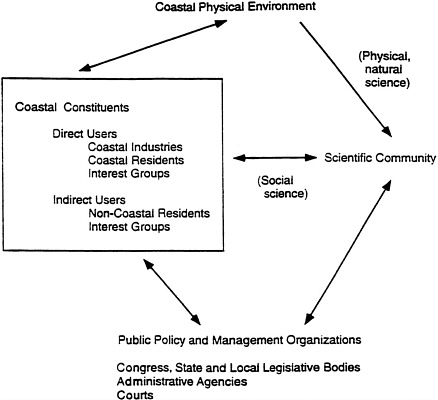
Figure 1. The Cultural Ecology of Coastal Public Policymaking
Social science is the study of humankind. The subset of humankind with which we are concerned in this paper is that contained within the cultural ecologic system shown in Figure 1. As we discuss the ways in which social science must be used in coastal policymaking, it is those humans with whose beliefs and behaviors we will be dealing.
What is Social Science?
Social science is the study of humankind in all of its dimensions. Economics deals with the distribution of scarce goods and services. Sociology deals with the relationships among humans in their perceptual and behavioral dimensions. Psychology deals with the inner workings of each individual, with social psychology taking that analysis to the group level. Political science deals with the ways in which humans deal with the processes, principles, and structures of government and institutions. Anthropology deals with humans in both the physical and cultural dimensions, with an emphasis on cross-cultural comparison. Geography takes in both the physical and cultural features of the human environment.
The humanities deserve a place in this discussion as well. History, literature, the arts—all of these can provide important perspectives towards the principal goal of all social science, which is to describe and explain human beliefs and behaviors. It would be difficult for a social scientist to describe or explain some of the aspects of the coast and its people better than a London, Carson, Melville, or Steinbeck.
The theories and methods of the social sciences are myriad, but in general the approaches are very similar to those in the natural and physical sciences. Developing and validating hypotheses; systematic data collection; qualitative and quantitative analysis and interpretation; all of these principles form the bases for social sciences. In addition, because of the complexity and variability of the factors involved in human beliefs and behaviors, social scientists often supplement the documentable, quantifiable aspects of their analysis with more descriptive and interpretive material in order to give those who use their data the opportunity to sample that richness of belief and behavior not amenable to tabular summary.
Although certain of the social sciences—notably economics and political science—have been involved in policymaking to a greater extent than the others, all are relevant to some portion of the policymaking process.
The Uses of Social Science in Coastal Policymaking
We must begin this section with a distinction between social science OF coastal policymaking and social science FOR coastal policymaking. The former, the study of the human ecology of coastal constituents and policymakers, is useful in its own right and for many of the applications noted below as well. However, it is the latter activity —social science FOR coastal policymaking, that is, designed for direct use within the policy process itself—upon which we’ll focus here.
For heuristic purposes we will divide our discussion into social science and scientists in the process of policy development versus the process of policy implementation. Policy development we will define as that portion of the process up to, but not including, the production of detailed rules and regulations. “Policy development ” for our purposes thus includes development of legislation and the more general policy required by those mandates. Policy implementation we will define as the development of detailed rules and regulations, enforcement, monitoring and evaluation, and possible termination. Although there are many conceptual frameworks within which these processes may be viewed, this broad binary division emphasizes the two behavioral processes with which we are dealing: (1) that of the people who formulate the policies; and (2) that of the people who are affected by those policies.
Policy Development
The process of policy development entails several related tasks. The first is the recognition and definition of a problem or issue amenable to a public policy solution. The second is the construction of a human structure and process through which potential policies might be developed. The third is the development of specific policies through that structure and process. The social sciences can assist in all of these tasks.
Most coastal policy problems or issues arise through routine channels in our existing policy and management structure such as constituents contacting legislative representatives or administrative agency personnel, scientific advisors bringing them to the attention of policymakers, or routine monitoring producing warning signs in various measures. The social sciences can assist this process in two ways.
First, in cases where a potential problem or issue has already been brought to the attention of the policymaker, social science can assist in further defining the problem or issue and investigating its depth and dimension. Survey and sampling techniques can document the breath and nature of concern for the problem or
issue among the constituencies. Ethnographic techniques can further define the depth and character of the issue or problem. Second, “scoping” survey and sampling techniques can explore for perceived problems or issues among the constituencies which may not yet have been brought to the attention of policymakers.
Much of the general structure and process of our public policymaking system is prescribed by legislation and embodied in existing regulation. However, the social sciences can assist in either restructuring existing organizations and processes or in adapting processes within existing organizations to address particular policy questions better. Political scientific analysis of comparative policymaking systems, for example, can be useful in this regard. As another example, a variety of social network techniques may be used in determining which constituencies should be involved in the policymaking process.
Scientists from each social scientific discipline can assist in identifying the different human variables which must be taken into consideration in common in every policy process, and special variables that are relevant to particular policy issues or questions. Economists, for example, can advise on how to build valuation of costs and benefits into the basic policymaking process, or on how to consider such special cases as valuation of non-consumptive use of wildlife resources. All social scientists can contribute to the establishment of baseline, or base case data against which potential changes as a result of public policy activities may be compared. Such contributions are in fact required under NEPA and many other legislative mandates.
In the development of specific policies for specific domains such as fisheries, coastal management or oil and gas, social scientists must work alongside natural and physical scientists in, for example, the definition of policy alternatives and in particular in the analysis of the potential impacts of those alternatives. For any potential policy alternative there is FIRST a potential human (direct) impact and THEN a potential impact, through the potential change in human behavior, on the physical environment. These human and physical impact potentials must be investigated side-by-side for proper projections of possible impacts to be made. Such requirements were the original intent of Environmental Impact Statements; Regulatory Impact Reviews, and similar documents mandated by NEPA and other law and policy. Pursuant to these mandates, fields of study such as social impact assessment have developed virtually alongside many sectoral policy processes such as those in fisheries and oil and gas.
Policy Implementation
The second general portion of the policymaking process involves actually carrying out the policies and programs defined by the policy development process. This involves the development of those rules and regulations which are designed to carry out—as opposed to making policy (although one must often make lower-level policy decisions in the process of developing rules and regulations), and the processes of monitoring and evaluation and possible termination of policy and management processes.
It is precisely in the development of detailed rules and regulations pursuant to legislative mandates that social scientific analysis can be most helpful. The development of rules and regulations, which as opposed to the legal mandates themselves are the actual operational tools of behavioral change, must take into account the interaction of the principles of legal mandate with the actual behavior of those who will ultimately be affected by the regulations. Here the knowledge of human behavior must be taken to a more detailed level, at least to the level of detail to which the rules and regulations which implement policy mandates themselves are taken. So, for example, in setting a fishery policy the policy-maker may have determined using a broad knowledge of conditions in the fishery that time and area closures are the most appropriate mechanism for management of the fishery; the decisions concerning the exact location and timing of such closures, however, require a much greater level of detail concerning fishermen behavior.
Monitoring and evaluation, by definition, cannot take place without social scientific data because the major intent of regulations is to change human behavior towards some goal or objective. Whether one is evaluating the effect of regulation on specific populations or the structure or functioning of the regulatory process itself, it is social scientific data on human behavior which is required. The same generic requirements for monitoring (both short- and long-term), data management, and storage and analysis which apply to the physical and natural sciences also apply to the social sciences for the monitoring and evaluation process.
Existing Mechanisms for Social Scientific Input
There are three mechanisms for social scientific input to coastal policy and management practices: (1) Social scientists working internal to the public policy process itself, that is as employees in public policy agencies; (2) social scientists with positions on advisory bodies to the public policy process; and (3) Social scientists working as researchers who provide data or analysis useful to the policy process.
In the first category, there are social scientific professionals in a number of coastal policy-related agencies from the disciplines of economics, sociology, political science, psychology, and related disciplines. In some agencies, in particular those agencies which employ enough social science professionals for there to be a “critical mass” of resources and expertise, the ability exists to produce social science data or analysis internal to the agency. More often, however, the social scientists employed by public sector agencies lack this critical mass and must act essentially as “entrepreneurs” of the social sciences, attempting to convince (1) the agencies to provide the resources for social scientific work; (2) qualified social scientists outside of the agency—at universities or in private firms—to produce the social scientific data and information; and (3) the agencies to put that data or analysis to use.
In the second area, that of formal advisory functions, virtually all of the coastal policy sectors have included social scientists to one degree or another in such functions. In fisheries, social scientists have participated on the Scientific and Statistical Committees of the Regional Fishery Management Councils; on the Marine Fisheries Advisory Committee; and on specialized social science and issue task forces. In oil and gas, social scientists have served on the national Scientific Advisory Committee for the Minerals Management Service in the Department of Interior, and on regional and issue-oriented task forces. In coastal zone management social scientists have served on advisory committees for state, regional, and national programs.
In addition, social scientists have participated on National Academy of Science (NAS) and National Research Council (NRC) functions concerning coastal and marine issues. The Ocean Studies Board; the Tuna-Porpoise Mortality Committee; the NRC committees on the adequacy of environmental information for OCS oil and gas decisions; these and other NAS functions have included social scientists.
In the role of data and information-producers, social scientists are involved both as individual researchers and as participants in formal organizational arrangements such as cooperative agreements between regulatory agencies and universities or partnership projects between regulatory agencies and private entities. There are common challenges which arise in many such arrangements stemming from the different organizational cultures of each entity, and from the attempt to use social scientists or social scientific information in the policy process in general.
Impediments to the Use of Social Scientists and Social Scientific Data in the Coastal Policy Process
There are three generic problems in the use of social science in the coastal policy process. The first concerns the perceived nature of the social, as compared to the natural and physical, sciences. The second involves the support and resources available for social science applications in coastal policy. The third concerns the actual translation of social scientific data into the policy process.
Is Social Science Science?
At the beginning of this paper we argued that social science involves the same general processes as any scientific endeavor (hypothesis development, systematic data collection, etc.). There is, however, a perception that the social sciences are a different kind of science from the natural and physical. Part of this is due to the extensive use of qualitative methodologies, and the production of data not amenable to tabular summary. Part is due to the difference between data points of relative stability in characteristic and behavior, such as those geologists study, and data points (people) with generally wide variability in characteristic and behavior. Biology, dealing in the coastal application with non-human living organisms, lies somewhere in between geology and sociology on this dimension.
Another aspect of social science that is different from the natural and physical is that social science deals with organisms which have motive and perception themselves, and which in many cases are reactive to the scientific process in ways which may alter the results of the study in question. Fishermen change their behavior to adapt to a regulatory process, thereby confusing the initial social impact assessment; oil companies employ strategies which may alter the nature of the policymaking process itself; fish and oil do not behave in this manner.
Realizing the validity of these conditions, however, it is fair to point out that social science uses BOTH qualitative and qualitative approaches; that variability is simply a parameter which must be taken into account in the design and analysis of a project; and that reactions to studies or policy processes are themselves data to the process. Although the perception of social science as “different” clearly exists, the objective components of this perception may be fully, if not easily, addressed.
Support and Resources for Coastal Social Science
There are relatively few social scientists employed in regulatory agencies. Funding for social science research, especially in the applied areas, in programs
such as those of the National Science Foundation, the Sea Grant Program, and the Coastal Zone Management Act programs has been much smaller than that for the natural and physical sciences. Although social scientists serve on advisory groups, their potential for input has been restricted by the lack of data to use in their functions, and by the kind of perception referred to above. To some extent this is a chicken-and-egg problem: If social science were better understood as a part of the public policy process, it would receive more funding and support; but more funding and support is dependent on the provision of clear examples of where and how social science is relevant, the production of which is dependent on funding and support.
Translating Social Science Into Policy
The greatest challenge in incorporating the social sciences into policymaking is in answering the “so what?” question. Once we know the value of a resource in its different forms and uses to different potential users, how do we allocate it? Once we know that a potentially affected community has a certain social structure, how do we take that into account? If a national management regime should be merged with state and local regimes to best accomplish the policy objective: how do we accomplish that reconfiguration of the public policy process?
There are at least three factors which affect the ability of social science and scientists to enter the policy process. The first has to do with the personal characteristics of the scientists themselves. The second is an issue of skills and training. The third involves, for lack of a better term, serendipity.
Scientists go into their chosen field for many different reasons, among them interest in the substance of the field, the appeal of the inquisitive life, comfort with the university or other institutional setting. Scientists often, however, place a high value on the order and control inherent in scientific research, especially that research amenable to experimentation. Unfortunately, most applied science —including, by definition most of that relevant for coastal policymaking — -takes place under anything but conditions of order and control.
Scientists often feel that environmental policy becomes “political” rather than “scientific.” This is in part a major and basic misperception on their part, because as we pointed out at the beginning of this paper all environmental policy is value-based decisionmaking, which is essentially and incontrovertibly “political.” When added to the general lack of control over many of the research variables, this distaste for the “political” thwarts many efforts to involve scientists in the policymaking process.
Second, the ability to take scientific research results of any kind and fold them into the policy process is a skill, a teachable, technical ability. At the very least, it involves the “translator” having virtually as good a basic working knowledge of the public policy portion of the human ecology of the system as they do of the constituent portion of the system. This is true as well for natural and physical scientists; to fold their knowledge into policymaking they must have a knowledge of the policymaking system itself. These are generally skills not included in the basic training of scientists.
Finally, the effective translation of social scientific knowledge into policy often involves having the right combination of conditions occurring at the right time. The data collection must be organized under a conceptual framework oriented to the particular policy problem or issue; funding must be available in the correct amount and time frame; trained personnel must be available for both the research and the “translation” into the policy process; resources for monitoring and evaluation must be available. It is possible to construct a system where all of these conditions would be met. However, these things are at this point most often accomplished serendipitiously.
Conclusion
Coastal public policymaking is value-based decisionmaking. The effective development and implementation of coastal policy must take place within a complete framework of the cultural as well as physical ecology of coastal environments and their constituents. There is a place in this process for all of the social science disciplines, and the humanities as well, with both quantitative and qualitative data and information.
Specific roles for social scientists may be internal to the policymaking organization, as advisors to the process, or as producers of the social scientific data and information itself. These are roles which have unique characteristics, and for which specific knowledge, training, and often specific temperaments are required. All of these roles must be filled for the effective production and translation of social science into policy.
Although several impediments exist to the full incorporation of social scientists into the coastal policymaking process, that incorporation must be accomplished before we will have a fully rational, comprehensive system for our value-based coastal policymaking.
ON THE ROLE OF SCIENCE IN THE IMPLEMENTATION OF NATIONAL COASTAL OCEAN MANAGEMENT PROGRAMS
Robert W. Knecht
Center for the Study of Marine Policy
Graduate College of Marine Studies
University of Delaware
Introduction
Through studies of various policy areas, analysts have come to understand the “policy process” as consisting of five or six rather discrete phases. The role of science in each of these phases can be expected to be somewhat different, both in degree of potential impact on the process and in the nature of the interaction. The goal of this paper is to explore the science-policy interface—both existing and potential—at various stages of the policy process in the context of a number of national coastal ocean management programs. Examples will be drawn from the national Coastal Zone Management Program, the National Estuary Program, the Outer Continent Shelf Oil and Gas Program, fisheries management under the Magnuson Fishery Conservation and Management Act, and marine mammal protection under the Marine Mammal Protection Act.
It is clear that virtually everyone favors strengthening the scientific basis and the technical soundness of public policymaking. Indeed, policymakers often plead for scientific studies to guide and support their decisions and this is quite
understandable. If well understood causal relationships are in hand, policymaking becomes a much easier task. For example, if concentrations of silt in coastal waters greater than a particular level have been clearly shown to inhibit the growth of corals, then it is relatively straightforward to put a policy in place that regulates those shoreland activities that generate silt runoffs at such levels.
The difficulty lies in the fact that a great deal of coastal and ocean policymaking is taking place without the benefit of a full (or in some cases even partial) “causal” understanding of the processes involved. This occurs, of course, because of the desire, especially by elected policy bodies, to take action of some sort to reduce or eliminate unwanted outcomes. The typical response is to formulate a policy and create a new program to achieve the agreed policy goals even if there is no clear evidence to link the chosen means to the desired end.
Hence, we now have in place coastal zone management (CZM) programs aimed at confronting a wide range of increasingly serious problems which employ approaches which may or may not be effective. We have fishery management programs in use which use prescribed management devices yet it is freely admitted that we do not really understand why fish populations vary the way they do. Similarly, achievement of our policy of “no net loss” of wetlands depends upon an effective mitigation effort, especially with regard to the restoration of degraded wetlands, yet the requisite scientific understanding is not yet in hand.
We find ourselves in the situation mentioned above because society often demands some sort of public action even in advance of full understanding. In some cases, it is possible that an empirically derived relationship can be used to good effect even without a full understanding of how a particular remedy works. The use of small daily doses of aspirin to ward off heart attacks may be a case in point.
The purpose of this paper as mentioned above is to examine the present role of “science” in national coastal ocean management programs. The aim is to obtain a better understanding of why science seems to play a stronger role in some parts of the policy process than in other parts and in some coastal ocean programs than in others. Particular emphasis is placed on implementation and evaluation as stages in the policy process where the greater attention to scientific rigor could have a substantial payoff. To accomplish these aims, the paper is divided into four parts:
-
Science and its place in the policy process
-
Program implementation as an experimental process
-
The use of science in national coastal ocean programs
-
Conclusions
Science and Its Place in the Policy Process
The term, the policy process, is used here to describe the various stages that a policy goes through from the earliest recognition that an emerging problem (or opportunity) is likely to require a new policy or policy change to the final step when action is taken to modify or terminate the policy in question. Brewer and deLeon defined six steps—initiation, estimation, selection, implementation, evaluation, and termination (Brewer and deLeon, 1983). For purposes of this study, steps 2 and 3 have been combined under the term “formulation” and step 6 has been renamed modification and/or termination. The categories we will use in this study, therefore, are policy initiation, policy formulation, policy implementation, policy evaluation, and policy modification and/or termination.
Policy initiation refers to the initial stage wherein a problem is recognized and placed on the national agenda; policy formulation takes place when, after a review of available options, a specific policy response is drafted into legislation; policy implementation is the process by which the mechanisms called for in the legislation (to achieve the policy goals) are made operational; policy evaluation is the stage of the process wherein the results being obtained by the newly implemented mechanisms are compared to the policy outcomes being sought; and, finally, policy modification/termination describes the process by which the results of the evaluation are used in a feedback sense to either modify the program accordingly or to terminate it (Figure 1).

Figure 1. Stages in the Policy Process
It is important to note that the existence of this framework for better understanding the policy process is, itself, the product of the application of the methods of social science. Thus, when we employ this methodology in the present study, we are using an analytically derived instrument in our analysis.
Before examining how “science” relates to each of these stages, it is useful to discuss what is meant by “science” in this paper. Science, as used here, refers to the extent to which the scientific method or scientific approach is employed. By scientific approach we mean the systematic use of analytically or technically rigorous methodologies. Also implied is the use of scientifically derived data and information when such are needed. This involves not only the methods of the natural sciences but the methodologies and approaches of the social sciences as well (economics, geography, political science, law, etc.).
That having been said, it is important to stress that “science” in the context of the policy process is more than simply the injection of scientifically derived results at various points in the process, although this is an important part of it. I believe that science can play a significant role in structuring important parts of the process itself. In Section 2 of the paper, for example, it is suggested that, given the novelty of the approaches being taken, much if not all of the implementation stage of the policy process as it pertains to coastal resource management programs should be thought of as “experimental” in nature. With this in mind, a properly designed implementation process can produce a great deal of information which can be of direct value in modifying the approaches being used or in later efforts of a similar nature. Too little use of this kind of “feedback” is seen. Similarly, a more scientific (more rigorous) approach to coastal zone management would involve much greater emphasis on the evaluation of outcomes and the subsequent adjustment of the management process based on such assessments.
Thus, I believe that the science-policy interface is a very broad one indeed—that science can (and should) play a role in a number of steps in the policy process, particularly in the design and execution of the implementation and evaluation phases.
The possible roles of science in each of the five stages of the policy process are briefly described below.
Policy Initiation
The role of science at this, the earliest stage in the policy process, is somewhat uneven in practice. Science can play a very large role if the issue in question is perceived as largely a technical one —for example, the effect of chlorofluorocarbons on the ozone layer or greenhouse gases on global warming. On the other hand, science is sometimes “used” by special interest advocates trying to attract attention to the need for new public policy in a given area. But clearly, science has an important role to play at this stage in assisting in “framing ” the policy issue to insure that, at the later stages, some intellectual clarity is
present. Also, given the wide variety of issues demanding attention and the fact that resources are almost always limited, science can help in winnowing out trivial or unimportant issues and in setting priorities.
It should be remembered, however, that there are factors at work that tend to reduce or restrict general access to the policy initiation stage. Policy initiation, almost by definition, is a decentralized activity that occurs very early in the policy process. It is possible, therefore, that the opportunity to apply good science to an emerging policy issue may only come at the next stage—the policy formulation stage.
Policy Formulation
It is useful to think of policy formulation as having two parts: (1) the development of policy options and (2) putting the selected option into legislation.
-
The process of formulating an appropriate range of options to deal with particular problems can and often does benefit from science and the use of the scientific approach. At this stage, there is generally a strong desire for objective analyses of available options. Both the natural sciences and the social sciences can play important roles. To the extent that the issue has a technical component, say fisheries management, the natural sciences come into play. To the extent that normative values will be used to differentiate one option from another, the social sciences can be helpful. Also, the social sciences, especially political science, law, public administration, and economics, are often critical in the analysis of the social and administrative viability of various options.
-
The process of converging on a single option and writing it into law is heavily political, of course. At this stage especially, the processes of accommodation, trade offs, and bargaining take place, most of which can be seen as the antithesis of a rigorous approach. Science per se may be used, but probably to justify preconceived or preferred options. In this setting, one set of recruited scientists sometimes is pitted against another, especially if the policy area under discussion is complex and lacks agreed methodologies.
Policy Implementation
In policy areas involving the coastal zone and the coastal ocean and management of the resources contained therein, the implementation phase is by far
the longest and, many would argue, the most important. This is especially true if one includes the entire operational phase of a management program in the implementation phase. Implementation is the phase of the policy process during which (1) the activities necessary to convert a piece of legislation into an operational program are undertaken (interpretations of the statute, preparation of rules and regulations, creation of an administrative structure and operational procedures, etc.) and (2) the operation of the program begins and, generally, continues indefinitely. Although science can play important roles in both aspects of implementation, it can be perceived to be in competition with bureaucratic necessities during this stage. Because of the central importance of this phase of the policy process, it is dealt with more extensively in Section 2 below.
Policy Evaluation
As is well known, this is often the most neglected stage in the policy process. All too frequently, the policy process ends with the implementation phase with little or no serious evaluation ever taking place. In part, this is understandable given the inherent difficulties of program evaluation. Self evaluation (evaluation conducted by those administering the program) lacks the appearance of objectivity whereas “outside ” evaluations sometime also have certain biases built into them. But, perhaps most important is the fact that outcome-related data against which to assess program performance are frequently either not available or not reliable. Relatedly, the stated goals of some management programs are so general, so diffuse or so conflicting that they do not lend themselves to ready evaluation.
Designing appropriate evaluation methodologies clearly demands good science. Indeed, in my view, much more attention needs to be placed on this aspect of the policy process. Without rigorous evaluation procedures in place, coastal resource management programs could be “flying blind.” How is it possible to improve management programs over time without objective, reliable, and timely information on how well they are doing? Designing sound programs to obtain this kind of information for use in systematic evaluation efforts should be given high scientific priority. The social sciences can play an important role here.
Policy Modification/Termination
The point of periodic evaluation of management programs is, of course, to inform the process of program modification and, where appropriate, termination. If the legislation being implemented is absolutely straightforward, with little or no discretion given to the implementors, and no uncertainty exists with regard to achievement of the desired outcomes, then it might be safe to assume that the
operation of the newly implemented program is producing the wanted results. Obviously this is virtually never the case. More realistic is the assumption, especially with regard to coastal zone and coastal ocean management initiatives, that considerable discretion is left to the implementing agency and that the linkage between program inputs and desired program outcomes is ill-defined and poorly understood. In the real world, therefore, periodic adjustment or modification of the program based on the results of carefully conducted, regular evaluations is a vital aspect of a properly functioning policy process.
Program Implementation as an Experimental Process
We now turn to a more detailed examination of the program implementation phase of the policy process which, together with the evaluation phase, holds great promise to benefit from more attention to science and the scientific approach.
The discussion below is divided into three parts: the nature of the implementation process; implementation as an experiment; and the need for a technically sound evaluation process.
The nature of the implementation process—During the implementation process, the intent of Congress as embodied in the legislation is converted into a working program complete with rules and regulations, procedures, staffing and offices, and, sometimes, as well, a field structure. Far from being a straightforward process, a substantial measure of policymaking is usually called for to fill gaps in the legislation, to interpret unclear or ambiguous provisions and to deal with unanticipated issues. Furthermore, if the coastal states and/or local governments are to be included in the program, the federal agency assigned the responsibility for implementation of the legislation immediately confronts a “double bind”—that of attempting to design the details of the new program in such a way as to accommodate the differences between states (in terms of politics, administrative structure, tradition, etc.) while at the same time struggling to put uniform standards in place across the nation as a whole.
As mentioned above, it is useful to divide the implementation process into two parts: (1) the initial period shortly after the enactment of the legislation when a number of one-time activities such as the writing of rules and regulations are undertaken in the preparation for the operational phase of the program and (2) the operation of the program itself, a phase likely to extend over a number of years. In principle, both parts should be candidates for strong scientific input since the heavy politics surrounding the shaping of the legislation will generally not be present and since the implementing agency is usually given a rather significant amount of discretion in most legislation. Yet factors are present which tend to
mitigate against the use of science. For one thing, time pressures almost inevitably exist since, increasingly, Congress is setting the timetable for the preparation of rules and regulations in the legislation itself. Agency staff, under these conditions, turn to familiar approaches to compile the requisite new rules, regulations, and procedures such as the use of specialized consultants or in-house staff familiar with the bureaucratic timelines and constraints.
Another barrier to the use of more science in the initial implementation phase relates to the matter of agency culture and the emphasis in the implementation process on legal and policy issues. During this critical period in gearing up a new program, staff tends to focus on Congressional intent, the needs of the clients (including the coastal states), and the review procedures for new regulations inside the government (other federal agencies and OMB). In this environment, unless specifically called for in the legislation, using the best science in deriving proposed new regulations may seem an unnecessary luxury.
The second phase of implementation is the long-term operation of the program itself. For programs that are funded (in part) by the federal government and conducted (for the most part) by the states and territories, as many coastal resource management programs are, a strong intergovernmental focus develops. Indeed, implementation at this stage often becomes an activity involving not only the responsible federal agency but counterpart state and local agencies as well. In the process, the emphasis shifts from questions of interpretation of the legislation and the establishment of working procedures, to intergovernmental coordination, administration (grants management, etc.) and oversight. And at the state and local levels, concentration is on the formulation of responses to the new federal mandates and, sometimes, to new state mandates as well, through the establishment and operation of the resource management programs. Again, while the potential is large for the application of science to put the soundest possible management and regulatory programs in place, the bureaucratic pressures tend to push in other directions.
Implementation as an Experiment
As can be seen from above, the implementation phase is largely conducted in a sequential fashion. It is usually seen as a process whereby regulations and procedures are created at the federal level, are received and interpreted at the state level, leading to regulatory and management programs which are operated at state and local levels. In some cases, of course, state legislative mandates in coastal management predate federal initiatives and state programs are already in place.
One can question whether this linear approach is the best way to undertake the implementation of programs which often contain untried concepts and novel approaches. Furthermore, these new approaches are being tried in greatly varying state and territorial settings. These very different contexts challenge both the initial phase of the implementation process wherein national uniformity is sought in rules and regulations, and, as well, the operational phase of the program which anticipates that each of the 35 or so coastal state and territorial programs will follow a generally similar course.
New concepts are built into coastal and ocean management legislation with some regularity. The federal consistency provisions and the national interest requirements were virtually untested concepts when they were incorporated into the Coastal Zone Management Act of 1972. The concept of “optimum yield” in the Magnuson Fishery Conservation and Management Act and the approach embodied in “optimum sustainable population” in the Marine Mammal Protection Act were also new ideas. Yet, the implementation processes generally proceeded as if the legislative language, the national rules and regulations, and the state responses to them are bound to be “right ” (or close enough) the first time out! Most of us would agree that this “faith” in the success of our initial efforts to deal with new concepts is probably misplaced. The potential difficulties represented in this approach are increased still further when one realizes that objective data upon which to evaluate the success or failure of these (new and untested) efforts are generally not available.
The coastal states and territories are exceptionally varied in their characteristics. These differences extend from the structure of the state government, the individual endowments of coastal resources and the nature and perceived urgency of coastal and ocean problems, to political traditions, the relations between states and their local governments, the varying roles and power of interest groups, economic conditions, the goals and values of the electorate, and many other factors. Virtually all of these factors affect the way in which the implementation of national coastal and ocean resource management programs proceed in a given state. Some factors make the process easier, others slow it down, and still others have a diversionary effect. All of these influences (and many others) leave their “mark ” on the implementation process--for example, on the extent to which commissions or councils are used in CZM permitting, on the “transparency ” (or lack thereof) of the regulatory process, on the role of local governments and resource management, on the degree to which science is used in the decisionmaking, and on many other aspects of the implementation process.
Each state and territory also experiences a generally different stream of coastal and ocean issues, problems, and opportunities throughout the implementation process. It is true that most coastal states have had to confront
the same set of particular national issues as these arose (i.e., acceleration in the national OCS oil and gas program) but, for the most part, the particular mix of issues confronted by each state CZM program was unique to that program. These differences, too, had varying influences on the implementation process.
Taken together with the structural differences between the states discussed above, these factors insure that what emerges from the national level as a set of uniform rules, regulations, procedures and guidance, will necessarily generate a wide variety of responses as the implementation proceeds at the state and local level. States will structure and empower their management efforts very differently. For example, they will choose different regulatory devices; they will house their management programs in different agencies; and give them greatly varying amounts of visibility and/or autonomy depending on their own realities, constraints, and opportunities.
Indeed, after 10 to 15 years of evolution, for example, the 35 state and territorial CZM programs look very different one from another. One would scarcely believe that they represented responses to the same piece of federal legislation. Yet all have been certified by the federal government as meeting the standards of the Coastal Zone Management Act of 1972. The differences between these programs are not random. The specific characteristics that they now possess can be traced to the individual peculiarities of each state and territory —peculiarities in the state politics, structure, administration, traditions, bureaucratic culture, and differences in the coastal and ocean environment and resource issues faced by each.
In effect then, the implementation process under these conditions should be seen as a large scale social science experiment and designed as such. This would mean that states and territories would more systematically document certain changes in the structure, implementation, and/or operation of their programs that took place. More care would be taken to be aware of key decisions made in the structure or operation of the programs and the reasons for the actions taken. Most importantly, considerably more attention would be paid to the evaluation issue. Program resources would be allocated to the design and implementation of processes to measure the extent to which CZM programs (for example) achieved expressly articulated goals. Of course, this would entail the setting of specific, “on the ground” goals and objectives, probably on an annual basis, and creating a process to collect the data on results and outcomes necessary to evaluate the effectiveness of the management program in reaching the specified goals.
With this kind of information, we could better understand the kind of CZM experiment that is being conducted in California or in South Carolina or in Delaware and could derive some important new information from these extensive (and
expensive) experiments. For example, California has gained a wealth of experience on the pros and cons of employing a politically appointed regulatory commission as a part of its CZM program. On the other hand, Delaware has shown what can be done in coastal management using a minimum in dedicated administrative structure and staff.
Thus, it would seem that the incorporation of this additional rigor is essential if coastal zone management or other coastal programs are to become more scientifically grounded programs. Some of the implications of this are discussed in the next part.
Need for a technically sound evaluation proces--Four steps are necessary to create a more rigorous assessment process:
-
The establishment and articulation of a clear set of goals for coastal management programs to achieve in a prescribed time period.
-
The design and operation of sub-programs to achieve each of the agreed goals.
-
The collection of data necessary to evaluate the extent to which each of the individual goals were met in the prescribed time period.
-
Comparison of goals with outcomes, analysis of results, and the formulation of appropriate program modifications (or termination).
Each of these are discussed briefly below.
Setting Goals
Goals undoubtedly are already being set by coastal management programs but in many cases these are process-related not outcome-related goals. For example, a state may have the goal of issuing new regulations on wetlands during the coming year or the goal to increase wetland enforcement actions by thirty percent, both being process-related goals. Alternatively, it could have the goal of cutting the rate of state coastal wetland loss to no more than 1,000 acres during the next year (down, for example, from a rate of 2,000 acres per year averaged over the last three years). Specific, outcome-oriented, “on the ground” goals should be set in each of the major goal areas of the management program in question. For CZM programs, these would typically include wetlands protection, beach and dune management, improved public access, management of coastal development to reduce losses due to natural hazards (erosion, storms), and, soon,
the management of non-point source pollution. As much as possible, the goals developed in each of these areas should be quantitatively expressed and progress toward the achievement of them subject to observation and measurement. To the extent that the goals can be expressed in quantitative terms, it should, in principle, be possible to place a “value” on the achievement of each of the goals and hence on the regulatory functions of the overall CZM program. Of course, work on establishing the value of fully functioning natural coastal wetlands of various types is still very much in its infancy so that bottom line benefit-cost ratios, to the extent that they are desired, may be still somewhat in the future. Nonetheless, even the information on how much is being spent per acre to protect coastal wetlands would be of considerable interest.
Program Operation
The more rigorous approach to coastal management would require that specific attention be paid to the individual parts of the state’ s coastal management program associated with each of the agreed goals —that a clear methodology be set out showing what will be done during the next 12 months to achieve each of the goals. Using the wetland example above, the plan would show how the 2,000 acres per year loss was going to be reduced to 1,000 per year loss—perhaps 500 of the 1,000 would come from increased enforcement actions and the other 500 from a series of pending rezoning actions. The important point here is that the plan to achieve each of the goals should be shown in sufficient detail to allow a later determination as to which parts need modification based on a year-end analysis of actual achievements.
Collection of Outcomes Data
Surprisingly, relative little attention has been given to this need as yet. However, with the specific goals of the management program in a given year more clearly spelled out, the collection of outcome-related data should become a relatively straightforward task. Questions related to the kind of data to collect and how to do it should be examined and settled as an integral part of the goal-setting exercise. Indeed, the setting of concrete goals and the methodology to be used to determine the extent to which the goals are achieved, should be seen as part and parcel of the same task. Without doubt, proper attention to this aspect will require the investment of resources (time, money) devoted expressly to this need. New data reporting schemes may have to be established.
Analysis and Program Modification/Termination
The final step begins with a comparison of the individual goals and the related outcomes data. To the extent that shortfalls exist, an analysis should be undertaken to attempt to relate the shortfalls to the methodology that the program put in place in order to achieve the outcome. To the extent that shortfalls in desired outcomes can be traced back to specific program elements, modifications or changes can be made in the deficient elements. Ultimately, the analysis may show that the management program or parts of it are no longer cost effective and that termination is indicated.
The Use of Science in National Coastal/Ocean Programs
This section discusses the role of science in four major national coastal ocean programs—the Coastal Zone Management Program (under the Coastal Zone Management Act of 1972 as amended), the Fisheries Management Program (under the Magnuson Fishery Conservation and Management Act of 1976 as amended), the Outer Continental Shelf Oil and Gas Program (under the Outer Continental Shelf Lands Act Amendments of 1978 as amended), and the Marine Mammal Protection Program (under the Marine Mammal Protection Act of 1972 as amended). The purpose of the section is to describe the way in which (and the extent to which) science is now incorporated into or influences these programs and to provide some examples where increased use of science appears to be occurring.
The Coastal Zone Management Act (CZMA) of 1972
Much of the earlier discussion used examples drawn from the Coastal Zone Management Program and these will not be repeated here. The CZMA has no provisions that explicitly bring science into the policymaking and management processes with the exception of the estuarine reserve research provision which encourages research in formally designated estuarine reserves. The Act seeks to “preserve, protect, develop, and, where possible, restore and enhance the resources of the coastal zone” by encouraging the coastal states to exercise their full authority. “Encouragement” is provided in the form of grants, technical assistance, and the incentives implicit in the additional intergovernmental leverage offered in the federal consistency provisions.
In contrast to other programs where the overall goal is reasonably specific (i.e., protecting marine mammals or managing fish), the CZMA has multiple, sometimes inconsistent goals which clearly add complexity to the program. Furthermore, the tractability of the marine mammal and fishery management
problems is substantially higher than in the case of coastal zone management. As Kem Lowry has put it (Lowry, 1985):
The CZMA is unique among national environmental programs in its lack of an explicit causal theory. It sets no standards and prescribes no intervention technologies for coastal resources management. It is not based on a set of hypotheses about the relationships among specific management techniques and desirable outcomes.
Lowry goes on to say that the approach used in CZMA involves “variables that are related in poorly understood ways and for which no widely accepted solutions exist.”
Prohibiting the take of marine mammals as prescribed in the Marine Mammal Protection Act (MMPA) should restore the populations of these animals, which is a central goal of MMPA—managing fishing effort, one of the measures called for in the Magnuson Fishery Conservation and Management Act (MFCMA), should restore fisheries abundance. But, does it necessarily follow that providing financial assistance and intergovernmental incentives to states will necessarily lead to reduced losses of wetlands, increased public access to the shoreline, and fewer losses from natural coastal hazards—all goals of the CZMA?
In terms of the overall goals of CZM, since 1980 there has been a steady effort, both in legislative amendments’ to the CZMA and in administrative oversight, to specify the national goals of CZM with less ambiguity and more clarity. Indeed, today it is probably possible to lay out a set of national coastal goals that would be accepted by most of the concerned interests. However, systematic and rigorous evaluation of the extent to which the CZM programs of the nation are achieving these goals (and others set by the individual states) is not yet underway.
In addition to overall program soundness issues as discussed above, most of the technical areas of CZM have important scientific aspects. Management of coastal erosion requires a detailed understanding of coastal processes; restoration and creation of coastal wetlands requires a good appreciation of the various natural functions of wetlands and the extent to which they can be replicated in man-modified or man-created systems. Research needs such as these should be systematically identified and funding found for the necessary studies. The 1990 amendments to the CZMA re-emphasize the technical assistance dimension of coastal zone management. The agency administering this program (the Office of Ocean and Coastal Resource Management of NOAA) intends to strengthen this part of their activity substantially.
The Magnuson Fishery Conservation and Management Act
The legislation is fashioned with the need for scientific information in mind. Scientific and statistical committees are called for as a part of each regional council structure and councils are mandated to take account of the recommendations of these committees in devising specific fishery management plans. Recently, fishery management-related scientific studies have focused on rationalizing the fishery allocation process in order that commercial fishing can be done in a more economically efficient manner. One of the new schemes—individual transferable quotas (ITQS)— emerged directly from the research studies of fishery economists.
While some analysts may see the first introduction of ITQs into U.S. fisheries management program as an “experiment,” the implementation of the new program must apparently go forward as if fishermen were receiving, using, and trading fixed percentages of the total allowable catch of the fish stock (in this case, surf clams off the Mid-Atlantic coast) which they will hold (own) in perpetuity. If this were not perceived to be the case, fishermen would be less inclined to take the long-term view in seeking the best strategies to protect their economic interest, hence, invalidating one of the central tenets of the privatization approach. This “reality” seems to rule out the possibility to do very much preliminary research or pilot studies on ITQs prior to their universal adoption in a given fishery.
Many important scientific questions remain with respect to fisheries management. For example, fishery scientists are not yet in a position to ascribe many of the observed variations in fish abundance to specific causes (pollution, overfishing, habitat loss, etc.) although clearly this kind of understanding is basic to a rational management program.
Outer Continental Shelf Lands Act Amendments (OCSLAA)
The offshore oil and gas activities in the United States are governed under the OCSLAA of 1978. This legislation contains an explicit “science” component—the Environmental Studies Program (ESP). The purpose of ESP is to conduct studies in support of the overall national offshore oil and gas program. A good bit of research has been done under this program although some critics charge that the results do not seem to be closely related to the policy- and decisionmaking processes. Due to conflicts between some of the coastal states, environmental interests, and the federal government, both the Congress and the President have placed moratoria on the leasing of certain offshore ocean areas over the last half a dozen years or so. The resumption of leasing preparations in some of these areas has been predicated on the completion of an adequate set of
environmental studies. A recent National Research Council study, conducted at the request of the Minerals Management Service of the Department of Interior, also pointed out that the ESP has not supported sufficient social and economic studies in its program to date (National Research Council, 1993). Recommendations were made with regard to a wide range of studies which are needed.
An important difference exists, of course, between the OCS oil and gas program and the two programs discussed above (CZM and fisheries management). The first two programs are truly intergovernmental in nature, with the states and territories playing active roles as “partners” with the federal government. [The same is true for the National Estuary Program discussed below.] The oil and gas program (and the marine mammal protection program discussed below, as well) is first and foremost a federal program, operated principally for national purposes with the states limited to an advisory role (except for the legal leverage gained through the operation of the federal consistency provisions of the CZMA). While better science can sometimes reduce conflict in controversial development proposals by narrowing the difference between estimates of adverse effects, conflicts directly related to perceived inequities in decisionmaking power must be addressed directly by adjustments in policy- and decisionmaking procedures.
In addition to questions regarding the adequacy of socioeconomic studies of the impacts of offshore oil and gas development and the debate over the role of the states and territories in decisionmaking, a number of other issues involving the more technical aspects of offshore oil and gas operations have also faced the program. One example would be the impacts of the use and disposal of drilling muds on the surrounding environment and the resources contained therein. Are such muds injurious to the marine environment and to marine resources? If so, under what conditions? Too often, even after MMS has funded environmental studies to examine issues such as this one, controversy continues. This can be because the validity of particular findings are in question or the interpretation of the results is debatable. Much, if not all, of this difficulty could be eliminated with greater use of outside peer review groups to help in the drafting of work statements, in the review of requests for proposals, in the selection of research proposals to be funded, and, especially, in the peer review of results and their interpretation. Thus, a more rigorous scientific approach to the operation of the Environmental Studies Program would likely contribute to a more widely accepted offshore oil and gas program.
Marine Mammal Protection Act
From the beginning, science has been an integral part of the national effort to protect marine mammals in the United States. The legislation —the Marine
Mammal Protection Act of 1972—authorized the creation of the Marine Mammal Commission and a committee of scientific advisors on marine mammals. There was (and still is) a close working connection between the agencies implementing and enforcing the legislation (the National Marine Fisheries Service and the Fish and Wildlife Service), the Marine Mammal Commission, and the marine mammal scientific community. The prominence of science may be attributable to the fact that a tractable problem is posed in the legislation—that of protecting marine mammals by prohibiting the taking of the animals and through other related measures and science has a clear place in assisting in the achievement of that goal. Scientific studies are undertaken of ways to achieve optimum sustainable populations and of all of the factors affecting the health and well-being of various types of marine mammals. Science also is brought to bear in developing innovative methodologies to estimate population levels of animals that are sometimes difficult to observe. Research is carried on with regard to the effects of changes in habitat, pollution, loss of food supply, and other changes that could affect various species.
On the other hand, fewer studies seem to be undertaken of the interactions between marine mammals and other species, say fish stocks, which are not under the same kind of protective regime. Also, few studies of the long-term implications of the policy of near absolute protection have appeared in the literature and, with the exception of research involving indigenous peoples, relatively few social science studies exist.
National Estuary Program
The National Estuary Program (NEP) is the newest coastal ocean management program to appear at the federal level. Formally authorized by the 1987 amendments to the Clean Water Act, 21 of the nation’s most important estuaries are now a part of the Environmental Protection Agency (EPA)-administered effort. The aim of the program is to produce improved management of important estuaries in the United States using a waterbody-drainage basin approach and not one structured principally by political boundaries and jurisdictions.
The legislation and EPA’s operational guidance together have built a significant science component into each of the estuary programs. Patterned after the “flagship” program—Chesapeake Bay—scientific and technical advisory committees are created as one of the major organizational elements of each program. These committees oversee research programs aimed at filling the gaps in understanding the behavior of the estuaries in question. If the Delaware estuary program is a representative example, then the bulk of the funding available to the
individual NEP programs during their first several years goes into research and characterization studies of the estuaries.
With the completion and federal approval of the initial comprehensive conservation management plans (CCMPs), the first several estuary programs are entering the “implementation” phase, notably Buzzards Bay (Massachusetts) and Puget Sound (Washington). No specific implementation plan had been included in the 1987 legislation on the assumption, presumably, that each of the agencies in the “management conference” (a body of all of the involved and affected federal, state, and local agencies) will accept the responsibility to implement those portions of the CCMP under their control. Relatively little NEP funding appears to be going into management or implementation-related research although a novel program like NEP would seemingly benefit from such studies.
Estimates of the degree of science involvement in each of the five coastal ocean management programs are noted in Figure 2 below. Entries in the table have been subjectively estimated by the author based on reference to the underlying legislation, the nature of the implementation processes used in connection with the five programs, and a general appraisal of the policymaking approaches in each area.
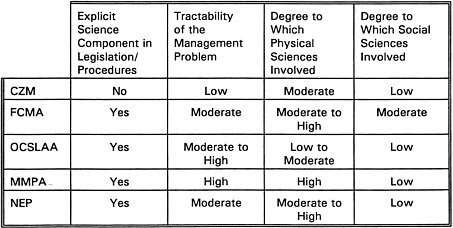
Figure 2. Science and National Coastal/Ocean Management Programs
Figure 2 shows that “science” is explicitly built into four of the five coastal ocean management programs. Only the CZM program has no such element. Of the five programs, the marine mammal protection program is judged to be the most tractable, the fisheries management program and the offshore oil and gas program, the next most tractable, and the estuary management program is judged to be of “moderate” tractability, with the CZM program judged as the least tractable of the five (Cicin-Sain, 1986). Estimates of the degree to which the natural sciences are involved in the program suggest that the most tractable programs are likely to have a larger natural science involvement than the less tractable programs. Similar estimates for the social sciences suggest an involvement more than minimal in only one program area, fisheries management.
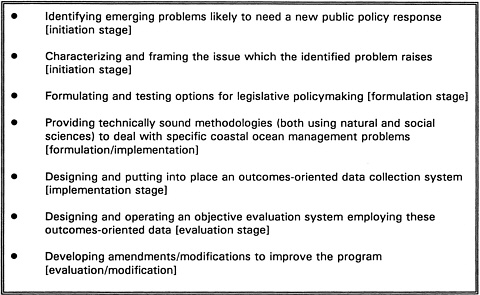
Figure 3. Ways in Which Science Can Assist Coastal Ocean Policymaking at Different Stages of the Policy Process.
Conclusions
I have argued that science can play an important role in the formulation, implementation, and operation of national coastal ocean management programs. In practice, however, the role is uneven and varies from program to program and, as well, depending on the phase of the policy process. Figure 3 below contains a listing of some of the principal ways in which, in my view, science can have a positive influence on the coastal ocean policy, decisionmaking, and management process.
Taking into account the opportunities for science input suggested in Figure 3, several suggestions are offered to those currently funding coastal ocean science research which is being conducted to support improved policymaking, decisionmaking, and management, and to those responsible for the drafting of legislation and for the implementation and operation of national coastal ocean management programs:
-
Coastal ocean management legislation should contain specific mandates for regular, objective evaluation of the management systems resulting from the legislation.
-
Coastal ocean research programs justified on the basis of improving policy, decisionmaking, and management should involve active managers of coastal ocean resource management programs in all of the processes related to project selection, funding, and oversight.
-
Agencies implementing coastal ocean resource management programs containing new and relatively untested concepts should adopt implementation strategies that acknowledge the experimental nature of such programs.
-
Coastal and ocean resource management programs should regularly collaborate to: (a) develop and maintain a list of the most critical scientific and technical needs facing such programs and (b) ensure that these research needs are regularly forwarded to agencies funding research in this area. My suggestions for an initial list of candidate items are given below.
-
Development of sound mitigation and restoration strategies based on a full understanding of the natural functioning of wetlands
-
Improved understanding of eutrophication and algal blooms
-
Effective management measures for non-point source pollution control
-
Determination of coastal erosion rates
-
Methodologies for handling cumulative impacts
-
Methodologies for multiple use coastal ocean management
-
Methodologies for valuation of natural resources (and the uses of such resources)
-
Use of innovative approaches for managing shoreline use in the face of accelerating sea level rise
-
Formulation of better integrated coastal zone management programs
-
Use of market-based approaches in natural resources and environmental management
-
Operationalizing the ethical concepts of intergenerational equity and stewardship
-
Operationalizing the legal concepts underlying the public trust doctrine
-
Development and testing of innovative approaches to shared governance (federal-state) approaches in the expanded territorial sea and in the Exclusive Economic Zone
Others will, of course, have their own candidate items for this list. In any event, it is hoped that agencies funding coastal ocean science and research will find listings such as this one useful as they formulate their funding priorities.
In closing, I will have met my goals in preparing this paper if I have stimulated some additional thinking on those aspects of the science-policy interface explored above. It is my view that much can be gained by focusing increased scientific attention on the implementation and the evaluation stages of the policy process. Both the natural sciences and the social sciences have important roles to play and both are needed if we are to better inform the stewardship that we must bring to our nation’s coastal ocean and its resources.
References
Brewer, G.D. and P. deLeon. 1983. The Foundations of Policy Analysis, Dorset Press, Homewood, IL, p. 17.
Cicin-Sain, B. 1986. Ocean resources and intergovernmental relations: An analysis of patterns In: Maynard Silva (ed.), Ocean Resources and US Intergovernmental Relations in the 1980s, Westview Press, Boulder, CA.
Lowry, K. 1985. Assessing the implementation of federal consistency policy. American Planning Association Journal, Summer 1985.
National Research Council. 1993. Assessment of the U.S. Outer Continental Shelf Environmental Studies Program: IV Lessons and Opportunities, National Academy Press, Washington, DC.
ALTERNATIVE MODELS OF THE ROLE OF SCIENCE IN PUBLIC POLICY: APPLICATIONS TO COASTAL ZONE MANAGEMENT
Paul A. Sabatier
Division of Environmental Studies
University of California, Davis
This paper will first lay out a Textbook Model of the role of science in public policy—focusing on the proper roles of scientists, elected public officials, and agency officials—and then discuss the problems with this conception. I shall then present an alternative, Advocacy Coalition Model, which has proven to be useful in several environmental policy disputes, including (1) the controversy over freshwater flows into the San Francisco Bay/Estuary and (2) petroleum leasing on the Outer Continental Shelf (OCS). Hopefully the contrast between the two models will provide a point of departure for our distinguished panelists.
The Textbook Model and Its Limitations
This is basically a normative model, derived from certain fundamental principles of democratic theory. It assigns very distinct roles to three categories of actors in the policy process:
-
Scientists are supposed to be neutral seekers of the truth. Their role is to understand the world and to present this information to policymakers. When serving as policy advocates, they should make their normative assumptions explicit.
-
Elected officials are responsible for making basic policy decisions in a manner which reflects the distribution of values in society. They use scientific findings to help them understand trends in various problems, the factors affecting them, and the means of alleviating those problems. Their basic role is to establish clear laws (and budgetary priorities) for implementation by agencies. They should have little role in science, except to establish funding priorities for applied research.
-
Governmental agencies are composed largely of civil servants who should be politically neutral (i.e., faithfully implement whatever the legislature decides) and who have a special role in fostering applied research in areas of interest to the agency. Political appointees within the agency are responsible for seeing that the agency reflects the Administration ’s priorities—to the extent permitted by law.
As indicated above, this is a normative model of how science should be used in making public policy. And there is some evidence that many scientists involved in policy disputes do, in fact, view themselves as “objective technicians” (Meltsner, 1976).
According to this model, the major problem impeding communication between scientists and governmental officials is that they inhabit two quite distinct communities with different value priorities, time-frames, and methods for resolving conflict (Dunn, 1980; Webber, 1983). Proposals for reform thus focus on improving communication between the two communities by exchange programs, the development of facilitating or “translating” institutions, etc. (Sabatier, 1978). Several of the papers in this symposium—most notably that by Peter Douglas—generally are consistent with the Textbook Model.
Limitations of the Textbook Model
The textbook model has substantial limitations in practice, in large part because many people do not behave as the model indicates they should.
-
Scientists are often not neutral participants. Virtually all scientists operate within a specific “paradigm,” i.e., a set of often-implicit assumptions about basic causal assumptions and proper methods of investigation which guide
-
research (Kuhn, 1970; Lakatos, 1971). For example, almost all biologists operate within a paradigm labeled “the Neo-Darwinian Synthesis” which views changes in species composition as a function of genetic mutation and selection pressures arising from environmental perturbations. Efforts to enact public policies which go against a dominant paradigm—such as a creationist view of evolution—are likely to encounter strenuous resistance.
More importantly for our purposes, almost all scientific disciplines contain important normative assumptions which members often come to accept in an uncritical fashion. For example, my impression is that most civil engineers assume that nature exists for human purposes and that they can mitigate virtually all negative impacts arising from their projects. In contrast, many wildlife biologists tend to view virtually all species as having intrinsic worth and are very skeptical of the ability of humans to manipulate natural systems without unforeseen adverse consequences on one or more species. With respect to nuclear waste disposal, Jenkins-Smith and Barke (1992) have recently provided evidence that biologists perceive significantly greater risks than physicists, chemists, and engineers; the latter think basically in terms of dose-response curves while biologists are more wary of the effects of any dose on living organisms.
Finally, scientists are often drawn to applied—rather than basic—research because they want to help solve a particular problem. Having a demonstrable effect on policy, however, normally requires the accumulation of results over an extended period of time (Weiss, 1977). The more neutral and “apolitical” scientists are unlikely to remain interested in an issue long enough to have such an impact. Thus the most active scientists in a particular dispute are likely to be those who have been involved the longest and who are most committed to defending a particular point of view.
The end result is that scientists who have something to contribute to important policy disputes are seldom neutral (see also Margolis, 1974; Mazur, 1981). I’m not arguing they manipulate or falsify data. Instead, disciplinary paradigms, the values underlying their discipline, and their desire to solve particular problems affect the topics they choose to research, the methods they utilize, how they treat uncertainty, where they place the burden of proof, and how quickly they present various results. For example, I suspect that wildlife biologists are much more likely than engineers to look for species in trouble because their disciplinary norms define species extinction as a serious problem. They are more likely to look to human technological interventions as a likely explanation because they tend to respect the beauty of natural systems. In contrast, engineers assume they can improve on nature. Members within each discipline will readily present results which are congruent with these assumptions, while incongruent results are likely
to be interpreted as tentative and in need of further verification (Kuhn, 1970; Lakatos, 1971).
-
Elected officials seldom pass clear laws on contentious issues with substantial technical components because very few have the expertise to obtain a decent understanding of the technical issues. Instead, they tend to pass procedural laws which hand over the problem to an administrative agency without clear policy priorities (Gormley, 1986). A possible exception involves cases with clear and inviting villains, e.g., industrial polluters, during periods of public outrage.
In terms of funding research, elected officials seldom make a pretense of neutrality. Instead, they tend to support research consistent with their view of “the problem.” In water pollution, for example, Liberal Democrats support funding for studies of health effects, while Conservative Republicans want more analyses of the economic impacts of environmental regulations.
-
Agency officials are seldom as neutral as the civil servants in the Weberian model of bureaucracy (Knott and Miller, 1987). Most agencies involved in the longstanding controversy surrounding the protection of the San Francisco Bay/Estuary—whether it be the U.S. Bureau of Reclamation, state and federal fish and game agencies, the Bay Conservation and Development Commission, the U.S. EPA, or California water agencies —have a fairly clear overall mission which tells them to be give priority to some values over others. Most officials who join the agency come to accept those priorities, whether out of self-selection or gradual indoctrination. Agencies are often dominated by members of a particular profession or scientific discipline who share the norms of colleagues outside the agency (Bell, 1985; Gormley, 1987). Finally, any agency must be sensitive to the wishes of interest groups and legislators who play influential roles in allocating budgetary and statutory resources if it is to survive and prosper (Pfeffer and Salancik, 1978). Thus most agencies can be expected to sponsor research consistent with their mission and to be skeptical of findings which cast doubt on its wisdom.
For example, in a 1991 seminar at the University of California at Davis, Randy Brown of the California Department of Water Resources (the agency responsible for managing the State Water Project) interpreted the data in Figure 1 to indicate that delta smelt populations are low but stable, whereas Peter Moyle of the University of California at Davis interpreted them as providing strong evidence for listing as an endangered species. Both are fisheries biologists, but their institutional affiliations lead them to draw different conclusions from the same data. Interestingly, however, Brown has helped fund much of Moyle’s research on
the Delta smelt, so there is no effort on his part to impede Moyle from studying an issue which could adversely affect his agency.22
Likewise, recent studies of Congressional testimony on Outer Continental Shelf (OCS) petroleum drilling during the 1969-1986 period revealed that the Environmental Protection Agency (EPA) and the National Oceanic and Atmospheric Administration (NOAA) were usually allied with environmental groups, the Department of Energy was usually allied with the petroleum companies, and the Department of Interior frequently changed its position depending upon the administration in power and world oil markets (Jenkins-Smith et al., 1991; Jenkins-Smith and St. Clair, 1993). The study also found that agencies allied with interest groups generally tended to assume more moderate positions than their interest group allies.

Figure 1. Delta smelt fall abundance indices for the midwater trawl survey for years 1967-1973, 1975-1978, 1980-1990 (from Brown, 1991).
|
22 |
The U.S. Fish and Wildlife Service in the spring of 1993 listed the Delta smelt as a threatened species. This is likely to have very substantial repercussions on the operation of theState Water Project managed by DWR. |
In sum, very few participants in a policy dispute can be expected to behave in a manner consistent with the Textbook Model. Scientists who are actively involved are seldom neutral. Elected officials seldom make clear value choices. And agency officials are normally (and properly) concerned with promoting a legal and/or professional mission accumulated over a number of years. Thus any model which assumes neutrality on the part of most participants is seriously flawed.
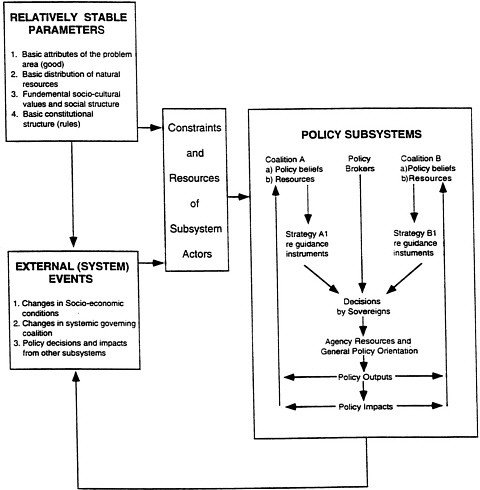
Figure 2. General Model of Policy Evolution Focusing on Competing Advocacy Coalitions Within Policy Subsystems (from Sabatier, 1988). Reprinted by permission of Kluwer Academic Publishers.
An Advocacy Coalition Model
Sabatier (1988) recently developed a conceptual framework of the policy process which views policy change over time as primarily the result of competition among advocacy coalitions within a policy subsystem. An advocacy coalition consists of interest group leaders, legislators, agency officials, researchers, and even journalists who share a set of basic beliefs (policy goals plus critical perceptions of causal relationships) and who seek to alter the rules of various governmental institutions in order to achieve those goals over time. Conflict among coalitions is mediated by “policy brokers,” i.e., actors more concerned with fashioning an acceptable compromise than with achieving specific policy goals. While the framework focuses on competition among coalitions within the subsystem, changes external to the subsystem and stable system parameters also play an important role in policy change ( Figure 2).
The Advocacy Coalition Framework (ACF) differs from the Textbook Model in assuming that scientific researchers and agency officials are not neutral but, instead, are often members of advocacy coalitions. In San Francisco Bay/Delta water policy, for example, one can probably identify an Environmental Coalition composed of environmental groups, many Bay legislators (e.g., Senator Petris, Congressman Miller), most officials in the California Department of Fish and Game and the U.S. Fish and Wildlife Service, many officials in the San Francisco Regional Water Quality Board, most researchers associated with the Bay Habitat Institute and the Tiburon Center, and several Bay Area journalists. They place a high priority on maintaining and restoring Bay/Delta fisheries and water quality, and view upstream diversions and industrial discharges as among the most serious threats to those resources.
Historically, they have been opposed on inflow issues by a Central Valley/Southern California Coalition which views the economic welfare of the state as being critically dependent upon the Central Valley Project (CVP) and State Water Project (SWP). Its members include water districts from the southern part of the state (most notably, the Metropolitan Water District of Southern California and the Kern County Water Agency), the two agencies which operate the projects (the U.S. Bureau of Reclamation and the California Department of Water Resources), agricultural interest groups from the San Joaquin Valley, and elected officials from the San Joaquin Valley and Southern California (especially, Orange, Los Angeles, and San Diego Counties). Members of this coalition have sought to attribute recent declines in Delta fisheries to everything except the CVP and SWP, including pesticides, changes in precipitation, and voracious Asian clams devastating the food chain.
In recent years, these two coalitions have fought over numerous policy initiatives to alter the rules of governmental institutions. These include a fifteen year struggle to build a Peripheral Canal to carry Sacramento River water around the Delta (which suffered crushing defeats in 1982 and 1983); a decade-long struggle by the California State Water Resources Control Board to revise the water quality standards for the Delta; efforts by environmental groups to convince the U.S. Environmental Protection Agency to set Delta standards; Congressional efforts to reform the CVP (which became law in November 1992); state efforts to purchase the CVP; and repeated efforts to get various species (including salmon and the Delta smelt) listed as endangered under state and federal law.
The ACF assumes that members of a coalition will readily accept new evidence consistent with their views and seek to discount information which conflicts with their perception of the seriousness of a problem or the relative importance of various factors affecting it. For example, recent studies by Chris Foe of the Central Valley Regional Water Quality Control Board provide strong evidence that pesticides from rice fields in the Sacramento Valley contribute substantially to mortality among striped bass larvae during May-June (Foe, 1991). While one would ordinarily expect Fish & Game to be sympathetic to such results, in this case they have sought to discredit them. The stated reason is that age-specific mortality from other striped bass data are not consistent with Foe’s hypothesis. While this may be true, one also suspects that Fish and Game officials want to minimize the contribution of any explanation of fishery declines which competes with their favored hypothesis of entrainment of bass in the CVP and SWP pumps. In addition, Fish and Game may be reluctant to admit that striped bass are, in some respects, a special case—in that the larvae find themselves in the Upper Sacramento when rice farmers are flushing their fields—because they have sponsored the striped bass index as an indicator of the overall quality of Delta fisheries. It is also the species with the best long-term data sets. Thus publicly acknowledging the role of pesticides for striped bass might raise questions about the appropriateness of the striped bass index as a general indicator of the health of Delta fisheries and the factors affecting their decline. This may be a perfectly legitimate disagreement among scientists. But one also suspects that, once a group of scientists—particularly those working for a governmental agency—have supported a particular causal proposition on a controversial policy issue, they will be quite reluctant to admit the validity of data supporting alternative explanations (Schiff, 1962; Kuhn, 1970).
Similarly, on OCS issues Heintz (1988) argues that millions of dollars in studies showing that improvements in petroleum exploration and drilling techniques during the 1970s substantially reduced their environmental risks did nothing to soften environmental groups’ opposition to petroleum leasing. Instead, environmentalists simply switched their focus to other topics, such as the risks of
pipelines and tankers, as well as the adverse effects on coastal communities. The result is “a dialogue of the deaf” in which opponents talk past each other.
In their paper for this symposium, Boesch and Macke suggest several other disputes in ocean policy which seem to have followed this pattern.
Promoting Learning Across Coalitions
The Advocacy Coalition Framework does not deny the existence of reasonably “objective” scientific research. It simply contends that such research will either be ignored or used in an advocacy fashion by whichever side feels it substantiates their policy position.
For anyone interested in improving the quality of information and debate on policy issues with a significant technical component—such as Bay/Delta water quality or OCS leasing—the trick is to identify those conditions under which learning across coalitions is most likely to occur. When are people from different coalitions most likely to move from disagreement to consensus on “technical” issues? The ACF hypothesizes three conditions for facilitating such learning (Jenkins-Smith, 1988; Sabatier, 1988; Sabatier and Jenkins-Smith, 1993):
-
Issues on which there is an intermediate level of conflict. Issues have to be important enough to generate sufficient research (usually by members of the two coalitions, as well as neutrals). On the other hand, issues involving conflict between the core beliefs of different coalitions—e.g., the rights of non-human beings or the ability of humans to improve on nature—generate more heat than light. Learning across coalitions is thus most likely on issues involving important secondary aspects of the relevant belief systems.23 On San Francisco Bay/Delta water quality, that would include such issues as (a) the trends and relative importance of various factors affecting striped bass and other critical fisheries, and (b) the probability of an earthquake destroying Delta levees. On OCS it might include the risks posed by different drilling or transmission technologies in various locales.
-
Issues involving natural rather than human systems. The former are easier to deal with because (a) the critical variables are not themselves strategic actors and (b) controlled experimentation is more feasible. Of
23
Policy core beliefs involve basic normative commitments and perceptions of causal relationships within a policy area, whereas secondary aspects involve more specific perceptions of problem seriousness, causal relationships, and program performance (Sabatier, 1988; Sabatier and Jenkins-Smith, 1993).
-
course, infrequent catastrophic events (such as earthquakes) pose problems of their own.
-
The existence of a forum which is (a) prestigious enough to force professionals from different coalitions to participate and (b) dominated by scientific norms. The latter assures a general consensus on the appropriate rules of evidence and a minimum of ad hominem attacks, as well as some attention to underlying assumptions. Legislative hearings obviously violate the second condition, as do administrative hearings dominated by lawyers. The Aquatic Habitat Institute was, I think, intended to be such a scientific/professional forum for San Francisco Bay/Delta water issues, but I’m not sure how successful it has been. It could be that a forum dependent upon the disputants for funding has an Achilles Heel if any of the key funders prefer continued controversy and stalemate to learning. On OCS issues, the Energy Modeling Forum at Stanford University has apparently been relatively useful (Weyent, 1988). Other possibilities for a professional forum include “blue ribbon” committees appointed by the National Research Council or a professional association, or studies by organizations with a strong reputation for neutral competence (e.g., the Congressional Office of Technology Assessment).24
With respect to professional fora, I have at least three other conjectures about their characteristics which are likely to be associated with success in bringing scientists from different coalitions into substantial consensus on empirical questions:
-
It should be funded independently of any of the participants, or at least any single participant. The potential for a perceived conflict of interest is just too great. This is probably one of the problems which has plagued the Aquatic Habitat Institute.
-
The forum should last at least a year, if not longer. It takes time for scientists from different coalitions to analyze their hidden assumptions, to critically evaluate the evidence, and to begin to trust each other. One-shot committees of short duration will probably not work.
-
The participants in such fora should include a majority of neutrals but also some scientists from the respective coalitions, including agency scientists. The latter have probably conducted a lot of the research and will be upset if ignored. In addition, they will be needed to “sell” whatever consensus
24
For a rather critical assessment of the NRC, see Boffey (1975).
-
emerges to the respective coalitions. But substantial numbers of relatively neutral scientists are needed to impose professional norms on the debate and to indicate to advocacy scientists when a professional consensus is beginning to emerge.
In short, learning across coalitions is not impossible. But it takes time for research findings to accumulate and to take account of objections from various disputants (Weiss, 1977). It is likely to be facilitated by the development of a forum in which professional scientists from the opposing coalitions feel obliged to confront each other. Another possibility is that, while the evidence may not persuade most members of the opposing coalition, it may be sufficient to convince a key public official (“Policy Broker”) to change his/her mind. On OCS issues, for example, while the research on environmental risks posed by various drilling technologies apparently failed to convince environmental groups to alter their positions, it played an important role in convincing Cecil Andrus, an environmentally-sympathetic Secretary of the Interior, to expand the agency’s leasing program (Jenkins-Smith and St. Clair, 1993).
Conclusion
In assessing the relative utility of the Textbook versus the Advocacy Coalition Models, I suspect that level of conflict is critical. When it is low, the Textbook Model is probably appropriate and efforts should be focused on trying to improve communication between scientists and governmental officials. But, when policy disputes involve substantial conflict, neither scientists nor governmental officials represent separate communities. Instead, the relevant demarcation is between groups of scientists and groups of agency officials who are allied in opposing coalitions. In such circumstances, many scientists are not neutral and the Advocacy Coalition Model is likely to be more useful for understanding the manner in which scientific information is used in the policy process. Fortunately, that model also suggests a number of mechanisms—most importantly, professional fora—for giving scientific norms the opportunity to moderate political conflict.
References
Barke, R. and H. Jenkins-Smith. 1993. Politics and scientific expertise: Scientists, risk perception, and nuclear waste policy. Risk Analysis 13 (October).
Bell, R. 1985. Professional values and organizational decisionmaking. Administration and Society 17 (May):21-60.
Boffey, P. 1975. The Brain Bank of America. McGraw-Hill, New York.
Brown, R. 1991. Impacts of State Water Project Operations on Fish and Wildlife Resources of the Bay-Delta, Seminar presented at UC Davis, May 8, 1991.
Dunn, W. 1980. The two-communities metaphor and models of knowledge use. Knowledge 1 (June):515-536.
Foe, C. 1991. Possible Impacts of Rice Pesticides on Striped Bass, Seminar presented at UC Davis, May 15, 1991.
Gormley, W. 1986. Regulatory Issue Networks in a Federal System. Polity (Summer):95-620.
Gormley, W. 1987. Professionalism within Environmental Bureaucracies. LaFollette Institute, Madison, WI.
Heintz, H.T. 1988. Advocacy coalitions and the OCS leasing debate. Policy Sciences 21 (Fall):213-238.
Jenkins-Smith, H. 1988. Analytical debates and policy learning: Analysis and change in the Federal bureaucracy. Policy Sciences 21 (Fall):169-212.
Jenkins-Smith, H. 1990. Democratic Politics and Policy Analysis. Brooks/Cole, Monterey, CA.
Jenkins-Smith, H, G. St. Clair, and B. Woods. 1991. Explaining change in policy subsystems: Analysis of coalition stability and defection over time. American Journal of Political Science 35 (November):851-880.
Jenkins-Smith, H. and G. St. Clair. 1993. The Politics of Offshore Energy: Testing the Advocacy Coalition Framework In : P. Sabatier and H. Jenkins-Smith (eds.). Policy Change and Learning, Westview Press, Boulder, CO.
Knott, J. and G. Miller. 1987. Reforming Bureaucracy. Prentice-Hall, Englewood Cliffs, N.J.
Kuhn, T. 1970. The Structure of Scientific Revolutions, 2d ed. University of Chicago Press, Chicago, IL.
Lakatos, I. 1971. History of science and its rational reconstruction. Boston Studies in the Philosophy of Science, No. 8, pp. 42-134.
Margolis, H. 1974. Technical Advice on Policy Issues. Sage Professional Papers. Sage Press, Beverly Hills, CA.
Mazur, A. 1981. The Dynamics of Technical Controversy. Communications Press. Washington, D.C.
Meltsner, A. 1976. Policy Analysts in the Bureaucracy. University of California Press. Berkeley, CA.
Sabatier, P. 1978. The Sacramento Connection: Improving Linkages between the Legislature and the University. Institute of Governmental Affairs, Davis, CA.
Sabatier, P. 1988. An advocacy coalition framework of policy change and the role of policy-oriented learning therein. Policy Sciences 21 (Summer/Fall):129-168.
Sabatier, P. and H. Jenkins-Smith. 1993. Policy Change and Learning: An Advocacy Coalition Approach. Westview Press, Boulder, CO.:
Schiff, A. 1962. Fire and Water: Scientific Heresy in the Forest Service. Harvard University Press, Cambridge, MA.
Webber, D. 1983. Obstacles to the utilization of systematic policy analysis. Knowledge 4 (June):534-560.
Weiss, C. 1977. Research for policy’s sake: The enlightenment function of social research. Policy Analysis 3 (Fall):531-545.
Weyent, J. 1988. Is there policy-oriented learning in the analysis of natural gas policy issues? Policy Sciences 21 (Fall):239-262.
SUCCESS AND FAILURE IN SCIENCE-POLICY INTERACTIONS: CASES FROM THE HISTORY OF CALIFORNIA COASTAL AND OCEAN STUDIES, 1945-1973
Harry N. Scheiber
School of Law (Boalt Hall)
University of California, Berkeley
A long-range plan with clearly defined objectives well understood by all will help avoid breakdowns [in the policy process]. And once you have them, you have no idea how you of the scientific community will be able to help us in the political community to achieve those objectives. And you can’t be too modest about it. If you know you’re right, if you know that a goal must be accomplished, you have to help us in the political world. Otherwise we in government just cannot do it.
--- Gov. Edmund G. Brown, Oct. 196525
A rich history of policy initiatives and programs testifies to the strength and continuity of the American quest to use scientific knowledge to inform public policies for management and conservation of natural resources. Among the most
|
25 |
Brown’s remarks, in Governor’s Advisory Commission on Ocean Resources (GACOR), Proceedings of the Second Meeting, 22-23 Oct. 1965, p. 4. (Copies of the Proceedings of GACOR [processed], are in the GACOR and Governor’s Commission on Marine and Coastal Resources Papers, SIO Archives.) |
prominent examples are the great continental exploratory expeditions of the Republic’s early period; the Navy’s scientific expeditions of the 1830s and after; the geological surveys, first of the states and then of the national government; the western reclamation and irrigation programs; and the programs for development of agricultural sciences and engineering in the land-grant colleges, together with later development of their farm extension and agricultural programs. Directly in this tradition were the fish hatchery programs and fishery laboratory studies, both federal and state, that have played such a prominent role in modern ocean science and industry on the West Coast for more than a century ’s time.26
If we seek to identify patterns or lessons for the present from this history, the experience of the State of California since the Second World War is a particularly fertile field of inquiry. From the 1880s until the 1940s, California’s state fisheries laboratory was one of the premier marine-fisheries research centers in the world, notable for some excellent basic science in biology but above all for leadership in the applications of scientific data to management issues.27 After the war, California experienced a devastating crisis in its commercial sardine fishery, which since the 1920s had been one of the most intensive fisheries conducted in any area of the world’ s oceans. It had also long been a mainstay of the coastal area’s economy in central California. The sardine collapse inspired the establishment in 1947-1948 of a cooperative research project on the sardine that has been shown to have been without significant precedent in organization and scope, in the history of American fisheries research. 28 As will be noted below, it
|
26 |
See Hunter A. Dupree, Science in the Federal Government: A History of Policies and Activities to 1940 (Cambridge, Mass., 1957); Donald J. Pisani, To Reclaim a Divided West: Water, Law, and Public Policy, 1848-1902 (Albuquerque, N.M., 1992); Pisani, From the Family Farm to Agribusiness: The Irrigation Crusade in California and the West, 1850-1931 (Berkeley, 1984); William Stanton, The Great United States Exploring Expedition of 1838-1842 (Berkeley, 1975). |
|
27 |
Arthur McEvoy, The Fisherman’s Problem: Law and Ecology in the California Fisheries, 1850-1980 (Cambridge and New York, 1986); Gerald D. Nash, State Government and Economic Development … in California, 1849-1933 (Berkeley, 1964); J. L. McHugh, “Trends in Fishery Research,” in A Century of Fisheries in North America, ed. Norman Benson (Washington, 1970), pp. 237-248. |
|
28 |
Harry N. Scheiber, “California Marine Research and the Founding of Modern Fisheries Oceanography: CalCOFI’s Early Years, 1947-64,” California Oceanic Fisheries Investigations [CalCOFI] Reports, 1990 31 63-83 (1990); McEvoy and Scheiber, “Scientists, Entrepreneurs and the Policy Process: A Study of the Post-1945 California Sardine Depletion,” Journal of Economic History 14:393-413 (1984). |
also was without significant precedent in American science, in the kind of ecosystemic approach that its program developed.29
This sardine project—which came to be known as the California Coordinated Oceanic Fisheries Investigation, or CalCOFI—was one of two landmark projects in the history of modern ocean science and state policy in California that I will consider here. The other comprised the work during the years 1964-1973 of two marine policy commissions, under auspices of the state government. Established in each case to help produce a coherent and integrated oceans policy for California, the two commissions operated in varying degrees of coordination with the state’s administrative agencies and with the University of California’s Institute of Marine Research at La Jolla, which also were dealing with ocean policy issues at that time.30
Certainly one could cite other episodes in the history of California ocean science and policy that are of great interest, ranging from the massive array of social science and natural science studies occasioned by the Santa Barbara offshore oil spill to the most recent (and perhaps most illustrious) example, the formation of the Monterey Marine Sanctuary. Given the constraints of space here, however, this paper will be confined to the two earlier California examples, embodying activities that spanned a quarter century’s time from the late 1940s to the mid-1970s. In these examples, as I will contend, there are a number of important lessons suggested as to the conditions of success and failure—lessons that can profitably be considered by those seeking to cope today with the daunting agenda of urgent new issues of resource use, management, and conservation in America’s and other nations’ coastal oceans.
CalCOFI: Brilliant Science and a Disappearing Fishery
The sardines cannot be treated as isolated organisms living in a vacuum. The investigation must be an integrated one in which proper weight is given not only to the currents and other aspects of the physical environment but also to the entire organic assemblage including the plants and animals which
|
29 |
See note 30 and accompanying text, infra; and Scheiber, “U.S. Pacific Oceanography and the Legacy of British and Northern European Science,” forthcoming in Exeter Maritime Studies, 1994 volume, ed. Stephen Fisher (Exeter, U.K., 1994). |
|
30 |
Unfortunately, neither marine policy concerns nor scientific advising are given any attention in the one scholarly study that has examined executive management of policy and related organization reform efforts in modern-period California: Gary G. Hamilton and Nicole W. Biggart, Governor Reagan, Governor Brown: A Sociology of Executive Power (New York, 1984). |
form the food chain of the sardines, their competitors for the food supply, and the predators, including man.... -- Roger Revelle (1947) 31
California’s innovative response to a dramatic and sudden decline in the commercial sardine fishery, threatening the industry’s survival, began in 1947 when the legislature authorized a research effort that would be financed by a special tax on sardine landings.32 The law provided for a nine-person committee, its majority composed of fishing industry leaders, the rest of them scientists, that would supervise expenditure of these funds in a coordinated research effort (CalCOFI). The actual research, begun in 1948, was a unique cooperative venture, to be led by the U.S. Fish and Wildlife Service, the state marine fisheries laboratory, and scientists of the Scripps Institution of Oceanography (SIO) of the University of California. Involved in lesser roles were Stanford University and the California Academy of Sciences.
The integration of agency and university expertise was thus one extraordinary feature of the CalCOFI enterprise. Another was the acquisition, virtually overnight, of a fleet of decommissioned Navy ships re-outfitted with state-of-the-art gear and instrumentation, largely as a gift by act of Congress (with SIO scientist Roger Revelle, then in the Navy Bureau of Ships, acting as political entrepreneur and fiscal broker). The third exceptional feature of the project was the vision of research goals and methods that the project’s scientific leadership brought to it from the outset—a vision that embodied a holistic view of ocean environments and an ecosystem approach to scientific study of them. The sardine industry’s (and the legislature’s) stated purpose of producing data that would reverse the fishery’s decline was subsumed, in effect, to the larger goal. CalCOFI increasingly was devoted to pursuit of the vastly larger objective of conducting comprehensive ecosystem research on the California Current, in all its interrelated physical, chemical, meteorological, and biological dynamic processes.33
|
31 |
Revelle to Col. I. M. Isaacs, Nov. 29, 1947, Scripps Institution of Oceanography Directors’ Files, SIO Archives, University of California, San Diego, at La Jolla. |
|
32 |
A detailed account of the CalCOFI record of accomplishments and failures from the founding to 1964 is given in Scheiber, “California Marine Research,” pp. 63-83. See also the discussion of the longer-term history of California fisheries research, beginning in the late 19th century, in McEvoy, Fisherman’s Problem, passim. |
|
33 |
This was early expressed explicitly by many of the agency and university scientists involved. One forthright statement of the ecological and holistic purposes of the project was made public early in the project ’s founding era by Roger Revelle. This would be a project, Revelle wrote, that would |
True to CalCOFI’s charter as the scientists thus successfully redefined it, the project ramified enormously: the sardine population became only one of a constantly enlarging set of phenomena that the ships of SIO and the state and federal government agencies went out to study. The extraordinary meaning of this ramification, in its geographic dimension, is evident from simply considering for a moment the 670,000-square-mile area of the station grid that CalCOFI had established by 1950 in a large segment of the ocean off the California and Mexican coastlines. Regular readings were made, with a fleet of three well-equipped ships operated by Scripps Institution and two or more others operated in coordination with them by the State of California and the U.S. Fish &Wildlife Service. A gigantic data base of synoptic oceanographic, atmospheric, and biological data was built up—a unique resource, as it later was recognized, for study of such ecosystemic problems as global climate change, and not only for the study of the California Current fisheries and their marine environment.34
There was manifest failure, however, in one segment of the CalCOFI record, for as the studies ramified and data sets and specimens piled up at SIO far beyond the capacity of the project to process them, the industry underwent a catastrophic collapse by 1953. From the outset, the state fishery-management program’s scientists, opposed by the industry, had wanted to impose stringent limits on the
make dynamic analyses ... of the processes in the sea, that is, the cause and effect relationships which affected sardine production.
In the past, oceanographic research has been concerned primarily with the description of average conditions prevailing in the sea. The investigation upon which we are about to embark poses a new and more difficult problem, that is, of studying the nature and causes of variations from the average conditions. The present is a good time to start such an investigation, because obviously [on account of the declining harvests] we are in a period of major departure from the average conditions, at least insofar as the distribution the sardine population is concerned....
In attacking a problem of such magnitude all possible scientific tools and methods will have to be employed....
(Roger Revelle to Col. I. M. Isaacs, Nov. 29, 1947, SIO Archives.) See also Revelle, MS. memorandum on the sardine project, May 3, 1948, manuscript in Subject Files: Marine Life Research Program, SIO Archives.
Compare, by contrast, the prevailing research norms in the 1940s, as discussed in J.L. McHugh, “The Biologist’s Place in the Fishing Industry,” Bioscience, 18 (1966):935-39; McHugh, “Trends in Fishery Research,” pp. 25-66. The lines of influence of European marine studies are explored in Scheiber, “U.S. Pacific Oceanography and the Legacy of British and Northern European Science,” cited note 28 supra.
|
34 |
See “Remarks by the Honorable John Knauss,” in CalCOFI Reports 31 (1990):33-36. |
fishing effort; the University of California’s basic scientists wanted to stay clear of involvement in such policy questions. Hence the research project went on with no resolution of the policy issue.35 Meanwhile, with industry support, the legislature authorized new sources of revenue in support of the research, in the form of landing taxes on catches of other commercial fisheries; and the scope of CalCOFI research widened inexorably.36
In three aspects, however, the project must be regarded as a powerful success. First, and most obviously, was its large contribution toward bringing American oceanography into the new world of “big science. ” Not only did SIO’s spectacular expansion in the 1950s and 1960s depend in heavy measure on CalCOFI funds and research—which played a role, of course, in bringing in additional support for related projects; and not only was the training of dozens of marine scientists, many of them later eminent in the field, expedited by the CalCOFI research. But in addition, the CalCOFI offshore grid of research stations provided an unprecedentedly large and comprehensive body of physical, chemical, and biological oceanographic data of a marine environment; and the integrated multidisciplinary projects undertaken by CalCOFI included considerable new research that creatively fused physical oceanography with fisheries biology, in a mode that had languished in American science since the early 1920s.37
Finally, CalCOFI set the cornerstone of what by the mid-1950s had become a coordinated pattern of interrelated and collaborative ocean research projects covering most of the fishing waters of the Northern, Eastern, and Central Pacific. These projects included the research activities conducted on fisheries oceanography by the state agencies of Oregon and Washington; the federal salmon and other programs in Alaskan waters; the U.S. tuna research project based in Hawaii (the Pacific Oceanic Fisheries Program [POFI], founded in 1948); the Inter-American Tropical Tuna Commission (established in 1949); and the international NORPAC and EPOC projects. The individual and joint scientific contributions of all these programs, in various ways, to United Nations and other international studies of the oceans, as well as to the provision of scientific data for international and
|
35 |
The federal scientists had their own reasons for keeping a low profile on management policy recommendations and decisions, fearing that at best they would be charged with interference in state affairs and at worst would lose support of the commercial fishing interests in Congress. See Scheiber, “California Marine Research,” passim; and McEvoy, Fisherman’s Problem, passim. |
|
36 |
See John Radovich, “Collapse of the California Sardine Fishery,” in Resource Management and Environmental Uncertainty, eds. M. H. Glantz and J. D. Thompson (New York, 1981); McEvoy, Fisherman’s Problem, pp. 199-203. |
|
37 |
See Scheiber, “Legacy of British and Northern European Science,” cited note 32 supra. |
national fisheries management, have been of great significance and have been given ample attention in the literature.38
A driving entrepreneurial force in gaining public support for all these projects, not only the CalCOFI idea, which he originated, was Wilbert McLeod Chapman. A fishery biologist and a masterful publicist for oceanographic science who also served in 1947-1951 as the State Department’s top fisheries officer, Chapman penned a letter in 1949 that offers a revealing insight into the history of this phase of California-based research and policymaking: Chapman declared that in the process of simply trying to help “to create a series of conditions which will produce the maximum quantity of food out of the Pacific,” through these new organized research efforts, he had found that
these conditions involve biological, oceanographic, political, commercial, diplomatic, technological, marketing, academic, economic, and personal relations factors, many of which I do not understand. I’ve come to the conclusion that nobody else understands all these factors and the interrelations either. Therefore, at every opportunity I seek to thrust together people who have specialized knowledge of one or more of these factors, to the end that they, jointly, can produce decisions and conclusions bearing on this objective that are more sound and practical than those produced by any one individual.... 39
Chapman’s view of how best to advance marine policy and science—a view that was instrumental in the shaping of all the oceanographic initiatives of the era—was shared by many of his contemporaries who took notable roles in the policy process. It is especially worth noting that Roger Revelle came down exactly where Chapman stood on this question of the need for coordination of specialties in the policy process. Revelle asserted in 1951 that
|
38 |
On the records of the various projects mentioned, see Milner B. Schaefer, “Management of the American Pacific Tuna Fishery,” A Century of Fisheries in North America, ed. Norman Benson (Washington, 1970), pp. 237-48 (the Inter-American Tropical Tuna Commission studies); O. E. Sette, Progress in Pacific Oceanic Fishery Investigations, 1950-53 (U.S. Department of the Interior, Special Scientific Report: Fisheries, No. 116) (Washington, 1954) (the POFI studies); and, inter alia, Edward Miles et al., The Management of Marine Regions: The North Pacific (Berkeley, 1982) (on coordinated of international research efforts in the North Pacific). |
|
39 |
Chapman to Dick [Croker], Dec. 15, 1949, copy in Wilbert M. Chapman Papers, Manuscript Collections, University of Washington Libraries. I have written at length elsewhere on Chapman’s contributions as publicist and scientific entrepreneur: Scheiber, “Wilbert Chapman and the Revolution in U.S. Pacific Ocean Science and Policy, 1945-51, ” in Nature in Its Greatest Extent: Western Science in the Pacific, eds. R. MacLeod and P. F. Rehbock (Honolulu, 1988). |
Man’s understanding of the sea and of the living creatures therein has advanced to the point where the methods of science and engineering can be effectively utilized in development of … the resources of the sea for the benefit of mankind. This can only be done, however, if many disciplines in addition to oceanography are brought to focus upon the problems involved.40
Optimism such as Chapman’s and Revelle’s about the potentialities of large-scale coordinated scientific and policy studies—and also the manifest necessity for public support on an unprecedented scale, if ambitious ecosystemic research were to be done at sea—doubtless did much to explain how basic scientists came to put aside the worries that many of them had regarding government ’s new (and potentially dominant) role as sponsor of their research. Emblematic of both the dilemma that many perceived, and, equally, the resolution of the dilemma as others saw it, was an exchange in 1946 between the directors of America’s two largest oceanographic institutions. Columbus Iselin, head of Woods Hole, wrote to his counterpart at Scripps Institution, Harald Sverdrup: “As for future plans, about all that can be said is that we have become entirely too dependent on government subsidy and that we hope they will not tie too many strings to their money.” Though agreeing entirely that there were dangers in large-scale government patronage, Sverdrup found some comfort in the thought that the scientific centers still had “one advantage which we may have to capitalize on: we still have the talent”!41
|
40 |
Memorandum, Roger Revelle (Director, Scripps Institution of Oceanography) to Baldwin M. Woods (Vice President, University of California), Dec. 1, 1951, manuscript in President’s Files, University of California Archives, Berkeley. This is not to say that Chapman, let alone Revelle, derogated the key place of the scientific enterprise by virtue of the concern to incorporate the insights and methods of social scientists in framing policy questions and resolving them intelligently. Indeed, Chapman often expressed his abiding belief in the importance of integrative research; he trusted to “scientific facts … to dispel the ignorance upon which … acrid debate” of ocean policy issues was too often based. (Chapman, “Effect of the 1960 Law of the Sea Conference on the High Seas Fisheries,” in Gulf and Caribbean Fisheries Institute, Proceedings, 13th Annual Session, p. 51.) |
|
41 |
Iselin to Sverdrup, April 10, 1946, and reply (copy), April 12, 1946, in SIO Subject Files, Box 6, f. 28, SIO Archives. On similar lines, the physical oceanographer Carl Eckart, who succeeded Sverdrup as SIO director, reflected on loss of individual autonomy. In June 1948 he wrote: “The individual scientist, working in seclusion, is apparently a thing of the past.” Uncertain that this development was “going to be good for science,” still Eckart admitted it was necessary but was concerned that the new research projects “be led by people who have a comprehension of the past.” (Eckart to L.A. Walford, June 28, 1948, SIO Directors’ Files: Marine Life Research, SIO Archives.) |
The subsequent record of CalCOFI indicates that Sverdrup’s confidence in the balance of advantages was not misplaced. If anything, it was the cleavages of interests and approaches to the fisheries problems that CalCOFI addressed—with differences emerging among the scientists, industry representatives, and government resource managers —and not a monolithic, controlling imposition of governmental imperatives, that proved to be the most intractable obstacle to agreement on specific policy recommendations for management of the sardine and California ’s other fisheries.42
Science and California Ocean Policy: New Initiatives, 1964-1973
Effective communication between experts and non-experts is the sine qua non of planning, in order to utilize optimally advances in knowledge and technology. The situation is not yet hopeless, but the task ahead is herculean.... While our society has become highly concerned about the training of experts, it must become equally concerned about the competence required of legislators and managers to function effectively and responsibly in the public interest in an era of accelerating scientific and technological advances. --IMR Planning Study, 1965 43
One of the most distinguished and productive scientists associated with these new Pacific fisheries oceanography projects of the postwar years was Milner Schaefer. His studies of Pacific tuna during 1946-1950 led to his appointment as director of the Inter-American Tropical Tuna Commission project; and both in leading that project and, later, as head of SIO’s Institute of Marine Resources (IMR), he made a series of contributions to the mathematical modelling of fishery
|
42 |
See, e.g., Radovich, “Collapse of the California Sardine Fishery,” stressing “agency-based perspectives” that led the State of California scientists (who were committed to stronger regulation) to a path of compromise, when confronted by industry intransigence, the desire of the scientists to allow the research to broaden and ramify, and the opposition to any hasty embracing of regulation on the part of the federal agency scientists and administrators. Indeed, within CalCOFI some of the leading scientists regarded their achievement in “getting previously warring agencies to work peaceably and even enthusiastically together” as a triumph that ought not to be jeopardized by any push for “premature” conclusions on management policy. (Robert Miller to Wilbert Chapman, Feb. 3, 1964, Robert Miller Papers, California Academy of Sciences Archives, San Francisco.) |
|
43 |
California and the Use of the Ocean: A Planning Study of Marine Resources prepared for the California State Office of Planning (Institute of Marine Resources, University of California, IMR Reference Publication 65-21) (La Jolla, 1965), Sec. 17, pp. 4-5. |
population dynamics that established him as a key figure in 20th century American science.44
Schaefer is remembered in California, however, as well for his organizing genius in the task of scientific advising to the state government. 45 Most notable in this regard was Schaefer’s chairmanship of the scholarly project that produced a landmark IMR policy report entitled California and the Use of the Ocean. This IMR document provided the agenda for a public debate of California oceans science and policy issues during the decade that followed. It also had a major impact on the conceptualization of ocean and coastal policy nationally, presaging in some important respects the approach and some of the specific recommendations of the Stratton Commission. The IMR Report’s immediate impact upon California policy debate, however, was above all its arguments for planning and management authority to be exercised at the state level, displacing fragmented local jurisdictions when scientific evidence on the coastal environment or social and economic objectives required it.
Governor Edmund G. Brown, Sr., made it a prominent objective of his administration to develop a unified oceans and coastal policy for the state. To focus public attention and to rally support from industry, academic institutions, and science, he sponsored a governor’s conference, “California and the World Ocean,” held in Los Angeles in January 1964. Brown spoke in roseate terms from a robust belief, expressive of the old-line progressive New Deal faith, that scientific expertise could produce answers that would permit policy to find that holy grail, “the public interest. ” Scientists, in the governor’s view, were needed to help cure “breakdowns in the political process.” If they could produce a long-range plan for California, one that was solidly based on scientific and technical knowledge, he declared, it would illuminate the kind of “clearly defined objectives well understood by all … [that could] help avoid those breakdowns.”46
|
44 |
See the appreciation of Schaefer in John Kask, “Preface,” in World Fisheries Policy: Multidisciplinary Views, ed. Brian J. Rothschild (Seattle, 1972); and also the brief commentary in David Cushing, Fisheries Resources of the Sea and their Management (Oxford, 1975), p. 27ff. |
|
45 |
Schaefer brought that same genius, of course, to the work of federal agencies and commissions and to the several major initiatives in the 1960s and 1970s of the United Nations, both in organized oceans research and in Law of the Sea deliberations. The present author has in preparation a biographical study of Schaefer’s career in ocean science and policy. |
|
46 |
See inscription, note 26 supra; and Brown’s remarks, in Governor’s Conference, California and the World Ocean: Proceedings of the Governor’s Conference, 31 January -1 February, 1964 (Sacramento: Office of the Governor, 1964). |
A core practical difficulty with this view from a perspective from inside the scientific and technical community, however, was identified by Wilbert Chapman, who warned in the round-table forum at the Los Angeles meeting that:
the academic scientists don’t like the government scientists and they don’t have much trust in industry. The government scientists don’t like the academic scientists, and they don’t much trust industry. The industry thinks both kinds of scientists are by and large chowder-heads, so this makes for a little bit of difficulty in cooperation.47
What is most interesting for our purposes, however, is that Schaefer himself—a man at the leading edge of what was then the most esoteric and demanding methodology in marine fisheries science—responded to Brown at Los Angeles in quite different terms.48 To Schaefer, the quest for relevant knowledge and techniques, in advising government on policy, could not be profitable it were confined to a narrow definition of science as the natural sciences—which is certainly what Governor Brown had meant. Thus, Schaefer boldly reinterpreted the governor’s specific subject-matter mandate for the IMR study by breaking it down into rather different functional areas of investigation. Many of these research areas involved questions that treated the interactions of science and engineering with law, economics, sociology, public administration, and political science; and Schaefer responded to the governor’s mandate by assuring him the study would proceed by systematic consultation with leading scholars in law, economics, and other fields, and not only the natural sciences.49
At about this same time, it should be noted, Schaefer was urging members of Congress to broaden their concept of research support on scientific oceans issues to include support for related research in social science and law. “It seems evident,” Schaefer wrote to Senator Warren Magnuson,
that in many cases the handicaps to rational, effective, and economically efficient development … of unutilized or underutilized resources … lie to a large extent in the area of economic and legal factors, and therefore a
|
47 |
Chapman, remarks in Governor’s Conference, California and the World Ocean, p. 103. |
|
48 |
In this respect, Schaefer followed the lead of his SIO colleague Roger Revelle, who spoke before him at the Los Angeles conference and who undoubtedly had huddled with Schaefer prior to their making their presentations at the governor’s conference. See Revelle’s remarks in Governor’s Conference, California and the World Ocean. |
|
49 |
Schaefer, California and the World Ocean, in ibid. |
thorough study of such factors, and consideration of possible means of changing them, will be highly important.50
The 1965 final report by IMR reflected this multidisciplinary and integrative approach to coastal area issues. Looking back on the Report from the perspective of a quarter century’s time, I believe that we can fairly characterize it as a mixture of some very bold and well-considered policy recommendations (e.g., with regard to estuarine and coastline management, air pollution, recreation, fisheries, and wildlife) and some other agendas for additional research that were only partially developed. Section reports were prepared on the following specific subjects: population and urbanization; weather and climate; recreation; wildlife preservation, conservation, and education; wastes management and pollution control; water and power; transport (marine-flux) considerations in the coastal zone; ocean transportation and trade; engineering and technology for the deep ocean environment; engineering and technology for the coastal environment (including a subcategory: “Planning of the Multipurpose Development of the Coastal Zone”); mineral resources; living resources; technical competence as an export to overseas areas; research and education; social considerations; legal considerations; and economic considerations (including spillovers). The Report, it should be noted, also reflected in part some of transient enthusiasms of the day, as in its call for building on the then-popular Operation Plowshare initiative to develop nuclear blasting techniques for coastal-area and underwater construction projects. And it also walked a middle position on the controversial issue of how the state should respond to private corporate pressures for offshore oil-drilling. 51
In one respect, however, the Report was a brilliant success in challenging very fundamentally both conventional disciplinary boundaries and established political-jurisdictional structures: this was in its basic premise that the coastal waters and adjacent land areas should be conceptualized—both for science and for policy purposes—as a social and ecological system requiring the exercise of state-level authority informed by systematic advising by scientists, lawyers, and social scientists. Within a decade’s time, not only in California but nationally, the idea of “coastal zone management” as a governmental and scientific enterprise was to become commonplace.52
|
50 |
Schaefer went on to suggest specific changes in the proposed statutory language so as to provide for “a penetrating and thoughtful study ” to embrace “the various scientific, economic and legal disciplines involved.” (Schaefer to Senator Warren Magnuson, May 6, 1964, copy in Wilbert Chapman Papers, Manuscript Collections, University of Washington Libraries.) |
|
51 |
IMR, California and the Use of the Ocean, passim. |
|
52 |
Peter M. Douglas, “Coastal Zone Management: A New Approach in California,” Coastal Zone Management 1:1-25 (1973). |
In 1965, however, the idea of the coastal zone as a multidimensional unit for study and management was new and was (in the best sense) truly subversive: it represented a decisive and challenging break from existing norms. As we have already noted, ecosystemic studies had been advanced in deep water ocean science of the previous two decades—most notably, in California, by the CalCOFI-inspired ecosystem research in Pacific waters. Now the studies under Schaefer’s direction pointed to the need for both science and public policy to adopt a similar approach to the coastal land and water zones as a complex environmental system interacting with human settlement and activities.
During the ensuing seven years, consideration of the IMR recommendations moved into a distinctly political phase, as a Governor’s Advisory Commission on Ocean Resources (GACOR) was appointed in 1965 to develop specific policy proposals, and to suggest administrative reforms and policy legislation. GACOR was composed of eighteen commissioners (including Schaefer as chairman), with a strong representation from industry, from sports and recreation interests, and from state government agencies—assuring abundant conflict over policy objectives and organizational questions.53 GACOR’s organizational life extended until 1967, and throughout the period of its deliberations it found itself with many enemies in state government because of its linkage of policy reforms (especially on fisheries, recreational and sports, and coastal management structures) with a concern to obtain what Chapman admitted would be “fundamental reorganization ” of the state agency structures.54
Meanwhile, on the advice of GACOR itself, the governor established by executive order a parallel advisory and coordinating structure, the Interagency Ocean Resources Committee (ICOR)—a body composed exclusively of state administrators. The purpose of the interagency committee, as the State Planning Office asserted, was to “coordinate the oceanic-associated activities of mutual interest to the respective agencies, and to integrate all such activities into a singly-
|
53 |
The GACOR members included several prominent scientists and other academics: Chapman (then associated with Van Camp Co. as research director), John Isaacs and Schaefer of Scripps Institution, John Radovich of the state Fish and Game Division, Earman Pearson of the UC Berkeley Engineering Department, Donn Gorsline of the University of Southern California Geology Department, and the economist Francis T. Christy, Jr. of Resources for the Future. Industry representatives included high-ranking officers from Lockheed Corporation, the California Research Corporation, the General Motors Defense Research Laboratory; and both federal and state agencies, and the state assembly and senate, were also represented. |
|
54 |
Chapman to David Potter, Sept. 22, 1965, GACOR Papers, SIO Archives. |
aligned oceanographic program for the Administration.”55 In actuality, however, ICOR became a citadel for the defense of well-entrenched bureaucratic structures against the force of the GACOR reform proposals.56
Further complicating the organizational picture was the existence of an Ocean Resources Planning Committee within the state Department of Finance, the powerful budgeting and financial arm of the executive branch. At the outset of GACOR’s operations, the Department of Finance sought to stake out its turf, suggesting that it retained its entire jurisdiction over formulation of “policy alternatives for the direction of the State’s role in the development and utilization of California’s ocean resources,” whereas GACOR ought to offer it counsel on the broad outlines of policy and on implementation programs. Schaefer deftly deflected this effort to curb the scope of GACOR studies, and he kept the new commission on course to undertake the broad and comprehensive review of all major ocean policy issues.57
Within GACOR, moreover, the industry representatives from petroleum and engineering firms, supported by a U.S. Department of the Interior official, pushed hard for a proactive state policy for development of offshore oil and gas that would link exploration with engineering development. Schaefer and the academics on the commission resisted the push for such a link, seeking instead to have the state confine itself to geological studies that might provide the necessary information for development policies later.58
|
55 |
Memorandum, “With Respect to the Establishment of an Inter-Agency Council on Ocean Resources,” March 21, 1966, GACOR Papers, SIO Archives. |
|
56 |
James Sullivan, Remarks on Ocean Policy Issues in California, Sea Grant Workshop on Legal and Policy Issues of the Territorial Sea, University of Hawaii, January 1991; also, informal remarks by Peter Douglas of the California Coastal Commission, and discussion by Dr. Sullivan, at the NAS/NRC preliminary conference on science-ocean policy interactions, Beckman Center, Irvine, California, October 1991. |
|
57 |
Harold R. Walt (State Finance Department) to Schaefer, March 15, 1965, and reply, March 24, 1965, GACOR Papers, SIO Archives. Governor Brown early informed Schaefer that the State Planning Office, the Resources Agency, and the Division of State Lands (which controlled offshore oil activities) were all being asked to keep the governor ’s office informed of how GACOR recommendations ought to be implemented. This was perhaps to be taken as less a reaffirmation of GACOR’s broad charter than as a reminder of the line agencies’ continuing role in consideration of ocean policy questions. (Brown to Schaefer, April 29, 1965, GACOR Papers, SIO Archives.) |
|
58 |
The GACOR subcommittee on marine minerals was chaired by John E. Crawford of the U.S. Department of the Interior Marine Minerals Technology Program, and he drafted a proposal for not only geological studies but also engineering in the form of active “technological research for finding commercially attractive systems for industrial recovery and utilization.” (Crawford to Schaefer, Feb. 1, 1965, GACOR Papers, SIO Archives.) Industry representatives supported Crawford, but Schaefer determinedly resisted their aggressive approach. (Gilman Blaker to Schaefer, Feb. 5, 1965, and reply, Feb. 8, 1965; Schaefer to Crawford, Feb. 17, 1965, GACOR Papers, SIO Archives.) |
With regard to fisheries policy and state organization, equally difficult political issues were confronted.59 Wilbert Chapman, who was a member representing the commercial tuna industry, was convinced that prevailing state policy was excessive in its regulation of the commercial fishing firms; these firms were being driven out of the state and to foreign waters, he argued. He therefore sought to advance a program of comprehensive reorganization of the state agencies concerned with fisheries. He was especially concerned to achieve a separation of sports and wildlife from commercial fishing policy administration, in the face of entrenched opposition from conservation organizations and segments of the state government ’s scientific as well as administrative bureaucracies.60 Ironically, even within the commercial fishing industry sector, there were divisions on policy that bedeviled GACOR’s efforts at formulating policy recommendations. Thus in 1966 the presence of Soviet trawlers in West Coast offshore waters prompted calls from many quarters—especially from the California coastal fishing fleets, especially those based in northern ports and in San Francisco and San Pedro—for GACOR to pass a resolution endorsing a U.S. territorial sea extension from the existing three-mile to a twelve-mile limit. The California tuna fleet interests were immediately alarmed, however, since—unlike fishermen who worked the coastal waters off
|
59 |
The 1965 IMR Report, much influenced by Chapman and Schaefer, had gone on record strongly in favor of changes in state management structure that would likely lead to an easing of regulations of the commercial fishing interests, while making it a basic axiom of policy, however, that the interests of sports fishing conservation would have priority. (IMR, California and the Use of the Ocean, sec. 14, p. 22.) |
|
60 |
Chapman wrote to Potter, Sept. 22, 1965 (GACOR Papers, Accession 81-50, SIO Archives): I think that one of the questions to be considered by the State Government is whether it wishes to have these State-located firms with high industrial capabilities in the marine resources field extend their operations in the State of California and thus aid the economy of the State directly, or whether it wishes to continue the process which has been going on the past ten years… in having these firms expand elsewhere in the country and in the world where their profit opportunities for the use of their capital and skilled labor are better. Continuing as a member of the Marine Research Committee, steering committee for CalCOFI studies, Chapman consistently argued for the commercial fisheries’ viewpoint. In 1967, for example, he denounced the state fish and game agency as “not only unresponsive but also irresponsible with respect to the marine fisheries,” and argued that “rational policies” could not be hoped for unless administrative reorganization took place first. (Minutes of Marine Research Committee, Aug. 8, 1976, copy in SIO Archives.) |
California’s shores—they depended upon access to waters offshore of other nations, in Latin America, and so were adamantly opposed to any extensions of territorial waters in the United States that would serve as precedent for similar action by other nations.61 Schaefer managed to get the issue buried at the 1966 GACOR meeting. 62
Every GACOR initiative, it seemed, thus awakened jurisdictional rivals or interest groups to defensive action. Meanwhile Governor Brown indicated the importance of coordination with the federal oceanographic programs, as they were emerging from President Lyndon Johnson’s executive offices and from Congress.63 By the late months of 1966, Congress had passed the Marine Resources and Engineering Development Act, which provided for a major national study of ocean issues by a blue-ribbon commission; and the National Academy of Sciences Committee on Oceanography had published a major report on oceans research. Meanwhile Congress was also moving ahead with development of legislation for a national Sea Grant educational and research program.64
With a virtual stalemate on GACOR recommendations evident in Sacramento in the waning days of Governor Brown’s administration, the dissipation of GACOR’s influence had already become evident when, in 1967, Ronald Reagan succeeded Brown as governor. The GACOR chairman complained to the Lieutenant Governor that the commission had not even received adequate reports from line agencies on the status of its recommendations, rendering the job of effective advising all the more difficult.65
|
61 |
See, inter alia, Bobbie Smetherman and Robert M. Smetherman, Territorial Seas and Inter-American Relations (New York, 1974). |
|
62 |
Francis Christy to Schaefer, June 3, 1966, and reply, June 6, 1966, GACOR Papers, SIO Archives. |
|
63 |
On the policy changes of this period in Washington--a period of ferment and new initiatives in ocean policy--see Edward Wenk, Jr., The Politics of the Oceans (Seattle and London, 1972); and Harry N. Scheiber and Chris Carr, “Constitutionalism and the Territorial Sea,” Territorial Seas Journal 3:67-90 (1992). In a letter to Milner Schaefer, April 29, 1965 (GACOR Papers, SIO Archives), Governor Brown expressed his concern for coordination with federal studies. See also note 65, infra. |
|
64 |
All these initiatives were discussed in GACOR, Proceedings of the Sixth Meeting, Dec. 19-20, 1966. See also Edward Wenk, Jr., The Politics of the Oceans (Seattle and London, 1972); Harry N. Scheiber, “Since the Stratton Commission Report: Policy Studies in Ocean Governance, ” in Ocean Governance Study Group, Ocean Governance: A New Vision, ed. B. Cicin-Sain (University of Delaware, 1992); and McEvoy, Fisherman’s Problem, p. 222. |
|
65 |
GACOR, 2nd Session, Proceedings of the Third Meeting, Oct. 21-22, 1967. |
Further complicating the ongoing process of policy advising, the legislature created a new commission—designated as the Advisory Commission on Marine and Coastal Resources, known as “CMC”—in September 1967. Wilbert Chapman was named as its chairman. The CMC was to supersede GACOR, which would hold in November a final meeting at which its cumulative policy recommendations would be summarized and submitted.66
Interest-group representation rather than mobilization of specialized expertise seemed to be the underlying principle of the new organization: the CMC was a large body, with thirty-six members from industry, recreation and sports activities, government agencies, and science. Its funding was sadly deficient from the outset, as Governor Reagan exercised his line-item budget veto authority to cut its appropriation from $60,000 to $35,000; and it lacked adequate independent staff. In sum, from its genesis, the CMC was disadvantaged by the manifest fact, as Chapman observed, that “every soul in Sacramento did not want such a Commission … to be established, and if it was established over their opposition, did not want it to be effective.”67 Subsequently Chapman lobbied tirelessly to obtain adequate staffing and funding for CMC, but these were denied him.
In leading the CMC, Chapman insisted that no matter how hot “the naked flames of political activity” in Sacramento, the commission must maintain a nonpartisan stance. While trying to distance his project from partisanship, however, Chapman simultaneously sought to develop close working relationships with Governor Reagan’s administrative staff and with the state line-agency bureaucracies. This mode of operation, Chapman thought, was essential if the CMC was to avoid unnecessary confrontation. Indeed, he regarded the failure of GACOR to carry its recommendations more successfully as resultant from its taking too strongly a “nuisance” role in forwarding its recommendations, giving insufficient attention to the cultivation of agency and gubernatorial support. To be effective, Chapman declared, CMC as a “group of independent experts” had to remain within its proper sphere: “I assume,” he wrote,
that the prime responsibility of CMC is advisory. It is not operational at all.... Its function is to view the ocean-oriented activities of the State in the
|
66 |
GACOR, 2nd Session, Proceedings of the Third Meeting, Oct. 21-22, 1967, passim. |
|
67 |
Chapman, Circular letter to CMC Commissioners, March 12, 1969, Advisory Commission on Marine and Coastal Resources (CMC) Papers, SIO Archives. Some of the material in the following several paragraphs follows closely from Scheiber, “Pacific Ocean Resources, Science, and Law of the Sea: Wilbert M. Chapman and the Pacific Fisheries,” Ecology Law Quarterly 13 (1986):383-533. |
light of its combined expertise from the educational, scientific and technical worlds … and advise on the need for programs, the manner and speed with which those are carried out, etc., in respect to the overall utilization of marine and coastal resources by the people of the State and their Government.
The commission needed to keep itself “sufficiently in tune with state government to be able to communicate with it.”68
Moreover, Chapman was keenly concerned that California state policy be articulated as quickly and effectively as possible, in light of efforts going forward in Washington to develop national policy initiatives in ocean affairs. The existence of a national ocean policy commission (the Stratton Commission), which was proceeding with its studies while the CMC effort was gearing up in California, made it all the more important, Chapman urged, for “expressing our opinion and judgment at every opportunity,” in hopes of influencing the course of national policy.69
Despite potentially deep cleavages within the commission on policy issues, and despite its political difficulties in Sacramento, the CMC—initially under Chapman and then under his successor, the prominent California attorney Robert Krueger—developed a set of recommendations on coastal, onshore, and marine development that advanced dramatically in public discourse the concept of scientific study, legal jurisdiction, and administration and management of the coastal zone as an social and ecological system. This was to become the comprehensive framework, in effect, that California would adopt in 1972 through Proposition 20 by direct ballot—after the legislature several times failed to reach agreement upon that approach.70 This framework would also become the
|
68 |
Chapman to steering committee, n.d. (early 1969), Chapman Papers, University of Washington Libraries. |
|
69 |
GACOR, 2nd Session, Proceedings of the Third Meeting, Oct. 20-121, 1967, pp. 2-3. On the Stratton Commission, see Wenk, Politics of the Oceans, passim; Ann L. Hollick, U.S. Foreign Policy and the Law of the Sea (Princeton, 1981 ), pp. 187-191; Scheiber, “Since the Stratton Commission Report: Policy Studies in Ocean Governance, 1969 and 1992,” in Ocean Governance: A New Vision, ed. B. Cicin-Sain (Ocean Governance Study Group Report) (Newark, Del., 1992), pp. 19-22. |
|
70 |
There were strong differences between the Commission and factions in the legislature regarding such issues as whether a statewide administrative agency should be given jurisdiction over coastal zone development decisions, with substate local or regional authorities subordinated--in addition to differences over how far the regulatory power in general ought to be extended to control property interests in the coastal region. (Interview with Robert Krueger, Esq., La Jolla, January 1992; see also Krueger as quoted at note 76, infra.) |
conceptual basis of national policy in the Coastal Zone Management Act and related legislation from the 1970s to the present day.71
Ironically, it was the failure to win adoption in Sacramento of CMC ’s two core recommendations to the legislature—its proposal for integration of ocean policy responsibilities in a new state line agency, and its support for adoption of a comprehensive “California Ocean Area Plan,” for protection of the coastal zone and more systematic planning of marine resources development—that led an increasingly powerful environmentalist coalition to seek reform of coastal and marine policy instead through the popular ballot in its Proposition 20 drive in 1972.72
* * *
It thus became CMC’s enduring achievement, despite its failure to bring the legislature and governor to its point of view, that it did much to educate the voting public in California on the issues relating to the need for new political structures and a parallel approach in science, focusing on the environmental and social realities of the coastal interface area of land and sea. For in that delicate geographic zone, as Chapman later wrote, in the area of “ a few miles either side of the interface between sea and land, … are the estuarine, pollution, multiple-use, aesthetic, industrial, recreation, social, and economic problems so complex, difficult, and interdigitating as to try the patience of Job and the wisdom of Solomon.”73 Chapman strongly believed that these interrelated coastal zone problems should be left to the jurisdiction of the state governments, rather than addressed by national legislation and highly centralized administration. 74
With adoption of Proposition 20 in 1972, following an extraordinarily successful campaign by the activist environmental coalition called the Coastal Alliance, state coastal zone regulation was given the kind of comprehensive
|
71 |
Douglas, “Coastal Zone Management,” loc. cit. |
|
72 |
Ibid, See also works cited in note 74, infra. |
|
73 |
Wilbert M. Chapman, Statement respecting H.R. 13247: A Bill to Amend the Resources & Engineering Development Act of 1966 (Nov. 17, 1969), copy (Nov. 17, 1969) in Chapman Papers, University of Washington Libraries. |
|
74 |
Ibid. In 1969 the U.S. Commission on Marine Science, Engineering and Resources (the Stratton Commission) Report (H.R. Doc. No. 91-41, 91st Cong., 1st Sess., 1969), took the same position, contending that “the States must be the focus for responsibility and action in the coastal zone.” |
charge—embracing environmental conservation and public rights as well as development concerns—toward which the CMC had been pointing in its reports since 1967. Proposition 20 also put the CMC out of business, however, bringing to a close this chapter in the history of science advising in California oceans policy.75 A weary epitaph was written by CMC chairman Robert Krueger, who succeeded Chapman. He attributed the success of Proposition 20 to the failure of the governor and legislature to adopt the CMC recommendations:
The fact that CMC’s recommendations on the subject during the years 1969-1972 were not acted upon by either of the entities creating it points up the futility of establishing advisory commissions without political responsibility, and provides some historical background relevant to the enactment of Proposition 20.... It is to be hoped that the Coastal Zone Conservation Plan to be developed under the Act will be consistent with principles developed by CMC....76
Meanwhile the focus of many issues that earlier had concerned the IMR study group, the GACOR experts in both ocean sciences and social science, and the more politically oriented CMC—especially issues of environmental protection, of offshore oil drilling policy, and of management and protection of living resources of coastal marine and shore areas—had become the objects of new federal legislation and newly created agencies. Many of the latter included, of course, requirements for coordination of state and federal plans. Especially important were new federal statutory provisions for “consistency” of federal programs with state plans (a vexed and much litigated feature of law). Also of key importance, especially in the fisheries management area after 1975, were new regional or state-federal structures for policy development and coordination. The larger impact of the GACOR-CMC studies—beyond their contribution to Proposition 20 and the California initiative on coastal resources regulation—lay in their influence upon these and other new approaches to the coastal area being taken by Congress and national agencies.
|
75 |
See, on the politics of Prop. 20 and especially the Coastal Alliance and its organization, Stanley Scott, Governing California’s Coast. (Berkeley: Institute of Governmental Studies, University of California, 1975); also, on the post-adoption history, Paul A. Sabatier and Daniel A. Maz, Can Regulation Work: The Implementation of the 1972 California Coastal Initiative (New York, 1983). |
|
76 |
Transmittal letter, Fifth Annual Report of CMC to Governor and Legislature, April 1973, p. ii. |
The Conundrum of Scientific Advising
This discussion of scientific advising in an important phase of modern California oceans policy history suggests a conundrum, with relevance beyond this single state’s experience, consisting of some six elements, as follows:
-
The Dilemma of Incomplete Information: The CalCOFI sardine investigation illustrated a very familiar dilemma in fisheries management—one also encountered in science and policy on a spectrum that would include, for example, the Exxon Valdez cleanup strategy (in which the effect of washing down the shore upon adjoining coastal waters was unknown when the decision had to be made) to the decision regarding the Yosemite burn. As John Gulland, among others, has observed in writing on this dilemma in fisheries management, the danger in delaying the imposition of regulations until there is a “high enough” level of certainty in the scientific research on condition of stocks, is that before that level is reached the sustainable limit may have been exceeded to an extreme. On the other hand, to proceed toward regulation with deficient or inadequate information can cause serious and unnecessary economic losses on capital investment and heavy costs to existing communities and individuals.77 This was the dilemma that CalCOFI scientists and California fisheries specialists faced with regard to the sardine; and by 1953, the tragic result was that the stocks did indeed collapse, not to come back to levels that would support commercial fishing for nearly forty years.78
-
The Frustrations of Political Entanglement—and the Related Temptation to Go Around the Implementation Problem : So long as the scientists, lawyers, and social scientists of the IMR study group (and those associated with GACOR and CMC) did their research for the commissions—with a view either to formulating specific policy recommendations or else to framing proposals for additional
77
The dilemma of acting on incomplete information has been discussed by John Gulland and others in the standard literature on marine fisheries management. (See Dayton L. Alverson, “Science and Fisheries Management, ” in Rothschild, ed., World Fisheries Policy, p. 211ff., especially at pp. 214-15, quoting Gulland.) For an indictment of management decision-making on an allegedly inadequate scientific basis, lacking (understandably) the political will in the society to invest what is necessary to obtain an adequate level, see F. R. Hayes, The Chaining of Prometheus: Evolution of a Power Structure for Canadian Science (Toronto, 1973).
78
Although marine scientists still disagree strongly today as to whether overfishing was alone responsible for the sardine collapse, or whether instead other natural variables played a controlling part, even those who downplay the overfishing factor admit that it was one of the relevant variables. In 1989, it might be added, the annual CalCOFI conference served at dinner to participants the first California sardines to be canned commercially since the closing of the last plants in Monterey in the early 1950s!
-
research—their roles were well defined: they sought information, systematized and interpreted it, and presented hypotheses and theories as to how it ought to be considered in relation to policy choices. Once their reports moved into the public arena, however, in almost every instance they challenged not only existing premises and substantial policies but also existing governmental structures and agency interests. (Hence Wilbert Chapman’s complaint, quoted earlier, that no one in Sacramento really wanted the CMC to recommend any meaningful reforms.) The reaction—natural enough, certainly an understandable one—was in many instances for the scientists, legal scholars, and social scientists to pull back and try to avoid the growing entanglement in the related politics of turf and substance.79 When bureaucracies are thus challenged, they will (like special interest groups in the private or educational sectors, in similar situations) dig in and seek to apply strategies of cooptation, evasion, or simply head-on resistance. It is certainly easier, in most instances, for expert policy advisers to go back to their laboratories or libraries than it is for them to remain bogged down in combat in the political lists; it is a lower-risk option to withdraw, and it has the advantage of leaving the expert’s time and energies for his or her own core professional concerns. For a few individuals of exceptional energy, persistence, and conscience or commitment (or some combination of these traits), such as Roger Revelle and Milner Schaefer, seeing public policies through to actual reform at times became a matter of first priority.80
-
The Pitfalls of Naive Faith in Science: The mechanistic and reductionist notion that science, by simply supplying reliable information on an imaginative and thorough basis, can also provide in an almost automatic way the correct policy choices —the “best” policy—is occasionally expressed even by the most competent scientists. It is all too frequently voiced as a routine truth, however, by policy leaders in quest of certain (if not to say magical) solutions to difficult problems.81
79
For two different views of how CalCOFI handled this frustrating problem, compare Scheiber, “California Marine Research,” 75 and 81n.51 (arguing that the scientists’ continuing quest for data and broadening of the research design may be attributed to their definition of roles for themselves outside of political decision-making), with McEvoy, Fisherman’s Problem, pp. 200-203 (where he argues that the scientists acted in their own self-interest without giving responsible attention to the need for intervention to save the sardine fishery stocks).
80
For Revelle, of course, this was especially true of his devotion to building the resources and connections with government agencies of the Scripps Institution. Like Schaefer, Revelle also provided strong leadership to international and national initiatives in science organization and research. Sarah Sharp is editor of a two-volume oral history interview of Roger Revelle, on deposit at the Scripps Institution Archives.
81
See the insightful comments on scientific advising in James W. Rote, “A Strategy for the Comprehensive Management of California’s Marine Resources,” in California Coastal Commission, Ocean Studies Symposium, Asilomar, Nov. 7-20, 1982 (processed, 1982).
-
Governor Brown, as we have seen, expressed a naive faith of this sort in 1964—not only asking too much of the scientists, but also omitting to recognize what experts in related areas outside of natural science could contribute (an omission corrected quickly enough by Schaefer). This sort of naive faith is extremely flattering but also fraught with dangers to scientists who fail—as in dealing with highly complex issues they often will—to deliver the kind of answers that will not only stand rigorous scientific scrutiny but also insulate the policy official from effective criticism or opposition, either in the legislature or out on the hustings!
-
The Minefield Effects of Multi-Level Government: A factor peculiar to policymaking in federal systems, and certainly to the United States, that adds considerable difficulty to scientific advising is the fact that almost any policy recommendation that addresses a significant problem will bring forth opposition based on the rival ambitions, opposed turf claims, and often (as in the case of Outer Continental Shelf drilling) opposed policies of local, regional, state, and national governments.82 Both phases of the California story that we have considered here had elements of these minefield effects; but in dealing with many of the key questions that coastal oceans policymakers face today, in California and in all the other coastal states as well the problems are even more acute since the governments in question—and also the administrative agencies they have created, with their own often-distinctive postures on key policy issues—have had another quarter century to develop their positions.
-
The Perils of Lost Faith in “the Public Interest”: Concern about a misplaced faith in science as having all the “right” answers can all too easily inspire a loss of faith altogether in the idea of the public interest in public policy—that is, in the idea that the common interests of the society can be defined and served by a policy process that will develop rationally justified options for action, systematically appraise the costs and benefits of these options, and make legislators and the electorate generally aware of the implications of policy choices. Scientific information and advice is, in this context, an instrument to be deployed in the quest for definition of policies that seek to transcend, rather than merely respond to, the contending objectives of the self-interested actors in the policy
82
See, e.g., Biliana Cicin-Sain, “Managing the Ocean Commons: U.S. Marine Programs in the Seventies and Eighties,” Marine Technology Society Journal, 16 (1982); and, for a vivid portrayal of policy conflict respecting Outer Continental Shelf resources, Charles F. Lester, “The Search for Dialogue in the Administrative State: The Politics, Policy, and Law of Offshore Oil Development” (Ph.D. dissertation, Jurisprudence and Social Policy Program, University of California Berkeley, 1992).
-
process.83 If, in the resolution of complex issues associated with the coastal oceans, there is often (or even normally) no single “rationally defined ” and easily defensible “right answer,” there is all the more reason to seek to strengthen the process of decisionmaking in a democratic mode. For when atomization of interests occurs at an extreme, and the deployment of science in the policy process is reduced to that of hired gun for special interests, reasoned inquiry and decision are ineluctably crowded out; and there is a tragic potential price to be paid when this occurs—tragic in the loss or abuse of resources and the welfare of biosystems, in the quality of life for human communities, and in the integrity of the governmental process itself in a democracy.84 Thus the enduring accomplishment of the GACOR-CMC effort was to advance the public’s understanding of how coastal and ocean issues could be reconceptualized and then addressed in an integrated way in the public interest. That Governor Reagan and the legislature did not gauge properly the strength of public opinion that had formed on lines consistent with, and ultimately in advance of, the GACOR-CMC view, proved to be only a temporary obstacle to adoption of the new policy and administrative process for coastal management.
Of particular interest, in recent years, is the relationship of plebiscitary decisionmaking, as was finally exemplified by Proposition 20, to scientific inquiry and informed examination of policy choices. The California electorate’s vote for Proposition 20, establishing coastal zone management, occurred after many years of scientific and policy debate, well informed by the IMR-GACOR-CMC deliberations and reports, and the responses to them from a host of industrial and environmental organizations, as well as individual political leaders and both political parties. Still, the resort to such a majoritarian solution is hardly itself without its perils. A plebiscitary campaign characterized by thirty-second sound bites in vicious TV campaigns, rather than a full and informed public discussion that confronts the hard choices (clarified for the electorate in a systematic set of investigations by experts), is a destructive and discouraging thing. It is not too much to deem it tragic, qualitatively different in moral and operational terms from, say, the difficulties associated with the dilemma of incomplete information.
|
83 |
This is a version of the Brandeisian model, as it may be called, of the optimal goals and methods of policy process. For analysis of how one distinguished legal historian, Willard Hurst, has viewed this model’s success and failures in various phases of American policy history, see comments in Scheiber, “At the Borderland of Law and Economic History: The Contributions of Willard Hurst,” American Historical Review, 75 (1970):743-56. |
|
84 |
For insightful commentary on this problem from a variety of perspectives, see [Jeffrey Martin], “Procedures for Decisionmaking under Conditions of Scientific Uncertainty: The Science Court Proposal,” Harvard Journal on Legislation, 16 (1979):443ff.; and Kenneth J. Shaffer, “Improving California’s Safe Drinking Water and Toxic Enforcement Act Scientific Advisory Panel Through Regulatory Reform,” California Law Review, 77 (Oct. 1989):1211-1258. |
-
The Joy of Unanticipated Results: The last element of our science advising-policy conundrum that requires our attention provides a much more optimistic perspective on this process than the other elements we have considered. This is the Joy of Unanticipated Results such as the extraordinary advancement of an ecosystemic approach to ocean environments that was achieved in the course of the CalCOFI investigations. In the case of CalCOFI, this was in very considerable measure, of course, the happy product of a hidden agenda that the scientists themselves brought to the enterprise. They had a vision which was consistent with, but very quickly transcended, the immediate purposes of the project as mandated by its political originators. In the case of the IMR-GACOR-CMC history, the experts built on the simplistic charge given them by the governor to advance a sweeping reconceptualization of coastal zone systems, studies, and management, with enduring effects on both science and policymaking that have given the field its basic framework from that day to the present. Engineers on the big federal projects are at pains to specify their hopes for “civilian spinoffs” from aerospace, military, and naval programs—usually without specification in advance; this is an institutionalized recognition from the operational side of the possibilities, so familiar to scientists engaged in advising, that unanticipated results can sometimes be far more important than the planned objectives.
Attention in U.S. and international policy circles has begun to focus again, as happened in the late 1960s and early 1970s, upon coastal and ocean resource management issues—impelled this time by the grave implications of the evidence concerning exhaustion of fishery stocks, ozone depletion, possible global warming, and changing sea levels, with debates intensified by the new political prominence of environmental-protection policies in America and globally. Especially so in light of the 1992 UN conference on the environment at Rio—at a time of prolonged economic recession and regional crises.85 As political conflict and policy deliberations in this area assume new configurations, both the cautionary and the hopeful elements of the conundrum that have been described here may be well worth pondering as a lesson from one American state’s experience in a crucial period of ocean-resources policy development.
Acknowledgements
The author is grateful to Professor Victoria Saker Woeste of Amherst College, who while serving as a California Sea Grant trainee in the Center for the Study of Law and Society, UC Berkeley, contributed to research for this study on
|
85 |
See, e.g., Luc Cuyvers, Ocean Uses and their Regulation (New York, 1984); and Biliana Cicin-Sain and Robert Knecht, “Implications of the Earth Summit for Ocean and Coastal Governance, ” in Ocean Governance: A New Vision, ed. Cicin-Sain, pp. 17-19. |
the 1965-1972 commissions. Published collaborative work by the author and Professor Arthur McEvoy of Northwestern University, as well as McEvoy’s book, The Fisherman’s Problem, cited in the notes, provided essential background on the CalCOFI project. The author is also indebted for suggestions and criticism to Ms. Deborah Day, head of archives at the Scripps Institution of Oceanography Library; Professors Biliana Cicin-Sain and Robert Knecht, University of Delaware; Dr. James Sullivan, Director of the California Sea Grant College Program; Peter Douglas, Director of the California Coastal Commission; Robert Krueger, Esq., of San Diego; and the late Robert Kelley, Professor of History, University of California, Santa Barbara.
Research for this paper was supported by the California Sea Grant College Program, under a grant to the Ocean Law and Policy Program, Center for the Study of Law and Society, University of California, Berkeley.


