
NOTICE: The project that is the subject of this report was approved by the Governing Board of the National Research Council, whose members are drawn from the councils of the National Academy of Sciences, the National Academy of Engineering, and the Institute of Medicine. The members of the panel responsible for the report were chosen for their special competences and with regard for appropriate balance. This report has been reviewed by a group other than the authors according to procedures approved by a Report Review Committee consisting of members of the National Academy of Sciences, the National Academy of Engineering, and the Institute of Medicine.
The National Academy of Sciences is a private, nonprofit, self-perpetuating society of distinguished scholars engaged in scientific and engineering research, dedicated to the furtherance of science and technology and to their use for the general welfare. Upon the authority of the charter granted to it by the Congress in 1863, the Academy has a mandate that requires it to advise the federal government on scientific and technical matters. Dr. Frank Press is president of the National Academy of Sciences.
The National Academy of Engineering was established in 1964, under the charter of the National Academy of Sciences, as a parallel organization of outstanding engineers. It is autonomous in its administration and in the selection of its members, sharing with the National Academy of Sciences the responsibility for advising the federal government. The National Academy of Engineering also sponsors engineering programs aimed at meeting national needs, encourages education and research, and recognizes the superior achievements of engineers. Dr. Robert M. White is president of the National Academy of Engineering.
The Institute of Medicine was established in 1970 by the National Academy of Sciences to secure the services of eminent members of appropriate professions in the examination of policy matters pertaining to the health of the public. The Institute acts under the responsibility given to the National Academy of Sciences by its congressional charter to be an adviser to the federal government and, upon its own initiative, to identify issues of medical care, research, and education. Dr. Kenneth I. Shine is president of the Institute of Medicine.
The National Research Council was organized by the National Academy of Sciences in 1916 to associate the broad community of science and technology with the Academy’s purposes of furthering knowledge and advising the federal government. Functioning in accordance with general policies determined by the Academy, the Council has become the principal operating agency of both the National Academy of Sciences and the National Academy of Engineering in providing services to the government, the public, and the scientific and engineering communities. The Council is administered jointly by both Academies and the Institute of Medicine. Dr. Frank Press and Dr. Robert M. White are chairman and vice-chairman, respectively, of the National Research Council.
This study was supported by Contract NASW-4003 between the National Academy of Sciences and the National Aeronautics and Space Administration.
Library of Congress Catalog Card Number 92-60204
International Standard Book Number 0-309-04726-9
Available in limited supply from:
The Aeronautics and Space Engineering Board
National Research Council
2101 Constitution Avenue, N.W.
Washington, D.C. 20008
Additional copies of this report are available from:
National Academy Press
2101 Constitution Avenue, N.W. Washington, D.C. 20418
S560
Printed in the United States of America
COMMITTEE ON EARTH-TO-ORBIT TRANSPORTATION OPTIONS
Joseph G. Gavin, Jr., Former President,
Grumman (Ret.), Huntington, N.Y.,
Chairman
Edmund Blond, Consultant,
Aerospace Corporation (Ret.), Los Angeles, Calif.
Yvonne C. Brill, Consultant,
International Maritime Satellite Organization (Ret.), Skillman, N.J.
Bernard Budiansky, Gordon McKay Professor of Structural Mechanics and Abbot and James Lawrence Professor of Engineering,
Harvard University, Cambridge, Mass.
Robert S. Cooper, President, Chief Executive Officer, and Chairman of the Board,
Atlantic Aerospace Electronics Corporation, Greenbelt, Md.
Wolfgang H. Demisch, Managing Director,
UBS Securities, New York, N.Y.
Clark W. Hawk, Director, Propulsion Research Center and Professor, Mechanical Engineering,
University of Alabama, Huntsville, Ala.
Jack L. Kerrebrock, R.C. Maclaurin Professor of Aeronautics and Astronautics,
Massachusetts Institute of Technology, Cambridge, Mass.
Byron K. Lichtenberg, Payload Specialist, President, and Chief Executive Officer,
Omega Aerospace, Incorporated, Virginia Beach, Va.
Artur Mager, Consultant,
Los Angeles, Calif.
Frank E. Marble, Richard L. Hayman and Dorothy M. Hayman Professor of Mechanical Engineering and Professor of Jet Propulsion,
Emeritus, California Institute of Technology, Pasadena, Calif.
Alton D. Slay,
USAF (Ret.),
President,
Slay Enterprises, Inc., Warrenton, Va.
Jasper A. Welch, Jr.
USAF (Ret.),
President,
Jasper Welch Associates, Arlington, Va.
Staff
JoAnn Clayton, Director
Allison C. Sandlin, Study Director
Noel E. Eldridge, Staff Officer
Maryann Shanesy, Project Assistant
Anna L. Farrar, Administrative Associate
AERONAUTICS AND SPACE ENGINEERING BOARD
Duane T. McRuer, President and Technical Director,
Systems Technology, Inc., Hawthorne, Calif.,
Chairman
James M. Beggs, Senior Partner,
J.M. Beggs Associates, Arlington, Va.
Richard G. Bradley, Director,
Flight Sciences, General Dynamics/Ft. Worth Division, Ft. Worth, Tex.
Robert H. Cannon, Jr., Charles Lee Powell Professor and Chairman,
Department of Aeronautics and Astronautics, Stanford University, Stanford, Calif.
Eugene E. Covert, Professor,
Department of Aeronautics and Astronautics, Massachusetts Institute of Technology, Cambridge, Mass.
Ruth M. Davis, President and Chief Executive Officer,
Pymatuning Group, Inc., Alexandria, Va.
Wolfgang H. Demisch, Managing Director,
UBS Securities, New York, N.Y.
Owen K. Garriott, Vice President,
Space Programs, Teledyne Brown Engineering, Huntsville, Ala.
John M. Hedgepeth, Consultant and Retired President,
Astro-Aerospace Corporation, Santa Barbara, Calif.
Robert G. Loewy, Institute Professor,
Aeronautical Engineering and Mechanics, Rensselaer Polytechnic Institute, Troy, N.Y.
John M. Logsdon, Director,
Center for International Science and Technology Policy, Space Policy Institute, George Washington University, Washington, D.C.
Frank E. Marble, Richard L. Hayman and Dorothy M. Hayman Professor of Mechanical Engineering and Professor of Jet Propulsion,
Emeritus, California Institute of Technology, Pasadena, Calif.
Garner W. Miller, Retired Senior Vice President for Technology,
USAir, Naples, Fla.
Franklin K. Moore, Joseph C. Ford Professor of Mechanical Engineering,
Cornell University, Ithaca, N.Y.
Harvey O. Nay, Retired Vice President of Engineering,
Piper Aircraft Corporation, Vero Beach, Fla.
Frank E. Pickering, Vice President and Chief Engineer,
Aircraft Engines, General Electric Co., Lynn, Mass.
Anatol Roshko, Theodore von Karman Professor of Aeronautics,
California Institute of Technology, Pasadena, Calif.
Maurice E. Shank, Consultant and Retired Vice President,
Pratt and Whitney of China, Inc., Bellevue, Wash.
Thomas P. Stafford, Vice Chairman,
Stafford, Burke, and Hecker, Inc., Alexandria, Va.
Martin N. Titland, Chief Operating Officer,
CTA, Incorporated, Rockville, Md.
Albertus D. Welliver, Corporate Senior Vice President,
Engineering and Technology, The Boeing Company, Seattle, Wash.
Staff
JoAnn C. Clayton, Director
Noel E. Eldridge, Program Officer
Martin J. Kaszubowski, Senior Program Officer
Allison C. Sandlin, Senior Program Officer
Anna L. Farrar, Administrative Associate
Theresa M. Fisher, Administrative Assistant
Christina A. Weinland, Administrative Assistant
Susan K. Coppinger, Senior Secretary
Maryann Shanesy, Senior Secretary
Preface
The National Research Council (NRC) was asked to make recommendations concerning future Earth-to-orbit transportation options. The following report was prepared during a time in our nation's history when all discretionary spending is undergoing close scrutiny. Thus, a major focus has been on approaches to reduce the costs of access to space while increasing reliability and resiliency. The NRC Committee on Earth-to-Orbit Transportation Options soon found that the most binding constraint to achieving these goals is the way we do business—launch vehicle assembly, payload processing, and launch pad design and availability. These facilities support the highways to space that enable the United States to pursue vital space interests. Like much of the nation's terrestrial infrastructure, they are in a state of obsolescence and disrepair.
A clear imperative also exists to design vehicles and propulsion systems that do not need to be operated at the very limit of their performance. Together, the combination of more robust vehicles and a streamlined infrastructure holds the promise of more routine access to space and the benefits that would accrue in space science, national security, commercial enterprises, and the further exploration of space. This report sets forth the Committee's recommendations regarding the various space transportation options that are available to the United States.
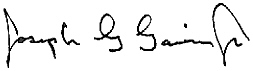
JOSEPH G. GAVIN, JR., CHAIRMAN
COMMITTEE ON EARTH-TO-ORBIT
TRANSPORTATION OPTIONS


